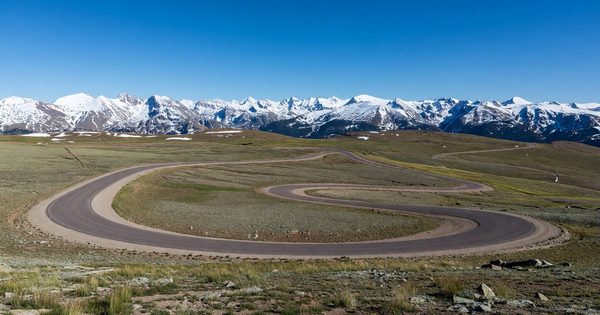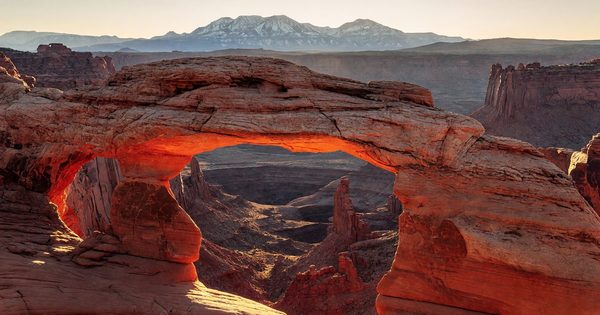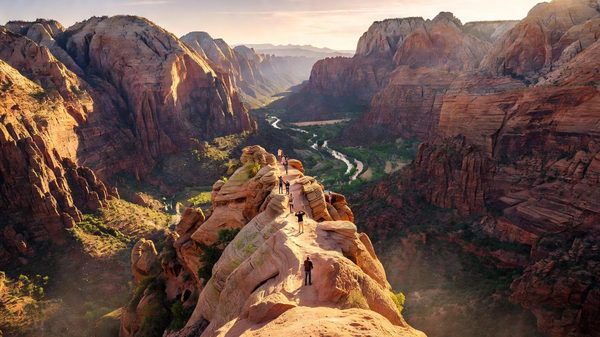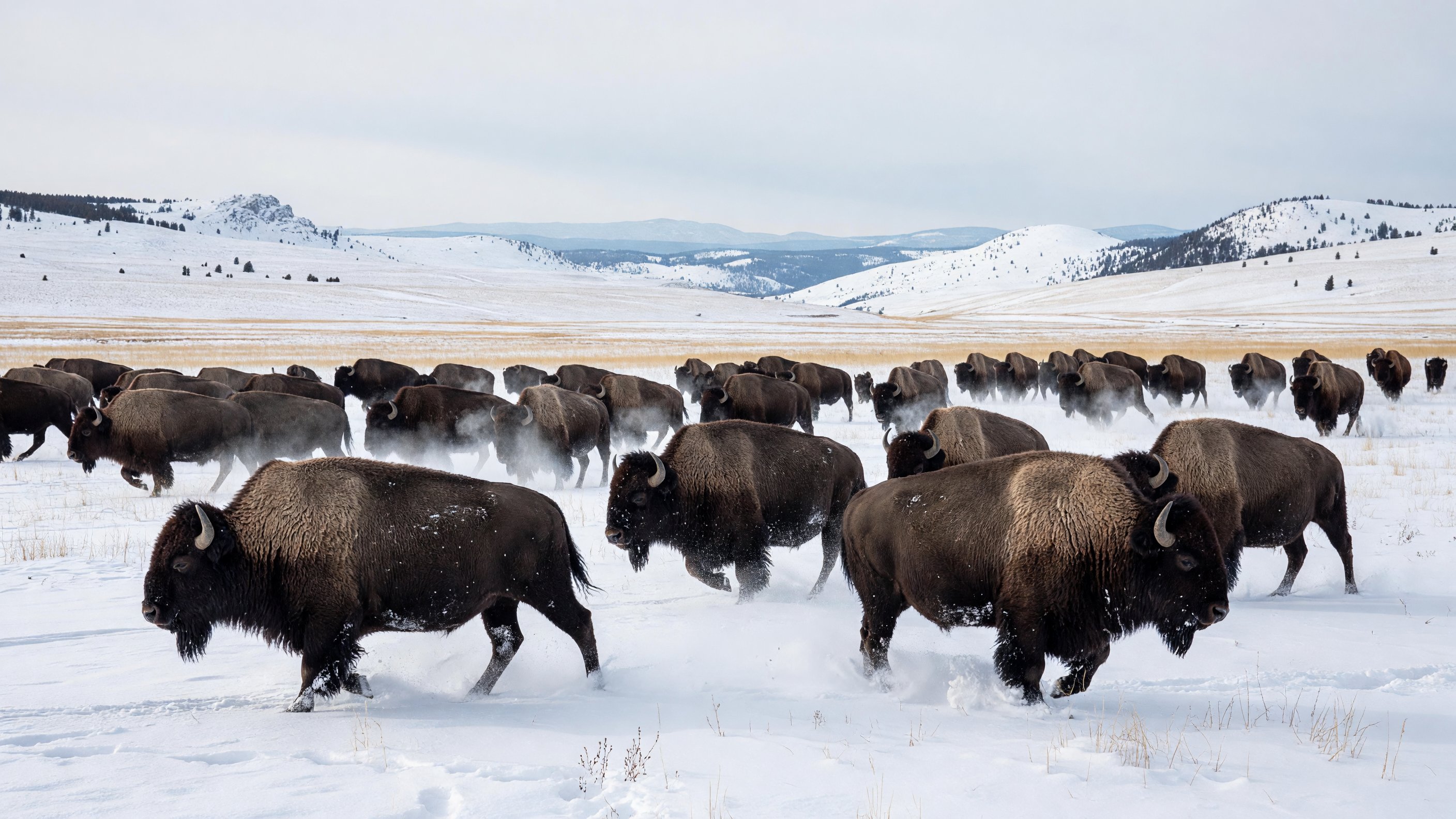
Here is a number that changed how I plan trips: roughly 90 percent of all national park visitation happens between May and September. That leaves the other eight months — and particularly the deep winter months of November through February — nearly empty. I have stood at the rim of the Grand Canyon in January with fewer than a dozen other people in sight. I have photographed Bryce Canyon’s hoodoos under fresh snow with no footprints ahead of me on the rim trail. I have watched wolves work a bison herd in Lamar Valley on a ten-degree morning and been unable to explain to anyone who wasn’t there why it was one of the finest wildlife experiences of my life.
Winter national park visits require specific preparation. Roads close. Facilities close. Snowchains become mandatory. Temperatures that feel mild on a California weather app can feel lethal when you’re exposed on a canyon rim at 7,000 feet with a twenty-knot wind. This guide is built around parks where the winter conditions are not just manageable but actively extraordinary — and honest about the gear and logistics that make them worth it.
1. Yellowstone National Park, Wyoming
What’s open: The North Entrance at Gardiner, Montana stays open year-round and gives car access to Mammoth Hot Springs and the Lamar Valley corridor — arguably the best wolf-watching road in North America. The rest of the park is closed to wheeled vehicles from approximately November through mid-April. Interior travel is by oversnow vehicle only.
What’s closed: All other entrances and roads except the Mammoth-to-Cooke City corridor.
The oversnow season: From late December through early March, Yellowstone’s interior opens exclusively via snowcoach and snowmobile under a concessioner-guided system. The two authorized oversnow concessioners are Xanterra Travel Collection (operating as Yellowstone National Park Lodges) and Yellowstone Vacation Tours — both operate guided snowcoach tours from West Yellowstone and from Flagg Ranch to Old Faithful and the Canyon area. Individual snowmobile access requires booking through an authorized guide; private unguided snowmobile use is not permitted in the park. Check nps.gov/yell for current season dates and concessioner contact information before booking — the oversnow season operates on a strict calendar tied to snowpack.
Why it’s worth it: Geysers in winter produce an effect you cannot replicate in any other season: in extreme cold, the steam columns rise hundreds of feet and catch the low winter light in ways that summer photographs never show. Old Faithful on a morning when ambient temperature is below zero and the geyser column freezes into ice crystals before it falls back to earth is something you will remember for a long time. The Lamar Valley from the Gardiner-to-Cooke City road — open year-round because it’s also the only winter access to Cooke City — is the best accessible wildlife corridor in the country in winter. The Druid Peak wolf pack territory runs through this valley; bison herds congregate here when deeper-interior snowpack pushes them toward lower elevations. I have seen wolves, bison, pronghorn, and a coyote working a carcass all in the same morning from a single roadside stop.
Gear realities: Chains or M+S-rated tires are mandatory on the Gardiner-to-Cooke City road in winter conditions. Dress for temperatures of -10°F to 20°F and assume that wind will push the effective temperature well below that. Layering system with a hardshell, insulated midlayer, merino base, insulated boots rated to at least -20°F, and hand warmers. Spotting scope for Lamar Valley — binoculars are fine for bison, but for wolf observation at 400 to 800 yards, a 60-80x scope is the difference between seeing a smudge and watching behavior.
2. Death Valley National Park, California
What’s open: Essentially the entire park. Death Valley does not close for winter — the low-elevation valley floor (Badwater Basin sits at -282 feet, the lowest point in North America) never accumulates meaningful snow, and Furnace Creek’s maintained road network stays open year-round. Dante’s View and Zabriskie Point are accessible. Mosaic Canyon, Golden Canyon, and most hiking routes operate normally.
What’s closed: Telescope Peak Road may require high-clearance or 4WD in snow years; check current conditions at nps.gov/deva.
The smart-visit season: November through March is the only time Death Valley makes sense for most visitors. Daytime temperatures at the valley floor typically run 60°F to 70°F — hiking weather that turns lethal in June, when the same valley exceeds 120°F. Nights drop to the 40s and 30s and occasionally below freezing; the 1,000-foot-plus elevation gain to Zabriskie Point and Dante’s View makes those locations colder.
Why it’s worth it: The desert light in winter is genuinely different from any other season. The sun tracks low across the sky from November through February, and in Death Valley’s north-south valley geometry, that means long shadows from the badland formations at Zabriskie Point run until midmorning. Golden Canyon — a short canyon hike through eroded clay and volcanic ash formations — photographs best in the hour before sunset in winter, when the low-angle light turns the clay from grey to gold to a deep amber-red in the space of twenty minutes. The color sequencing in that canyon is one of the best-timed light events in any desert park.
Super-bloom potential: In years following significant winter rainfall (typically El Niño years), Death Valley’s desert wildflowers bloom between February and April in quantities large enough to make national news. The NPS publishes a super-bloom prediction page that tracks soil moisture and precipitation forecasts — check it after significant winter storms if a bloom year is plausible.
Gear realities: Wind is the thing that surprises most winter visitors to Death Valley — the valley acts as a funnel, and 30 to 50 mph gusts are common in February. A hardshell jacket with a good hood matters more than most people expect. Insulation for evenings and high-elevation stops. Full sun protection regardless of temperature: December UV in the desert is still significant, and dehydration happens faster than you think in dry air.
3. Yosemite National Park, California
What’s open: Yosemite Valley is accessible year-round via Highway 140 (the all-weather route from Merced — no chain requirement in most conditions) and Highway 41 from the south. El Capitan, Half Dome, Cathedral Rocks, and the valley floor are accessible. Badger Pass Ski Area — the only downhill ski area in the Sierra Nevada national park system — operates on Glacier Point Road during the snow season, typically mid-December through mid-March, weather permitting. Check the Badger Pass page for current season status, as the ski area has been impacted in years with low snowpack.
What’s closed: Tioga Pass (Highway 120) closes by late October or November and typically remains closed through May or June. Glacier Point Road closes to vehicles above the Badger Pass junction. Hetch Hetchy Road closes October 15.
Why it’s worth it: The valley in winter has fewer than 10 percent of summer’s visitor volume, which means you can park at Tunnel View and watch the light move across El Capitan without a crowd behind you. Ice forms on the lower walls of El Capitan and Cathedral Rocks in sustained cold periods — large, translucent ice sheets that produce a completely different visual character than summer’s dry granite. Yosemite Falls in January and February often runs in an unusual combination: the upper falls flows while the lower falls freezes at its base, creating an ice cone that climbs upward from the pool floor over the course of the winter. The cone sometimes reaches 200 feet tall by February — a natural structure worth a specific visit.
Chains: Chains or traction devices are mandatory on all roads entering the valley when weather conditions dictate, which means most winter storm cycles. Highway 140 has the most lenient chain-control requirements of the three main valley approaches; Highways 41 and 120 (the latter only as far as it’s open) apply chain controls more frequently. Check Caltrans QuickMap for real-time chain controls before departure.
Photography notes: Blue hour is my preferred window in Yosemite Valley in winter — the 20 minutes after civil twilight, when the sky holds a deep blue and the valley walls are still visible in reflected light. Valley View looking east at blue hour with a light dusting of snow on the meadow floor is as good as this valley gets photographically.
4. Grand Canyon National Park, Arizona
What’s open: The South Rim is open 365 days a year and provides everything you need for a winter visit. Most South Rim viewpoints along Desert View Drive and Hermit Road are accessible by vehicle in winter; the Hermit Road west section requires the free shuttle bus in summer but is open to private vehicles from December through February. The main visitor facilities at Grand Canyon Village — Visitor Center, Yavapai Geology Museum, and the rim trail between them — are open year-round.
What’s closed: The North Rim closes to visitor services mid-October and typically reopens mid-May. If you need the North Rim perspective in winter, you can hike the North Kaibab Trail from the South Rim — but the upper portion passes through the inner gorge and is not a winter day-hike. Bright Angel Lodge and El Tovar are open year-round on the South Rim.
Why it’s worth it: Snow on the South Rim against the red-orange canyon walls below is one of those compositions that reliably produces photographs people don’t believe were taken in Arizona. The rim sits at approximately 7,000 feet, and winter storms deposit 2 to 6 inches of snow on the rim while the canyon interior stays dry or receives only light precipitation — the visual contrast between the white rim and the red-layer canyon sequence is dramatic in a way that summer’s uniform blue sky doesn’t produce. Crowds are genuinely thin: January and February are the least-visited months of the calendar, which means the trail-head parking at Yaki Point and Mather Point fills slowly or not at all.
Gear realities: The rim is exposed and cold. Even at 40°F ambient temperature, wind along the rim drops effective temperature to the 20s. Insulated boots, wind-resistant outer layer, and sun protection — winter UV at 7,000 feet is higher than most visitors expect. Icy spots on the rim trail form in the hours after snowfall and can persist for days in shaded sections; microspikes or traction devices are worth carrying.
5. Big Bend National Park, Texas
What’s open: The full park, including the Ross Maxwell Scenic Drive, Chisos Basin, and the Rio Grande Village corridor. The Santa Elena Canyon day hike, Ernst Tinaja, Tuff Canyon, and the Chimneys are all accessible. The Boquillas Canyon hot springs — a short hike from Rio Grande Village — run warm year-round regardless of ambient temperature and are especially appealing in cold weather.
What’s closed: Nothing significant closes for winter at Big Bend. The Chisos Mountains roads may close briefly after ice events, which are infrequent.
Why it’s worth it: Big Bend’s winters are mild by most standards — daytime temperatures in December and January typically reach the 60s to low 70s at river elevation, with nights dropping to the 30s in the Chisos Basin (elevation 5,400 feet) and warmer at the lower-elevation Rio Grande. The combination of warm daytime hiking and cold, dry nights makes this one of the best stargazing destinations in the national park system — Big Bend holds a Gold Tier designation from the International Dark-Sky Association, the highest rating IDA awards. The Rio Grande Valley creates a protected microclimate along the river that hosts wintering raptors including golden eagles, peregrine falcons, and a reliable Harris’s hawk population.
Photography notes: The low winter sun tracks across the Chihuahuan Desert at an angle that produces extraordinary sidelighting on the eroded limestone formations of the Chisos foothills from late afternoon through sunset. The Santa Elena Canyon slot (a 1,500-foot-deep gorge cut through Mesa de Anguila) photographs best in winter afternoon when the sun drops low enough to send light into the canyon throat rather than bouncing off the walls above.
6. Joshua Tree National Park, California
What’s open: The full park. Joshua Tree does not close for winter and — unlike the desert parks farther south — actually benefits from occasional snow events that cover the Yucca trees and the Mojave-to-Colorado Desert transition zone with a thin white layer that photographs unusually well.
Why it’s worth it: Desert light in winter at Joshua Tree is everything the summer light isn’t. The sun tracks low across the southern sky, and the particular combination of granite boulder formations (quartz monzonite, which catches low-angle light differently than sandstone) and the characteristic Yucca brevifolia branching silhouette produces compositions that are completely dependent on the sun angle — which means winter is the season when the light actually cooperates. The human climbing community also concentrates here in winter: the main climbing areas (Hidden Valley, Wonderland of Rocks, Jumbo Rocks) are accessible and populated with climbers doing routes that summer heat makes impractical.
Gear realities: January nights at Joshua Tree’s higher elevations (the park spans 1,000 to 5,000 feet) drop well below freezing. An insulated layer and windshell are necessary even if daytime temperatures reach the 60s. Snow occasionally covers the desert floor at higher elevations, typically between 3,500 and 5,000 feet in the park’s northern section.
7. Bryce Canyon National Park, Utah
What’s open: The main park road is plowed to Rainbow Point year-round, and the park headquarters, Visitor Center, and most rim-trail sections remain open. Ranger-led snowshoe walks are offered on winter weekends — check nps.gov/brca for current program schedules and whether snowshoes are provided (the park has historically offered loaner snowshoes for these programs; confirm availability before your visit). The cross-country ski trail on the Fairyland rim section opens when snow depth permits.
What’s closed: The canyon-floor Navajo Loop requires more careful assessment in winter — the switchbacks are icy and the descent is steep; check with rangers before attempting. Some hike-down routes close in high-snow conditions.
Why it’s worth it: Bryce is the park that most rewards a winter visit of any site in this guide. The hoodoos — orange and red limestone spires weathered into fantastical forms — catch snow on their horizontal surfaces and accumulate white caps and white-mantled ledges that transform the visual character of the amphitheater. In August, Bryce reads as orange-on-orange. In January, it reads as orange-on-white under a deep blue sky, with the snow emphasizing the shape of every individual spire. The combination is genuinely unlike any summer park visit, and the rim is quiet enough in January that you can hear the hoodoos when wind moves through them.
Elevation and cold: Bryce’s rim sits at 8,000 to 9,100 feet. That elevation means temperatures at the rim run significantly colder than gateway towns: expect highs of 20°F to 35°F in December and January, with lows that drop into single digits. Layering system with a proper insulated midlayer is not optional. The upside of the elevation is the extraordinary clarity of the light — low humidity and thin air above 8,000 feet produces a quality of midday illumination that does not exist at lower elevations.
8. Acadia National Park, Maine
What’s open: The park itself never closes, but access changes substantially. The Park Loop Road — the 27-mile paved road that passes Sand Beach, Thunder Hole, and Otter Cliffs — closes to vehicles in winter (typically mid-November through mid-April) but is accessible on foot, by snowshoe, and by cross-country ski. The Acadia carriage roads, a 45-mile network of broken-stone roads built by John D. Rockefeller Jr., are open for winter travel and provide excellent snowshoeing and skiing access across the island’s interior. Many summits including Cadillac Mountain are accessible on foot year-round.
What’s closed: Park Loop Road vehicle access, the Jordan Pond House restaurant (seasonal, typically closes for the winter), and most Island Explorer shuttle service.
Why it’s worth it: The combination of cold-season coastal features at Acadia is unlike anything in the park system west of the Mississippi. The Atlantic surf freezes in spray against Otter Cliffs and the shoreline rock formations in sustained cold, building ice formations that are genuinely spectacular — and inaccessible in the vehicle-heavy summer season. Cadillac Mountain in winter under clear skies reclaims its role as the first place in the continental United States to see sunrise — no crowds, a long blue-hour approach, and the full North Atlantic panorama. The carriage road network in snow transforms into a XC skiing destination that few people outside the local community know about.
Ice-climbing note: Acadia hosts limited ice climbing at certain cliffs in cold winters. The Maine Ice Report (Mountain Project is the practical source) tracks conditions; NPS regulations require climbers to register for certain technical routes.
Getting there: Bar Harbor, the main gateway, goes from a summer town of 50,000+ daily visitors to a quiet community of about 5,000 year-round residents in winter. Most lodging is closed; the remaining open properties (a handful of inns and motels) accommodate winter visitors comfortably. Reserve ahead — the shortage of open rooms is real, not manufactured.
9. Crater Lake National Park, Oregon
What’s open: The south entrance off Highway 62 is open year-round and provides access to park headquarters, the Steel Visitor Center (limited winter hours), and the rim viewpoints accessible from the plowed section of Rim Drive. Ranger-led snowshoe walks are offered on winter weekends from the Rim Village; snowshoe rental has historically been provided free for these programs — check nps.gov/crla for the current season’s schedule before your visit. Cross-country skiing is possible on the plowed rim section.
What’s closed: The north entrance closes approximately by late October and typically reopens in late May or June. Rim Drive’s full circuit is not available in winter — only the plowed section near Rim Village.
The snow: Crater Lake National Park averages approximately 504 inches of snow annually — among the highest snowfall totals of any place in the contiguous United States. The park’s caldera rim sits between 7,000 and 8,000 feet in the western Oregon Cascades, directly in the path of Pacific moisture systems. By mid-winter, snowpack at the rim regularly exceeds 10 feet in depth.
Why it’s worth it: The lake does not freeze. This is the defining winter fact about Crater Lake: beneath whatever snow blankets the caldera rim, the water stays its impossible blue year-round. The snow-covered rim makes the lake appear even more intensely blue by contrast. On clear days — which come between storm cycles in the Oregon Cascades — the Wizard Island cinder cone rises from the lake as a snow-blanketed volcanic shape that photographs unlike anything else in the country.
Chain requirements: Chains are frequently required on Highway 62 approaching the park in winter storm cycles. Check ODOT TripCheck before departure.
10. Great Smoky Mountains National Park, Tennessee / North Carolina
What’s open: Clingmans Dome Road closes December 1 and reopens April 1, but the main Newfound Gap Road (US-441) through the park is generally maintained year-round except during active snow events. Laurel Falls, Alum Cave Trail, and most valley-bottom trails remain accessible. Sugarlands Visitor Center near Gatlinburg and Oconaluftee Visitor Center near Cherokee maintain reduced winter hours.
What’s closed: Clingmans Dome Road (Dec 1 – April 1). Roaring Fork Motor Nature Trail closes for winter.
Why it’s worth it: Summer crowds in the Smokies are severe — Great Smoky Mountains is the most-visited national park in the system, with 12 to 14 million visitors annually. No timed-entry reservation is required (making it unique among high-visitation parks), but the combination of no reservations and maximum visitation produces summer conditions that are, practically speaking, traffic jams with trees. In January, the park is genuinely quiet, and the absence of leaves reveals what the tree canopy conceals in summer: the geologic structure of the ridgelines, the exposed rock faces on the higher summits, and the clear-water streams without the green overlight filtering everything. The old-growth hemlocks and mature hardwoods in the valley bottoms have a different visual weight in winter without foliage — they read as architecture.
Practical note: Parking at major trailheads in the Smokies remains congested even in winter on weekends, particularly at Laurel Falls and Alum Cave Trailhead. Arrive before 8 AM on winter Saturdays and Sundays or expect to park and walk from the roadside.
11. Olympic National Park, Washington
What’s open: The Hoh Rain Forest, accessible year-round from US-101, is the most compelling winter destination in the park. The old-growth Sitka spruce and big-leaf maple of the Hoh are arguably more visually interesting in winter than in summer: no leaves means full visibility of the enormous tree trunks and the extraordinary moss systems, and the Pacific Northwest winter light — grey, diffused, even — is ideal for capturing the texture of a rain forest environment.
Hurricane Ridge status: The Hurricane Ridge Day Lodge burned on May 7, 2023, and was a total loss. As of this writing, Congress has allocated approximately $80 million for rebuild but no reopening timeline has been confirmed. The ski area at Hurricane Ridge — historically the only downhill ski operation in the national park system — has been operating in a limited capacity since 2024 on a weekend-only basis when snowpack permits, using the remaining infrastructure. Check nps.gov/olym and the Hurricane Ridge Ski and Snowplay Area website directly for current 2024-2025 season status before planning a ski day; conditions and operational status change frequently post-fire.
What’s closed: Hurricane Ridge Road is plowed on weekends and some holidays in winter but is not guaranteed open on weekdays. The full visitor center experience at the ridge is unavailable pending lodge rebuild.
For the Pacific Coast: The Olympic coast in winter produces storm conditions that are extraordinary photographically — large swell, dramatic stack formations at Ruby Beach, and the absence of virtually all other visitors. Sea stacks in storm light are among the most compelling winter photography subjects in the Pacific Northwest, but access requires careful attention to tide tables and surf forecasts. The NOAA La Push tide predictions are essential; arriving at high tide on a large swell day can cut off access to beach sections that read as walkable on the map.
Chain-Up Requirements and 4WD Considerations
Most winter national park visits will encounter at least one of the following:
Mandatory chain controls — apply to all vehicles including 4WD in severe conditions at Yosemite, Crater Lake, Olympic (Hurricane Ridge Road), and Bryce Canyon. “R2” controls in California require chains on all vehicles except AWD/4WD with adequate snow tires; “R3” requires chains on all vehicles without exception. Check Caltrans QuickMap (California), ODOT TripCheck (Oregon), and WSDOT 511 (Washington) before departure.
Chain types: Traditional link chains provide the most traction on packed snow and ice. Cable chains are lighter and easier to install but less effective on ice. AutoSock (fabric snow socks) are accepted in some states as a chain alternative — verify the applicable state’s chain law before relying on them, as acceptance varies. Carry chains even if your vehicle has AWD; chain controls do not exempt AWD vehicles in the most severe conditions.
4WD and ground clearance: Most winter national park roads are plowed, but parking areas, campground access roads, and lesser-used viewpoints may not be. High-clearance vehicles (6+ inches) are an advantage at parks like Death Valley’s backcountry roads, Olympic’s forest service access roads, and Big Bend’s dirt roads after precipitation. AWD with all-terrain or M+S-rated tires is appropriate for most winter park visits; dedicated winter tires provide a meaningful improvement over standard M+S-rated all-seasons in sub-20°F conditions.
Winter Photography: Light, Gear, and Timing
The low-angle advantage: Between November and February, the sun tracks across the southern sky at an angle that produces extended golden-hour conditions. At 40° North latitude (roughly the level of Yosemite, Bryce Canyon, and Joshua Tree), civil twilight begins approximately 30 minutes before sunrise and ends 30 minutes after sunset — the “golden hour” window runs longer in winter than in summer because the sun rises and sets closer to the horizon. Desert parks like Joshua Tree and Death Valley benefit most from this; their geology is specifically designed, so to speak, for raking light.
Blue hour and long exposures: Cold, clear winter nights produce a blue-hour period of extraordinary intensity. After civil twilight, the sky holds a saturated deep blue for 15 to 20 minutes before full dark. With fresh snow on the ground acting as a reflector, even deep-canyon environments like the Grand Canyon’s South Rim are photographable at blue hour without artificial light.
Snow shadows and frost halos: Fresh snow in morning light with direct sun produces a phenomenon called “snow glitter” or surface sparkle — the result of individual ice crystals acting as reflectors. At a slightly wider scale, shadows on snow in morning light produce a blue cast (from reflected skylight) that contrasts with the warm-toned lit surfaces. This blue-in-shadow effect is most pronounced at elevation and in snow that fell in low-wind conditions — it photographs well in compositions that include both lit and shaded snow, such as a hoodoo spire at Bryce in morning sun.
Frost halos appear around light sources (the sun, a lamp post, a headlamp) in very cold conditions when ice crystals are suspended in the atmosphere. At Yellowstone, the steam columns from geysers create extended frost halo conditions when ambient temperatures are below zero — the ice crystals in the steam plume diffract light in ways that produce aureoles around the geyser column itself.
Camera gear in cold: Battery performance drops significantly below freezing — carry spare batteries in an inner pocket against your body and swap frequently. Lens condensation happens when moving from cold to warm; carry your camera in a sealed bag for 20 to 30 minutes when transitioning from outdoor to heated indoor environments to allow gradual temperature equalization. Carbon fiber tripods transfer cold less than aluminum; wrap tube sections with foam grip tape if you’re working gloveless in sub-20°F conditions.
Essential Gear List for Winter National Park Visits
Layering system:
- Merino wool or synthetic base layer (moisture-wicking — no cotton)
- Insulated midlayer (down or synthetic — down compresses better, synthetic works when wet)
- Hardshell outer layer (waterproof, wind-resistant, hood)
- Insulated pants or hardshell over base layer for exposed ridge and rim environments
Footwear:
- Insulated, waterproof boots rated to at least -20°F for high-altitude or Yellowstone/Bryce conditions
- Microspikes or traction devices (Yaktrax or Kahtoola microspikes) — rim trails at Grand Canyon and Bryce develop ice in shaded sections that makes standard boot soles unreliable
- Gaiters for deep-snow environments (Crater Lake ranger snowshoes, Bryce XC skiing)
Accessories:
- Insulated gloves with liner gloves underneath; convertible mitten-glove systems work well for photography
- Neck gaiter and balaclava — exposed face at Bryce’s rim in January wind is the fastest route to a trip-ending cold injury
- Insulated hat or helmet liner
Vehicle:
- Chains in the trunk for California and Oregon parks — buy before the trip, not at a mountain gas station at 10 PM
- Full tank of fuel before entering any remote park corridor; winter road closures can trap vehicles
- Emergency kit: space blanket, traction board, jumper cables, water, snacks, flashlight
Frequently Asked Questions
Are national parks free in winter? No. National park entrance fees apply year-round. The America the Beautiful annual pass ($80) covers entrance for your vehicle at all fee-required parks and pays for itself in two to three winter visits. Some parks have day-free programs (Grand Canyon’s fee-free days typically include Martin Luther King Jr. Day weekend), but these are not guaranteed annually — check nps.gov for the current year’s fee-free dates. For a full breakdown of pass options, see our America the Beautiful pass guide.
What roads close in winter at national parks? Road closures vary significantly by park and by year’s snowpack. General patterns: Yosemite’s Tioga Pass (Highway 120) closes October-May; Crater Lake’s north entrance closes October-June; Bryce Canyon’s full Rim Drive closes to vehicles December-March (main road stays open); Grand Canyon’s North Rim access closes mid-October; Yellowstone’s interior road system closes to wheeled vehicles November-mid-April except the Gardiner-to-Cooke City corridor. Always check nps.gov/findapark for current road status at your specific park before departure.
Is it safe to hike in national parks in winter? Safe with appropriate preparation; potentially dangerous without it. The most common winter hiking emergencies in national parks involve visitors who underestimated temperature drop, became wet from snowmelt or sweat, and experienced cold-related injury in conditions that didn’t feel “extreme” on arrival. Tell someone your itinerary and expected return time. Carry the Ten Essentials (navigation, headlamp, first aid, sun protection, water, food, insulation, firestarter, repair tools, and a shelter layer). Cell coverage is nonexistent in most park backcountry — a personal locator beacon (PLB) or satellite communicator (Garmin inReach or SPOT) is strongly advisable for any winter outing beyond the immediate parking area.
What wildlife can I see in national parks in winter? Winter is the premier season for large mammal viewing at several parks. Yellowstone’s Lamar Valley delivers wolf, bison, elk, coyote, and bald eagle in a single morning with regularity that summer crowds disrupt. Grand Canyon’s North Rim kaibab squirrel habitat is inaccessible, but California condors are visible from South Rim viewpoints year-round. Death Valley hosts wintering raptors and provides migrating waterfowl at Salt Creek in February-March. Great Smoky Mountains has a large black bear population (some bears remain active through winter in mild years in the Smokies, unlike true hibernators in colder climates). Big Bend’s Rio Grande corridor hosts golden and bald eagles, peregrine falcons, and rare Mexican endemic species along the river.
Do I need a reservation to visit national parks in winter? Most winter national park visits do not require advance reservations. Timed-entry systems at Arches, Glacier, and Yosemite apply to peak summer and fall seasons — virtually none are active in winter. Campground reservations through Recreation.gov are recommended if you plan to stay in park campgrounds; winter availability is generally easier than summer, but some campgrounds close entirely (Yosemite’s Camp 4 stays open; most park campgrounds at Crater Lake and Bryce close for winter). Yellowstone’s oversnow tour system requires advance booking through Xanterra or Yellowstone Vacation Tours — these fill weeks to months ahead for peak winter weekends.
What’s the coldest national park in winter? Yellowstone and Crater Lake regularly record the coldest temperatures of any accessible national park. Yellowstone’s interior reaches -40°F or below on still January nights; the combination of altitude (7,000-8,000 feet) and the park’s continental interior position makes it exceptionally cold. Bryce Canyon at its 9,000-foot rim elevation is comparably cold. Death Valley, counterintuitively, has the mildest desert-floor winter temperatures of any park in the Southwest.
The National Park Conservation Association publishes park-by-park advocacy updates and winter access reports at npca.org, including coverage of funding and infrastructure decisions affecting visitor access. For planning a Pacific Northwest winter circuit, Olympic National Park and Crater Lake National Park pair naturally — both are open year-round with compelling winter features, and the drive between them through coastal Oregon is an experience in itself.
If your visit falls during the December holiday school break (Dec 19–Jan 2), see our December holiday visit guide for specifics on holiday hours, in-park lodge availability, and which parks handle the family-surge best.
If your primary interest is wildlife rather than snow conditions, see our spring wildlife watching guide — the same parks transform significantly from winter to late April and May as bears emerge, ungulates calve, and migratory birds return.
For visitors specifically focused on XC skiing and snowshoeing, see our cross-country skiing and snowshoeing guide — a ranked breakdown of 12 parks with trail-level details, ranger program schedules, rental sources, and avalanche awareness notes for each destination.