Spring wildflower season is one of the most timing-dependent experiences in the national parks system. Miss the window by two weeks and you are looking at bare sand where a super-bloom stood; arrive on the right day in the Great Smoky Mountains and you are walking through a forest floor covered in trilliums and orchids that will be gone before the canopy leafs out. The planning lever is bloom-window timing, not just the calendar date.
This guide covers 10 parks and park-adjacent destinations — ranging from California’s Sonoran and Mojave deserts to the southern Appalachians to the bottomland forests of South Carolina — with specific peak windows, the best trails for viewing, photographer tips, and the forecasting science that makes the difference between a frustrating trip and a remarkable one.
How Spring Bloom Timing Works
Two separate biological systems drive spring wildflower timing: desert blooms and temperate spring ephemerals. Understanding both makes you a better planner.
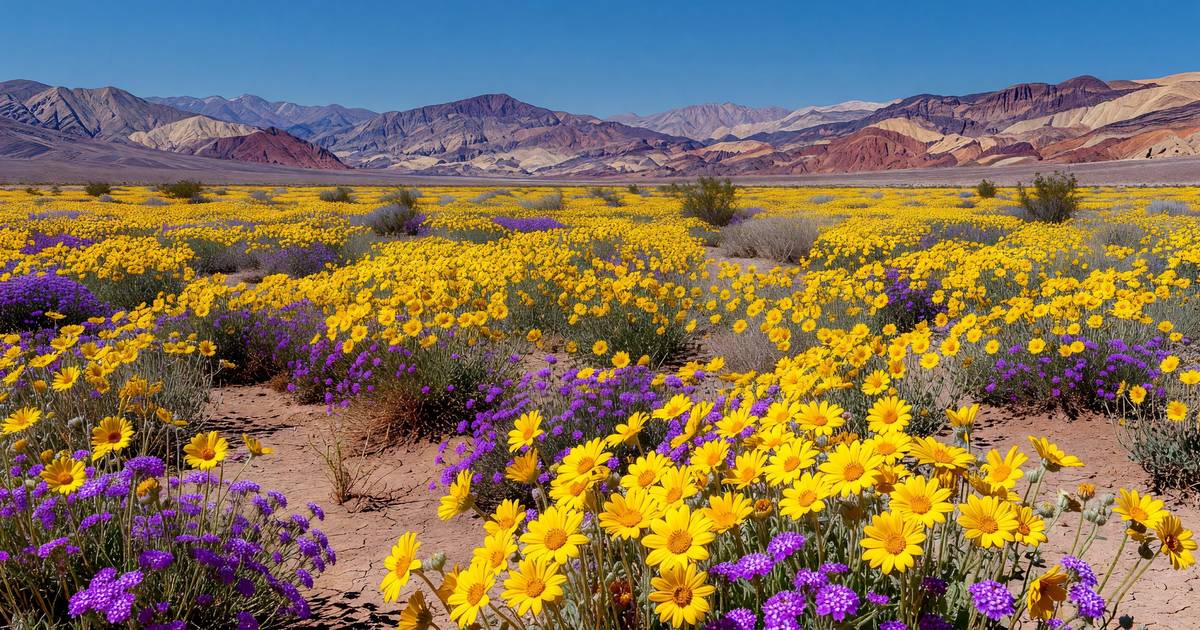
Desert wildflowers respond primarily to winter precipitation and temperature. The trigger for a widespread Sonoran or Mojave bloom is a wet winter — specifically, rainfall that penetrates the soil deeply enough to break seed dormancy across a broad area. Warm sunny days in February and March accelerate germination after wet January storms. Cool spring temperatures slow growth and extend the bloom window; warm temperatures accelerate it and compress the peak into a shorter period. A “super-bloom” — the term for a regionally extraordinary bloom covering hillsides and valley floors — requires not just enough rain but rain at the right time: seed germination requires moisture during the critical window after dormancy breaks. The historic California super-bloom years (2005, 2016, 2024) all followed above-normal precipitation events across the Mojave and Colorado Deserts after years of drought that allowed seed banks to accumulate.
Mountain snowpack drives bloom timing at higher elevations. The later a snowpack melts, the later the bloom begins. At Mount Rainier’s Paradise meadows, snowpack regularly persists into June and July, pushing the famous subalpine wildflower bloom into late July and August — which explains why Rainier’s bloom is spectacular but technically summer rather than spring at that elevation.
Spring ephemerals in temperate forests race the canopy. Trilliums, bloodroot, trout lilies, and lady’s slipper orchids in the Appalachians and Midwest emerge in the narrow window after soils warm above 50°F but before the canopy leafs out and cuts off sunlight to the forest floor. This window runs roughly three to six weeks — later at higher elevations, earlier in warmer, lower coves. A late freeze can wipe out a bloom entirely; an early warm spell can compress the window by half.
For desert blooms, the single best real-time forecasting resource is the USGS Desert Wildflower page and California state park bloom hotlines. For Appalachian spring ephemerals, the organized events described below provide the most accurate human-observed timing.
1. Death Valley National Park, California
Peak window: February through April, with wide variation by year. Super-blooms in February–March; reliable annual wildflower activity March–April in non-super-bloom years.
Death Valley is the most dramatic of the California desert parks for wildflower events. The valley floor sits below sea level, making it one of the earliest-warming landscapes in North America — and in years following wet winters, the result is one of the most photographed natural events in the country. The 2005, 2016, and 2024 super-blooms drew visitors from across the continent. In 2024, the bloom was considered among the most widespread in recorded history for the park following an exceptional 2023–24 winter rainfall season.
Best viewing areas: Badwater Basin road and the valley floor south of Furnace Creek deliver the most carpet-like views in a super-bloom year. Wildrose Canyon and Jubilee Pass Road offer bloom at slightly higher elevations when the valley floor is past peak. Mosaic Canyon’s wash brings seasonal wildflowers framing the narrows.
Photographer tips: Super-bloom mornings at Death Valley are about foreground coverage and mountain backdrop — the Panamint Range rising behind a flower-covered valley floor is the signature composition. Arrive before 8 a.m. to avoid heat shimmer in the lower atmospheric layers; golden hour light at low angles saturates the yellows and purples. A wide-angle lens at 16–24mm with the camera low to the ground emphasizes the carpet effect. Polarizing filter reduces glare on petals.
Accessibility: Most bloom-viewing at Death Valley is from paved roads and pullouts. Badwater Road is standard two-lane pavement accessible to all vehicles.
Planning logistics: Death Valley’s remote location requires planning. The nearest major supplies are in Las Vegas (2.5 hours) or Ridgecrest, CA (1.5 hours). Furnace Creek has accommodations, gas, and a market. Cell service is unreliable across the park. Check current bloom conditions at nps.gov/deva before making the drive — super-blooms are not annual events.
2. Anza-Borrego Desert State Park, California
Peak window: February through April, with the best color typically in March in moderate years.
Anza-Borrego is California’s largest state park and a primary destination for desert wildflower viewing — and unlike Death Valley, it operates a dedicated wildflower reporting service. The Wildflower Hotline (760-767-4684) is updated weekly by park staff during bloom season and provides specific location reports for which areas are showing color at what stage. If you are planning a trip to Southern California for wildflowers, call this number before you finalize your dates and route.
Best viewing areas: Borrego Valley (the accessible valley floor around the town of Borrego Springs) is the most accessible bloom area; Henderson Canyon Road is the most reliably photographed for field coverage. Coyote Canyon (requires four-wheel drive north of the wash) produces excellent bloom in wet years. Font’s Point, accessed via a sandy four-wheel-drive road, provides panoramic views over the badlands with bloom on the desert pavement below.
Photographer tips: Henderson Canyon Road is the benchmark for compressed flower-field compositions with the Santa Rosa Mountains as backdrop. A ladder or elevated vantage point — even standing on a vehicle bumper — dramatically improves the depth-of-field for flower carpets at middle distance. Shoot late afternoon for warm backlight on west-facing slopes.
Accessibility: Borrego Valley floor viewing is accessible from paved roads. Font’s Point and Coyote Canyon require high-clearance vehicles.
Planning logistics: Borrego Springs is a small town with lodging; book well ahead in a projected bloom year. For current conditions: Wildflower Hotline 760-767-4684, or CA State Parks Anza-Borrego page.
3. Joshua Tree National Park, California
Peak window: March through April in the Mojave Desert section (northwest); March in the lower-elevation Colorado Desert section (southeast).
Joshua Tree spans two distinct desert ecosystems at different elevations — and this is the planning key. The Colorado Desert section (south and east entrances, below 3,000 feet) blooms earlier and warmer, typically peaking in March. The higher Mojave Desert section (west entrance and the Joshua tree forests, above 4,000 feet) blooms two to three weeks later, typically peaking in mid-to-late April. A single visit covers both elevation bands if timed for early-to-mid April.
Best viewing areas: Cholla Cactus Garden (easy boardwalk loop in the transition zone) combines cholla bloom with annual wildflowers. Skull Rock Nature Trail loops through boulder formations with spring color in the washes. Cottonwood Spring in the Colorado Desert section provides early bloom and accessibility; the Cottonwood Canyon Wash trail in wet years is blanketed in sand verbena and dune primrose.
Photographer tips: Joshua Tree’s wildflower photography is boulder-and-flower composition — a carpet of yellow or purple ground cover framed against the distinctive weathered granite piles. Overcast morning light softens the contrast; full sun by midday bleaches the yellows. The Cholla Garden at dawn produces interesting backlighting through cactus spines when in bloom.
Accessibility: Cholla Cactus Garden boardwalk is accessible. Cottonwood Spring parking area is accessible. Most bloom viewing is from roadside pullouts and short trails.
Planning logistics: Check real-time conditions at nps.gov/jotr. Joshua Tree is day-trip accessible from Palm Springs and the Coachella Valley; overnight camping requires advance reservation during peak spring months.
4. Saguaro National Park, Arizona
Peak window: Saguaro cactus bloom — late April to early May. Broader Sonoran spring wildflowers — March through April.
Saguaro National Park preserves the densest concentrations of the iconic saguaro cactus in the United States, and spring brings a two-phase wildflower sequence. The general Sonoran Desert wildflower bloom — poppies, lupine, globe mallow, brittlebush — peaks from March through April depending on winter rainfall. The saguaro bloom itself arrives later, with the massive columnar cacti producing white waxy flowers at their crowns in late April through early May. The saguaro bloom is not a ground-level carpet — it happens 30 to 50 feet up, visible by binoculars and dramatic at dawn when the blooms, which open at night, are still fresh before the day’s heat closes them.
Best viewing areas: The Rincon Mountain District (east unit, Tucson) on the Cactus Forest Drive offers accessible bloom viewing from a paved loop road. Bajada Loop Drive in the Tucson Mountain District (west unit) winds through dense saguaro stands. Wasson Peak trail provides higher elevation views over the west unit’s bloom.
Photographer tips: For saguaro flower photography, a telephoto lens (200–400mm) from ground level looking up captures individual blooms against a blue sky. Morning is essential — the flowers begin closing by mid-morning. Broad foreground compositions combining poppies and lupine with saguaro silhouettes work best in the March–April Sonoran wildflower window, not during the saguaro bloom itself.
Accessibility: Cactus Forest Drive and Bajada Loop Drive are paved and accessible by all vehicles. The visitor centers in both districts are accessible.
Planning logistics: Saguaro National Park has two separate districts in Tucson. Both are worth visiting; the east unit has denser saguaro stands. Check nps.gov/sagu for current conditions. Tucson has abundant lodging and is a major regional hub.
5. Great Smoky Mountains National Park, Tennessee/North Carolina
Peak window: April through early May for spring ephemerals. The formal Wildflower Pilgrimage is scheduled for late April each year — 2025 dates: April 23–27.
Great Smoky Mountains National Park contains more than 1,500 species of flowering plants — more than any other national park in the United States — and a disproportionate number are spring ephemerals that bloom in the narrow window before the canopy closes. The diversity includes eastern trilliums, bloodroot, hepatica, spring beauty, fire pinks, yellow lady’s slipper orchids, large-flowered trillium, showy orchis, crested dwarf iris, and wood anemone, concentrated in the rich cove hardwood forests at low to mid elevations.
The Great Smoky Mountains Wildflower Pilgrimage is one of the longest-running nature events in the United States, held annually since the early 1950s. The multi-day event in late April offers guided wildflower walks, photography workshops, and natural history hikes led by botanists, naturalists, and NPS rangers. Registration for the Pilgrimage typically opens in January each year; popular guided hikes fill quickly. Check the current event schedule and registration status at the Wildflower Pilgrimage website before planning a trip around the event.
Best viewing areas: Porters Creek Trail (Greenbrier area, Tennessee side) is the benchmark spring ephemeral trail in the park — a moderate 4-mile walk through a cove hardwood forest rich in large-flowered trillium and phacelia. Little Cataloochee Trail and the Cataloochee area (North Carolina side) combine wildflowers with elk observation; the valley’s pasture edges see elk most reliably in early morning. Little River Trail from Elkmont is accessible and passes through good trillium habitat in mid-April.
Photographer tips: Cove hardwood forest photography requires soft light — overcast days are actually superior to full sun for shooting spring ephemerals because harsh shadows fragment the compositions. A macro lens (90–105mm) is the essential tool for trilliums, orchids, and bloodroot. Get down to the plant’s level rather than shooting down; the flower should be on the same plane as your sensor.
Accessibility: Porters Creek Trail begins with a flat gravel section accessible to most mobility levels before becoming rocky. Metcalf Bottoms Picnic Area provides roadside access to stream-side wildflowers. The accessible Clingmans Dome parking area is above the ephemeral zone and less relevant for spring ephemerals specifically.
Planning logistics: No entrance fee at Great Smoky Mountains. Pilgrimage registration at wildflowerpilgrimage.org — registration opens January, popular hikes fill within days. For general bloom timing, check nps.gov/grsm. The park’s wildflower diversity is documented at the University of Tennessee Herbarium, which provides taxonomic resources referenced by Pilgrimage leaders.
6. Shenandoah National Park, Virginia
Peak window: Late April to early May, descending from lower elevations upward along Skyline Drive.
Shenandoah’s spring wildflower window follows the elevation gradient of the Blue Ridge — lower-elevation hollows along the park’s eastern boundary transition first in late April, while higher ridgeline areas peak in early May. The combination of Skyline Drive’s 75 overlooks and roadside pullouts makes Shenandoah accessible for bloom viewing even on a tight schedule.
Best viewing areas: Doyles River Trail (milepost 81) drops into a rich cove with good trillium and spring ephemeral habitat. Limberlost Trail (milepost 43) is a 1.3-mile accessible loop through old hemlock forest and spring bloom — one of the most accessible wildflower walks in the park. Big Meadows (milepost 51) has the best accessible visitor facilities and surrounding bloom in the surrounding forest edges.
Photographer tips: Skyline Drive roadside photography benefits from very early morning starts before the drive fills with weekend traffic. Blue Ridge spring light — overcast fog burning off in the morning — produces the most atmospheric shots of trilliums along the road shoulders.
Accessibility: Limberlost Trail is the park’s most accessible full-loop wildflower walk (1.3 miles, gentle grade, crushed greenstone surface). Big Meadows facilities are accessible. Full accessibility details at nps.gov/shen.
Planning logistics: Skyline Drive entrance fee applies; America the Beautiful annual pass covers it. Wildflower weekends in late April draw significant traffic — midweek visits allow more relaxed bloom viewing and available parking. For conditions, check nps.gov/shen.
7. Mount Rainier National Park, Washington
Peak window: Late July to mid-August at Paradise meadows (the famous subalpine bloom). Lower-elevation spring bloom in the Ohanapecosh and Carbon River areas — May to June.
A clarification that surprises many visitors: Mount Rainier’s most famous wildflower bloom is technically summer, not spring, because the snowpack at Paradise (elevation 5,400 feet) does not melt until June or July in most years. The Paradise meadows bloom — avalanche lilies, paintbrush, lupine, bistort, and asters covering the subalpine meadows in late July — is one of the premier wildflower sights in North America, but timing a visit for “spring wildflowers” at Paradise will encounter snow, not flowers, before July.
For actual spring bloom at Rainier, the lower-elevation areas deliver. The Ohanapecosh area (southeast corner, 1,700 feet elevation) sees spring ephemerals — trilliums, wood sorrel, and stream violets — from May through June along the Grove of the Patriarchs Trail and Silver Falls Loop. The Carbon River Rain Forest (northwest corner) is among the only inland temperate rainforests in the contiguous United States; the understory blooms in May and June with wild ginger, oxalis, and stream violets under a dense Sitka spruce and western red cedar canopy.
Accessibility: Grove of the Patriarchs Trail is mostly flat and wide, accessible to most mobility levels. Paradise visitor center and surrounding meadow boardwalks are accessible (summer-season hours). Carbon River Road is subject to flood closure — verify status at nps.gov/mora before visiting.
8. Cuyahoga Valley National Park, Ohio
Peak window: April through early May. Peak for spring ephemerals — mid-April to first week of May.
Cuyahoga Valley’s spring wildflower season is anchored by the Cuyahoga River gorge’s rich bottomland forests — and the species diversity is impressive for a Midwest park. Trout lilies, bloodroot, large-flowered trillium, Virginia bluebells, Dutchman’s breeches, and mayapple bloom sequentially through April and into early May. The gorge’s protected microclimate allows species more typical of Appalachian coves to persist this far northwest.
Best viewing areas: Ledges Trail (moderate, 2.2 miles) loops through Sharon Conglomerate ledge formations with adjacent cove forest rich in trilliums and bloodroot. Towpath Trail from the Boston Mills area through the gorge bottom passes Virginia bluebell colonies in April. Kendall Lake Shelter and surrounding forest has accessible bloom viewing on the flat trail connector.
Photographer tips: Trout lily colonies along Cuyahoga’s stream banks are excellent macro subjects — the mottled leaves and reflexed yellow petals are distinctive. Virginia bluebells produce their best blue saturation in even overcast light; the Towpath Trail colonies bloom in mid-April for 10 to 14 days.
Accessibility: The Towpath Trail is paved and flat — the most accessible trail surface of any Ohio national park. Kendall Lake Trail loop is accessible. Current accessibility information at nps.gov/cuva.
Planning logistics: No entrance fee. Cuyahoga Valley is within easy day-trip distance of Cleveland and Akron. The Cuyahoga Valley Scenic Railroad operates spring excursion services — check cvsr.org for current schedules. For bloom timing, check the park’s conditions page at nps.gov/cuva.
9. Congaree National Park, South Carolina
Peak window: March through April for bottomland spring wildflowers. Peak diversity — late March to mid-April.
Congaree is one of the most overlooked national parks in the eastern United States — a bottomland old-growth floodplain forest in the South Carolina Midlands with champion-size bald cypress, loblolly pine, and water tupelo. Spring brings a distinct bottomland wildflower flora: swamp rose, native azaleas, butterweed (a native Packera species that turns the floodplain yellow in April), wild blue iris along creek margins, and atamasco lily in wet areas. The species here differ from the Appalachian spring flora and reward a botanically curious visitor.
Best viewing areas: Boardwalk Loop Trail (easy, 2.4 miles) is the park’s accessible spine and the most practical bloom-viewing route — the elevated wooden boardwalk crosses the floodplain and drops into the swamp at Cedar Creek, where the biggest trees and some of the richest bottomland flora concentrate. Weston Lake Loop (3.5 miles, moderate) extends through areas with good native azalea and iris habitat.
Photographer tips: Bottomland photography requires dealing with flat, low light under the canopy. Polarizing filters reduce glare from standing water and wet bark. The butterweed colonies in April produce the most saturated color; wide-angle views of yellow butterweed against massive cypress trunks are the distinctive Congaree composition.
Accessibility: The Boardwalk Loop is fully elevated and accessible. Visitor center is accessible. Detailed information at nps.gov/cong.
Planning logistics: No entrance fee. Congaree is 20 miles southeast of Columbia, SC. Summer heat and mosquitoes are severe; the spring window (March–April) is the most comfortable time to visit. Check nps.gov/cong for current conditions.
10. Catoctin Mountain Park, Maryland
Peak window: Late April to mid-May.
Catoctin Mountain Park — a National Park Service unit adjacent to Maryland’s Cunningham Falls State Park and a short drive from Frederick — is a less-visited Appalachian spring ephemeral destination that delivers comparable bloom quality to Shenandoah at a fraction of the crowding. The mixed hardwood coves on Catoctin’s slopes produce trillium (notably large-flowered trillium and sessile trillium), showy orchis, spring beauty, wild ginger, and jack-in-the-pulpit in the narrow late-April window.
Best viewing areas: Blue Ridge Summit Trail and Cunningham Falls Trail both pass through quality cove hardwood habitat with good spring ephemeral diversity. The lower sections of Hog Rock Nature Trail are accessible and rich in trilliums in late April.
Photographer tips: Showy orchis — a native terrestrial orchid with purple hoods and white lips — is the botanical prize at Catoctin and rarely photographed. Macro work at ground level during overcast light produces the best results; the orchis blooms for roughly two weeks in late April and early May in protected coves.
Planning logistics: Catoctin Mountain Park has no entrance fee. Cunningham Falls State Park (adjacent) charges a day-use fee. The park is 3 hours from Washington, D.C. — a viable overnight trip for mid-Atlantic visitors. Check nps.gov/cato for current conditions and trail status.
Super-Bloom Forecasting: How to Know Before You Go
Desert super-blooms cannot be planned months in advance — they depend on the preceding winter rainfall pattern. The forecasting process works in layers:
1. Follow the winter precipitation. A wet winter across the Mojave and Sonoran Deserts is the prerequisite. NOAA’s Climate.gov seasonal drought monitor and the California-Nevada River Forecast Center report precipitation anomalies by watershed. If the Mojave has received 150–200% of normal winter rainfall by February, the probability of a broad bloom increases significantly.
2. Watch for early field reports in February. Death Valley’s NPS wildflower page and Anza-Borrego’s wildflower hotline begin issuing reports in early February in potential super-bloom years. By the time reporters and photographers publish the first images of germinating annuals — typically mid-February — you have roughly three to five weeks before the bloom peaks in a warm year, slightly longer in a cool year.
3. Cool spring temperature extends the window. A cold March can extend a super-bloom window by two to three weeks by slowing the growth rate of annuals. A warm, dry March can compress the window to under two weeks. Check 10-day forecasts when planning a desert trip around a bloom.
4. Elevation staging for multi-day visits. Valley floors at Death Valley bloom earliest and most intensely; higher foothill elevations in Anza-Borrego’s canyons bloom two to three weeks later. Building a trip itinerary that starts at the valley floor and moves progressively to higher elevations can extend a single visit across two distinct bloom stages.
Resources for real-time desert bloom tracking:
- nps.gov/deva wildflowers
- Anza-Borrego Wildflower Hotline: 760-767-4684
- desertusa.com wildflower report — community field reports updated frequently during season
Great Smoky Mountains Wildflower Pilgrimage: Planning Guide
The Great Smoky Mountains Wildflower Pilgrimage is among the longest-running organized natural history events in the United States, held annually since the early 1950s — a tradition of more than 70 years. It draws botanists, photographers, naturalists, and dedicated wildflower enthusiasts from across the country.
Format: Multi-day event held late April (2025: April 23–27). Programming includes 100+ field excursions, indoor presentations, photography workshops, and natural history programs. Most field excursions are guided walks of 1 to 5 miles led by botanists, NPS naturalists, and university faculty.
Registration: Registration opens in January. Popular hikes — particularly the Porters Creek Trail botanical walk and any excursions specifically targeting lady’s slipper orchids — fill within days of the registration opening. Register at wildflowerpilgrimage.org.
Logistics for attending: The Pilgrimage is headquartered in Gatlinburg, TN. Most participants stay in Gatlinburg or Pigeon Forge — the area has abundant lodging at a range of price points. Book accommodation when you register in January; late-April Gatlinburg is busy independent of the Pilgrimage due to spring break and general park traffic. Vehicles entering the park from the Tennessee side (Sugarlands Visitor Center) do not pay an entrance fee.
If you miss registration: Unguided self-directed visits during the last week of April still catch the bloom in most years. Porters Creek, Little River Trail from Elkmont, and the Greenbrier area are the most reliably productive for self-guided ephemeral viewing without a guide. The NPS wildflower page at nps.gov/grsm lists current bloom conditions and highlight species by week through the spring.
Frequently Asked Questions
When is peak wildflower season at Death Valley?
Death Valley’s wildflower season typically runs February through April, with the peak in March in most years. Super-blooms — which require above-normal winter rainfall to trigger widespread annual germination — are not annual events; years like 2005, 2016, and 2024 represent exceptional seasons following wet winters. In an average year, the valley floor produces wildflowers primarily in washes and at higher bajada elevations.
What is the Anza-Borrego wildflower hotline?
The Anza-Borrego Desert State Park wildflower reporting hotline is 760-767-4684. Updated weekly by park staff during bloom season, it reports current conditions by area — which canyons are showing color, peak status, and whether the bloom is ascending or fading. Call before making the drive from San Diego or Los Angeles.
When does the Great Smoky Mountains Wildflower Pilgrimage happen?
The Great Smoky Mountains Wildflower Pilgrimage is held annually in late April — the 2025 event runs April 23–27. It has been held continuously since the early 1950s, making it one of the longest-running nature events in the United States. Registration opens in January at wildflowerpilgrimage.org; popular guided hikes fill quickly after registration opens.
Which national park has the most wildflower species?
Great Smoky Mountains National Park is generally cited as having the highest flowering plant diversity of any national park in the United States, with more than 1,500 species of flowering plants documented — a figure that reflects the park’s position at the convergence of northern and southern Appalachian flora, its wide elevation range, and its undisturbed old-growth coves.
Is Joshua Tree’s wildflower season the same as Death Valley’s?
Not exactly. Joshua Tree spans two ecosystems at different elevations. The lower-elevation Colorado Desert section (south entrances) blooms in March, similar to Death Valley’s timing. The higher Mojave Desert section around the Joshua tree forests blooms two to three weeks later, typically April. A visit in early-to-mid April can catch both bloom stages in a single trip.
Are spring wildflower trails accessible for visitors with limited mobility?
Several parks in this guide have excellent accessible wildflower viewing options. Congaree’s Boardwalk Loop is elevated, paved, and fully accessible through the bottomland forest bloom. Cuyahoga Valley’s Towpath Trail is flat and paved. Shenandoah’s Limberlost Loop is a 1.3-mile accessible walk through bloom habitat. Death Valley and Joshua Tree’s primary bloom-viewing areas are roadside pullouts accessible from paved roads.
Wildflower timing varies year to year based on temperature and precipitation. Always check the official NPS conditions page for each park before traveling, and verify the Anza-Borrego wildflower hotline (760-767-4684) for real-time Southern California desert conditions. Spring is one of the best shoulder-season windows for avoiding crowds — the shoulder-season planning guide covers specific open-vs.-closed status and weather trade-offs for parks beyond this list. If you are planning a multi-season trip, the fall foliage guide covers the 12 best parks for autumn color with the same bloom-window approach applied to foliage timing. For national park conservation updates, visit npca.org.