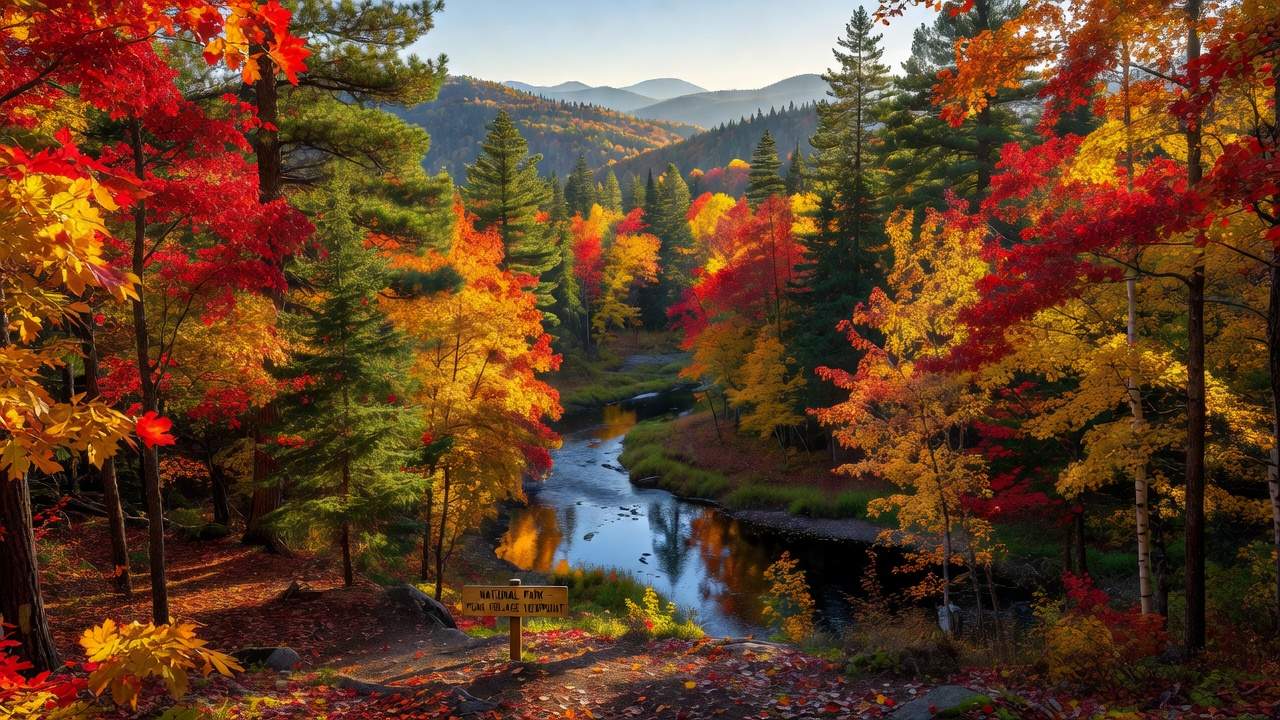
October is the most consequential month on the national parks calendar for anyone who cares about color. The window between peak-and-perfect and bare-and-done at most eastern parks is roughly two to three weeks — and it does not wait for you to get organized. This guide is built around the practical planning information that actually moves the needle: when color peaks at each park, which roads and trails put you in the middle of it, and what the logistics look like on a weekend versus a weekday.
The 12 parks covered here span the full geographic and timing range of fall foliage in North America — from Acadia on the Maine coast, where higher elevations turn in the first week of October, to Yosemite’s Valley floor, where dogwoods and cottonwoods hold color into early November. Understanding the elevation gradient and the difference between eastern hardwood color and western aspen color will help you build a rational itinerary rather than chasing a forecast.
Why Fall Foliage Happens: The Science in Brief
Leaf color change is triggered by a combination of shortening day length and cooling night temperatures. As days shorten in late summer, deciduous trees begin curtailing chlorophyll production — the green pigment that dominates leaf color through the growing season. As chlorophyll breaks down, it reveals underlying pigments (carotenoids, producing yellow and orange) that were always present but masked. Red and purple anthocyanins are synthesized fresh in autumn, responding to bright light and cool temperatures; they are the reason a tree that was green last week can turn crimson rather than simply yellow.
The intensity and timing of color in any given year depends heavily on the ratio of warm days to cold nights in September and early October. A warm, sunny September followed by nights that drop to the 40s Fahrenheit produces the most saturated reds. An early freeze can cut the season short; a warm, cloudy fall produces muted yellows without much red. Drought suppresses color. Rain at peak can accelerate leaf drop and compress the window.
Elevation is the most reliable planning lever. Higher elevations cool faster, trigger earlier chlorophyll breakdown, and typically peak two to three weeks ahead of valley floors at the same latitude. A park that spans from 1,000 feet to 5,000 feet effectively has a rolling foliage season — if you miss peak at the summit, you may still catch it in the coves. This is the defining characteristic of the southern Appalachian parks: the Great Smoky Mountains offer six or more weeks of moving foliage color as the peak descends from high ridges to low hollows.
Western parks substitute aspen groves and riparian cottonwoods for the continuous hardwood canopy of the East. The color is no less dramatic — a hillside of aspens turning gold against a dark spruce backdrop is one of the most striking foliage sights in North America — but it is more concentrated and more dependent on finding the right drainage or ridge.
Planning Strategy Before You Book
Book lodging before you finalize dates. Gateway towns near popular fall parks fill months in advance. This is especially true for Columbus Day weekend (second weekend of October), which is the single busiest foliage weekend in the eastern United States. For any of the parks in this guide, planning a Columbus Day visit without lodging booked months ahead means scrambling for rooms 30 to 60 miles from the park.
Weekdays beat weekends — no exceptions. Parking lots that are full by 9 a.m. on a Saturday often have ample space at the same time on a Tuesday. If you have any scheduling flexibility, a midweek visit at 80 percent of peak color will be a better experience than a weekend visit at 100 percent peak with gridlocked access roads.
Check conditions two weeks out, then one week out. The Smoky Mountains Fall Foliage Map (which also covers parks beyond the Smokies) and the USFS Fall Foliage Prediction Map are the most practical publicly accessible tools. Both update weekly in fall and give regional color status across the United States.
Reservation systems are non-negotiable at several parks. Cadillac Summit Road at Acadia, specific trailheads at Rocky Mountain, and timed-entry windows elsewhere have eliminated the ability to simply show up. Check reservation requirements at each park’s NPS page before your trip.
1. Acadia National Park, Maine
Peak window: Higher elevations (Cadillac Mountain summit, 1,530 ft) — late September to first week of October. Mid-elevation carriage road network — first two weeks of October. Coastal lowlands and Park Loop Road — second to third week of October.
Acadia is the earliest-turning major foliage park in the eastern United States, and the combination of ocean shoreline, granite ridgelines, and hardwood forest makes it visually unlike anywhere else. Birches and aspens on the upper slopes of Cadillac turn first; the interior forest on the carriage road network peaks shortly after; the coastal sections hold color latest.
Best routes and overlooks. The 27-mile Park Loop Road is the primary scenic drive — the one-way ocean section past Sand Beach, Thunder Hole, and Otter Cliffs is spectacular in October color. The carriage road network (45 miles of broken-stone roads, no motorized vehicles) provides the best forest immersion; the Eagle Lake circuit (~6 miles) through dense hardwood is among the best fall rides in New England.
The Cadillac Summit Road reservation. A timed-entry vehicle reservation is required from May 20 through October 25. Reservations are issued through Recreation.gov at a fee of $6 per vehicle (in addition to the park entrance fee). Sunrise slots fill within minutes of the booking window opening — check NPS Acadia for the current release schedule and book immediately when the window opens. Early October, the summit of Cadillac is the first point in the contiguous United States where sunlight reaches the earth each morning.
Weekday vs. weekend. Columbus Day weekend at Acadia is the busiest fall weekend in Maine by a significant margin. Shifting to the first full week of October typically delivers comparable color with noticeably lighter crowds and available parking.
Accessibility. The Park Loop Road is accessible to standard vehicles; major overlooks are reachable from parking pullouts. The paved Cadillac summit loop is navigable for most mobility levels. The NPS Acadia accessibility page has current facility details.
Seasonal logistics. Jordan Pond House (the park’s iconic popover restaurant) closes after Columbus Day weekend. Many Bar Harbor lodging properties close at the same time — verify your property’s operating season when booking. The Island Explorer free shuttle runs through mid-October.
2. Great Smoky Mountains National Park, Tennessee/North Carolina
Peak window: Higher elevations (Clingmans Dome, 6,643 ft) — early to mid-October. Mid-elevation slopes — mid-October. Low-elevation coves and hollows — late October to early November.
Great Smoky Mountains is the most visited national park in the United States and the site of the most extended fall foliage season of any major park. The park spans from roughly 875 feet at its lowest coves to 6,643 feet at Clingmans Dome — an elevation range that produces a rolling six-week foliage window as the color front descends from the high ridges. No entrance fee makes this one of the most accessible parks in the country.
Best routes and overlooks. Newfound Gap Road (US-441), the only paved road crossing the park from Tennessee to North Carolina, provides a comprehensive elevation transect — driving it in early-to-mid October shows multiple stages of the foliage progression simultaneously. Clingmans Dome Road (closed to vehicles in winter, typically accessible through October) climbs to a half-mile walk to the summit tower. Roaring Fork Motor Nature Trail on the Tennessee side winds through lower coves and stream-side forest. Heintooga Ridge Road on the North Carolina side offers solitude and a long ridgeline perspective.
Foliage tracking. The Smoky Mountains Fall Foliage Map is updated weekly through the season and is the most useful publicly available tool for timing a Smokies visit. It shows color status by elevation zone and tracks the descent of peak color week by week.
Weekday vs. weekend. The Smokies receive 12 to 14 million annual visits — more than any other national park. Fall weekends on Newfound Gap Road involve stop-and-go traffic and full parking lots by 9 a.m. at every major overlook. A Tuesday or Wednesday visit transforms the experience.
Accessibility. Newfound Gap Road overlooks are accessible from paved pullouts; Clingmans Dome parking area is accessible; the tower walk (0.5 miles, paved but steep) may be challenging for some mobility levels. Current accessibility details are at NPS Great Smoky Mountains.
Seasonal logistics. Clingmans Dome Road typically closes in November. LeConte Lodge (the backcountry hut atop Mount LeConte) closes after late October.
3. Shenandoah National Park, Virginia
Peak window: Higher elevations along Skyline Drive — early to mid-October. Lower slopes and hollows — mid-to-late October.
Shenandoah is one of the most accessible fall foliage parks in the eastern United States — a 105-mile ridgeline drive along the Blue Ridge, less than 90 minutes from Washington, D.C. Skyline Drive provides 75 overlooks across its length; foliage on the slopes below the ridge and in the hollows of the Shenandoah Valley on both sides is visible from virtually every pullout.
Best routes and overlooks. The full length of Skyline Drive from Front Royal (milepost 0) to Rockfish Gap (milepost 105) is the primary scenic experience. The drive can be done in 3 to 4 hours without stops — plan a full day if you intend to hike from any trailheads. Stony Man Summit (milepost 41) and Hawksbill Mountain (milepost 45) offer the best open summit views. Big Meadows (milepost 51) is the central hub with visitor center, gas, and lodge.
Weekend parking realities. Weekend parking at every major Skyline Drive overlook fills by 10 a.m. during peak foliage. The stretch between mileposts 41 and 53 — covering Stony Man, Skyland, and Big Meadows — is the most congested. Midweek visits or very early morning arrivals (before 8 a.m.) are the practical workarounds.
Accessibility. Skyline Drive overlooks are reachable from paved pullouts. Big Meadows Lodge, Skyland Lodge, and the Byrd Visitor Center are accessible. The NPS Shenandoah accessibility page covers current facility status.
Seasonal logistics. Skyland Lodge and Big Meadows Lodge close in late October or early November — verify dates when booking. The park entrance fee applies year-round; the America the Beautiful annual pass covers it.
4. Cuyahoga Valley National Park, Ohio
Peak window: Late October, typically peaking the last two weeks of the month.
Cuyahoga Valley is the most-visited national park in Ohio and one of the most accessible NPS units in the Midwest — sitting between Cleveland and Akron, with no entrance fee and a remarkable piece of infrastructure for fall foliage: the Cuyahoga Valley Scenic Railroad.
Cuyahoga Valley Scenic Railroad fall excursions. The CVSR operates scheduled excursions through the valley each fall, running through the Cuyahoga River gorge and past the most concentrated stretch of hardwood forest in the park. Fall foliage excursion tickets sell out; book in advance at cvsr.org. The rail corridor follows the gorge bottom, providing upward views into the color that are not replicated from any road in the park.
Best driving routes. Riverview Road runs the length of the valley alongside the Cuyahoga River and the Ohio & Erie Canal Towpath, passing Brandywine Falls (a 65-foot cascade flanked by autumn color) and multiple canal lock remnants. The Towpath Trail — 20 paved miles through the park — is the primary cycling and walking corridor and exceptional in late October color.
Accessibility. The Towpath Trail is paved and flat — among the most accessible trail surfaces of any national park. Brandywine Falls boardwalk is accessible. Full accessibility information at NPS Cuyahoga Valley.
Seasonal logistics. No park entrance fee. The Boston Mill Visitor Center is the main hub. Late October can bring early frost and leaf drop — the window between peak and bare can be compressed in wet, windy years.
5. Rocky Mountain National Park, Colorado
Peak window: Aspens at higher elevations (above 9,000 ft) — late September to early October. Lower elevation aspen groves — early October. Trail Ridge Road typically open through mid-October.
Rocky Mountain’s fall color is aspen-driven — the park’s deciduous tree species is almost entirely aspen, and the golden yellow of aspen groves against dark spruce and fir is one of the defining images of the Colorado high country. The elk rut, which peaks in September and runs into October, adds wildlife viewing to the foliage draw.
Best routes and overlooks. Trail Ridge Road (US-34) crosses the park from Estes Park on the east to Grand Lake on the west, climbing to 12,183 feet — the highest continuous paved road in the United States. Above treeline, the tundra is turning yellow and russet in late September while the aspen groves below are still green or just beginning. Many Elk Park and Moraine Park on the east side provide accessible flat meadows with surrounding aspen-forested slopes and reliable elk activity.
Trail Ridge Road closure. Trail Ridge Road closes in mid-October, typically around October 15, for the season — though the exact date varies by year and snow conditions. Check NPS Rocky Mountain for current road status before planning a late-October visit.
Timed-entry reservations. Rocky Mountain requires timed-entry reservations at the Bear Lake Road Corridor and the park’s main entrance during peak periods. The fall reservation system is separate from the summer one — verify current requirements at the NPS site before your visit. Reservations are issued through Recreation.gov.
Accessibility. The Bear Lake area has paved accessible paths to the lake shore. Trail Ridge Road pullouts are accessible from the road. Current accessibility details at NPS Rocky Mountain.
Seasonal logistics. Lodging in Estes Park books out months in advance for late September foliage weekends. Many Estes Park properties and park campgrounds close in mid-October.
6. Glacier National Park, Montana
Peak window: Western larch at Highline Trail and Avalanche Creek area — late September to early October. Going-to-the-Sun Road typically closes mid-October.
Glacier’s fall foliage is defined by one species that doesn’t get enough attention: the western larch. Unlike most conifers, larches are deciduous — and when they turn, the needles go brilliant gold in late September, painting the upper slopes with color that reads from miles away. The combination of gold larch groves against dark evergreen forest, alpine lakes, and snowcapped peaks is extraordinary.
Best routes and overlooks. Going-to-the-Sun Road is the signature drive — 50 miles across the Continental Divide at Logan Pass. In late September, the upper sections near Logan Pass show the larch turn while Going-to-the-Sun is still accessible; by mid-October the road typically closes above Avalanche Creek on the west side. The Highline Trail from Logan Pass is the premier day hike for views of larch-covered slopes with the Garden Wall above. Avalanche Creek Trail (west side) is a short, easy walk through ancient cedar-hemlock forest with excellent larch color on the slopes above.
Going-to-the-Sun Road closure. The road closes progressively from the outer sections inward beginning in mid-September, with the full closure typically occurring in mid-October. Check NPS Glacier for the current closure schedule — it varies significantly by year based on snow. Driving the road after early October may require checking conditions daily.
Accessibility. The Trail of the Cedars at Avalanche Creek is fully paved and accessible. Logan Pass visitor center is accessible. Detailed accessibility information at NPS Glacier.
Seasonal logistics. Most park lodges (Many Glacier Hotel, Lake McDonald Lodge, Village Inn) close in early to mid-October. The park’s west-side campgrounds close similarly. Apgar Village and West Glacier have some year-round services. Glacier has no entrance fee during the off-season — the entrance fee window closes in early fall; verify dates at the NPS site.
7. Grand Teton National Park, Wyoming
Peak window: Cottonwoods and aspens — late September to first week of October. Elk rut bonus — same window.
Grand Teton’s fall is short, sharp, and spectacular. The aspens in Cascade Canyon and on Teton hillsides turn brilliant yellow in late September; the cottonwoods along the Snake River bottoms peak shortly after. The Teton Range as backdrop, with first snow dusting the peaks, produces the classic early-October composition that fills photography workshop schedules for the entire month.
Best routes and overlooks. Teton Park Road south from Jenny Lake provides a corridor of aspen-covered foothills against the Teton Range. Mormon Row (the historic homestead row in Antelope Flats, approached from the east side of the park via Antelope Flats Road) offers classic cottonwood-lined ditch views with the Tetons rising behind. The Oxbow Bend pullout on the Snake River is one of the most consistently photographed spots in any national park — in late September, cottonwoods rim the bend in gold.
Elk rut. The elk rut peaks in mid-September and extends into early October. Bulls are bugling through the forest before dawn; meadows near Elk Ranch Flats and the meadows south of Moran Junction are reliable observation spots. This is a legitimate wildlife experience that adds significant value to a late-September visit.
Accessibility. Teton Park Road is accessible by vehicle; Mormon Row road is packed gravel, navigable by most standard vehicles. Oxbow Bend pullout is accessible from the road. Detailed information at NPS Grand Teton.
Seasonal logistics. Teton Park Road closes to vehicles in November; most services in Jackson close or reduce hours in October. Jackson town has year-round amenities. Lodging in Jackson books aggressively in late September — the combination of foliage, elk rut, and early-season skiing makes this a competitive window.
8. Yellowstone National Park, Wyoming
Peak window: Cottonwoods and aspens in Lamar Valley and along the Yellowstone River — late September.
Yellowstone is not a primary foliage destination — the park is dominated by conifers, and deciduous color is more accented than panoramic. But the cottonwoods and aspens in Lamar Valley (the northeast corner of the park) turn golden in late September, and the combination of fall color, thermal features, bison herds, and wolf activity makes a late-September Yellowstone visit among the best wildlife experiences in North America.
Best routes and overlooks. The Northeast Entrance Road through Lamar Valley is the primary fall color corridor. The valley is also Yellowstone’s best wolf-watching area — packs are regularly visible from the road. Bison herds concentrate in the valley in fall. The Grand Loop Road between Mammoth Hot Springs and Tower-Roosevelt passes through open sagebrush flats with cottonwood draws and limited aspen groves.
Foliage context. If fall color is your primary goal at Yellowstone, combine it with a Grand Teton visit — the Tetons, 60 miles south, offer better foliage and the same general Wyoming wildlife context. Yellowstone’s fall value is the thermal landscape plus wildlife plus incidental color, not foliage as the main event.
Accessibility. The Grand Loop Road is fully accessible by vehicle; major geyser basins have accessible boardwalks. Detailed accessibility information at NPS Yellowstone.
Seasonal logistics. Most Yellowstone lodges close after early October. The park entrance fee applies year-round; check the current fee schedule at NPS Yellowstone.
9. Yosemite National Park, California
Peak window: Valley floor dogwoods and cottonwoods — late October to early November. Tioga Pass closes in mid-to-late October.
Yosemite’s fall foliage is Valley-floor color, not the sweeping hillside panoramas of eastern parks. Black oaks, bigleaf maples, dogwoods, and cottonwoods along the Merced River and in the Valley meadows turn yellow and orange in late October — a subtle color that is framed against the vertical granite walls and waterfalls of Yosemite Valley. It is quieter than spring and summer, the air is clear, and the Valley crowds are dramatically reduced.
Best routes and overlooks. Yosemite Valley drive along Northside and Southside Drive is the primary scenic corridor. The meadow at El Capitan Meadow has cottonwoods along the Merced River with El Capitan as backdrop. Sentinel Bridge over the Merced offers the classic Half Dome reflection shot; the surrounding meadow has bigleaf maples in late October color. Cook’s Meadow Loop is a flat walk through Valley meadow with color on the valley walls above.
Tioga Pass (CA-120) closure. Tioga Road, the trans-Sierra highway crossing the park at 9,945 feet, typically closes in mid-to-late October, sometimes earlier after early-season snowfall. Check NPS Yosemite for current road status. The Valley is accessible year-round; Tioga closure has no effect on a Valley fall visit.
Timed entry. Yosemite has used a timed-entry reservation system during peak periods. Verify whether fall timed entry is required for your dates at the NPS Yosemite site before visiting — the system has been modified year to year.
Accessibility. Yosemite Valley has the most comprehensive accessible trail network of any park in the Sierra Nevada. The Valley Loop (paved), Bridalveil Fall path, and Valley Visitor Center are accessible. Detailed information at NPS Yosemite.
Seasonal logistics. Ahwahnee Hotel and Yosemite Valley Lodge operate year-round. Tuolumne Meadows facilities close in October. Curry Village closes in winter.
10. New River Gorge National Park and Preserve, West Virginia
Peak window: Late October, typically the last week of the month.
New River Gorge was designated a national park in 2020, the first new full national park in nearly two decades. The gorge sits in the Allegheny Plateau — hardwood forest on the rim and slopes above a Class III-V whitewater river. In late October, the mixed hardwood canopy turns, and the combination of deep gorge topography and saturated color makes for dramatic aerial and overlook views.
Best routes and overlooks. Canyon Rim Trail (easy, 2.1 miles) along the gorge rim provides the most accessible overlook views without a vehicle reservation. The New River Gorge Bridge — the longest single-span steel arch bridge in the Western Hemisphere — is the visual centerpiece of the park; views from below (from the gorge floor via Grandview Road) and from the Canyon Rim Visitor Center parking area are the primary orientations. Grandview overlook on the north rim provides the most expansive upriver view of the gorge.
Bridge Day. The third Saturday of October is Bridge Day — a West Virginia state festival when the New River Gorge Bridge is closed to vehicle traffic and opened to pedestrians, base jumpers, and rappellers. In 2024, Bridge Day falls on October 19. This is the highest-profile event in the park’s calendar — expect significant crowds in the immediate area; plan the gorge itself for different days during a Bridge Day visit.
Accessibility. Canyon Rim Trail has accessible sections; Grandview visitor area is accessible. Detailed information at NPS New River Gorge.
Seasonal logistics. No entrance fee. The park has limited overnight lodging within NPS boundaries; Beckley and Fayetteville have the nearest hotel options.
11. Indiana Dunes National Park, Indiana
Peak window: Mid-October.
Indiana Dunes sits on the southern shore of Lake Michigan, 50 miles east of Chicago — the most accessible national park to the Midwest’s largest metro area. The park’s combination of sand dunes, oak savanna, and wetland forest produces a modest but accessible mid-October foliage display. For Chicago-area visitors who want a national park fall experience without a multiday trip, Indiana Dunes delivers.
Best routes and overlooks. Mount Baldy (the park’s largest active dune at 126 feet) is the signature landmark — foliage on the Oak Forest south of the dune provides color contrast against the white sand. Cowles Bog Trail (4.7 miles) winds through dune swale forest with October color. West Beach is the most accessible section for general visitors, with restrooms and a paved trail access.
Accessibility. Pavilion Picnic Area at West Beach has accessible facilities. Several accessible trail loops are available. Detailed information at NPS Indiana Dunes.
Seasonal logistics. No entrance fee. Most park facilities operate year-round. Fall weekends bring Chicago-area day visitors — midweek visits are noticeably lighter.
12. Mammoth Cave National Park, Kentucky
Peak window: Mid-October.
Mammoth Cave is primarily a cave destination — the world’s longest known cave system at over 400 mapped miles. But the surface park encompasses 53,000 acres of mixed hardwood forest on the Green River plateau, and mid-October delivers solid foliage across the trails and Green River bottomlands.
Best routes and overlooks. The Heritage Trail (5 miles, moderate) loops from the visitor center through forest and along the cave ridge. The River Styx Spring overlook near the historic entrance provides a view into the cave system’s outflow — in October, the surrounding forest is in full color. Green River Ferry Road (a short scenic road to the historic ferry crossing) passes through bottomland hardwoods at late-October color.
Cave tours. Mammoth Cave’s guided cave tours operate year-round and are independent of surface foliage conditions. The Historic Tour, Violet City Lantern Tour, and Domes and Dripstones Tour are the most popular fall options. Book cave tours well in advance through Recreation.gov — fall tours sell out.
Accessibility. The Frozen Niagara cave tour route is the most accessible; it involves paved paths and is available to most mobility levels. Heritage Trail has accessible sections. Detailed information at NPS Mammoth Cave.
Seasonal logistics. No entrance fee (cave tour fees apply). Lodge at Mammoth Cave operates year-round; cabins are available through mid-fall.
Foliage Tracking Resources
The tools below are the most practically useful for timing a fall park visit:
- Smoky Mountains Fall Foliage Map — Updated weekly through fall; covers all eastern parks and many western ones. The most broadly useful publicly available foliage tracker.
- NPS park-specific conditions pages — Each park’s NPS page has a “Conditions” section updated by park staff. This is the authoritative source for road closures, trail conditions, and reservation requirements.
- Recreation.gov — Required for Cadillac Summit Road reservations, Rocky Mountain timed entry, Mammoth Cave tours, and many campground bookings.
- NPCA.org — National Parks Conservation Association; advocacy and park-specific news.
Frequently Asked Questions
When is the earliest fall foliage at any national park?
Acadia and the northern parks — particularly at higher elevations — typically show the earliest color, with high-elevation Acadia peaks turning in the last week of September. Rocky Mountain aspens also turn in late September. Most eastern parks reach mid-elevation peak in mid-October.
Which national parks have the longest foliage season?
Great Smoky Mountains has the most extended foliage season of any major national park, with color moving from the highest elevations in early October down to the lowest coves in late October and early November — a window of roughly six weeks. The park’s 5,000-foot elevation range drives this extended season.
Do western national parks have fall foliage?
Yes, but the character is different from eastern hardwood forests. Western parks depend on aspen groves and riparian cottonwoods rather than continuous hardwood canopy. Rocky Mountain, Grand Teton, Glacier (western larch), and Yellowstone all offer significant fall color — concentrated in specific drainages and grove areas rather than covering entire hillsides.
Can I do fall foliage at national parks with limited mobility?
Yes. All 12 parks in this guide have accessible options — either paved scenic drives with accessible pullouts, accessible rail experiences (Cuyahoga Valley Scenic Railroad), or flat paved trails. Parks with the best accessible foliage experiences include: Shenandoah (Skyline Drive overlooks), Great Smoky Mountains (Newfound Gap Road pullouts), Cuyahoga Valley (Towpath Trail and CVSR), and Yosemite (Valley floor paved paths). Check each park’s NPS accessibility page for current conditions.
What is the best national park for fall foliage overall?
There is no single answer — the best choice depends on where you are, when you can travel, and what experience you are seeking. For guaranteed peak color in a compact window with no entrance fee: Great Smoky Mountains in mid-October. For scenic driving without crowds: Shenandoah on a weekday in mid-October. For the most dramatic East Coast combination of foliage plus distinctive landscape: Acadia in the first two weeks of October. For western aspen color at high altitude: Rocky Mountain in late September.
Plan your fall visit using the official NPS websites for each park. Road closure dates and reservation requirements change year to year — always verify current conditions before you go. For visitors planning around Great Smoky Mountains or Shenandoah, both parks also deliver exceptional spring color — trilliums, lady’s slipper orchids, and Appalachian spring ephemerals in April and early May. See the spring wildflowers guide for bloom windows and trail details. For ongoing national park news and conservation updates, visit NPCA.org.