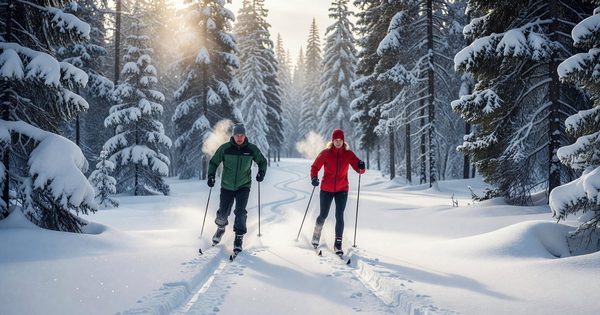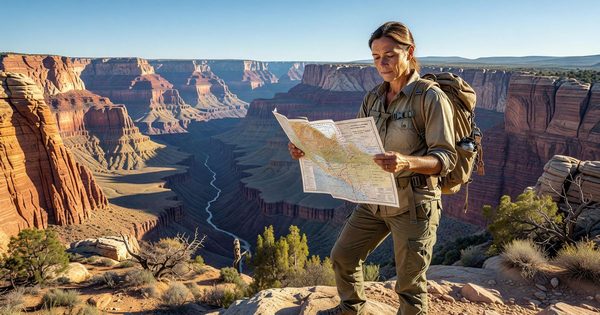
December is one of the most misunderstood months in the national parks calendar. The general assumption — that parks shut down for winter, or become dangerous, or are simply not worth the trip — is wrong in most cases. The majority of US national parks are open 365 days a year. What actually changes in December is more specific: visitor centers reduce hours or close on Christmas Day and New Year’s Day, some in-park lodges suspend operations, and a handful of seasonal roads close in snow country. For visitors who do the homework in advance, December offers something summer cannot: the same parks with a fraction of the crowds.
There is one important nuance. December is not uniformly quiet. The weeks of December 1 through 18 are genuinely off-peak — parking lots that held a thousand cars in July hold a hundred, and popular trails are nearly empty. The weeks of December 19 through January 2 are different. School breaks in most US districts run from roughly December 19 through January 2, and that window produces a concentrated family-visit surge at the most accessible and family-oriented parks. If you are trying to avoid crowds, the first three weeks of December are your window. If your visit falls over Christmas or New Year’s, plan with the same reservation discipline you would bring to a summer trip.
Below is a ranked guide to the parks that reward a December visit — honest about what’s open, what’s closed, and what the experience actually looks like on the ground.
1. Grand Canyon National Park, Arizona (South Rim)
The South Rim of the Grand Canyon is open every day of the year. The park entrance stations operate 24 hours; the main visitor center at Grand Canyon Village maintains reduced winter hours but is typically open daily. The one exception: most visitor centers across the NPS system are closed on Christmas Day (December 25). The South Rim Visitor Center follows this pattern — check nps.gov/grca for confirmed hours in the year of your visit, as NPS operational schedules are updated annually.
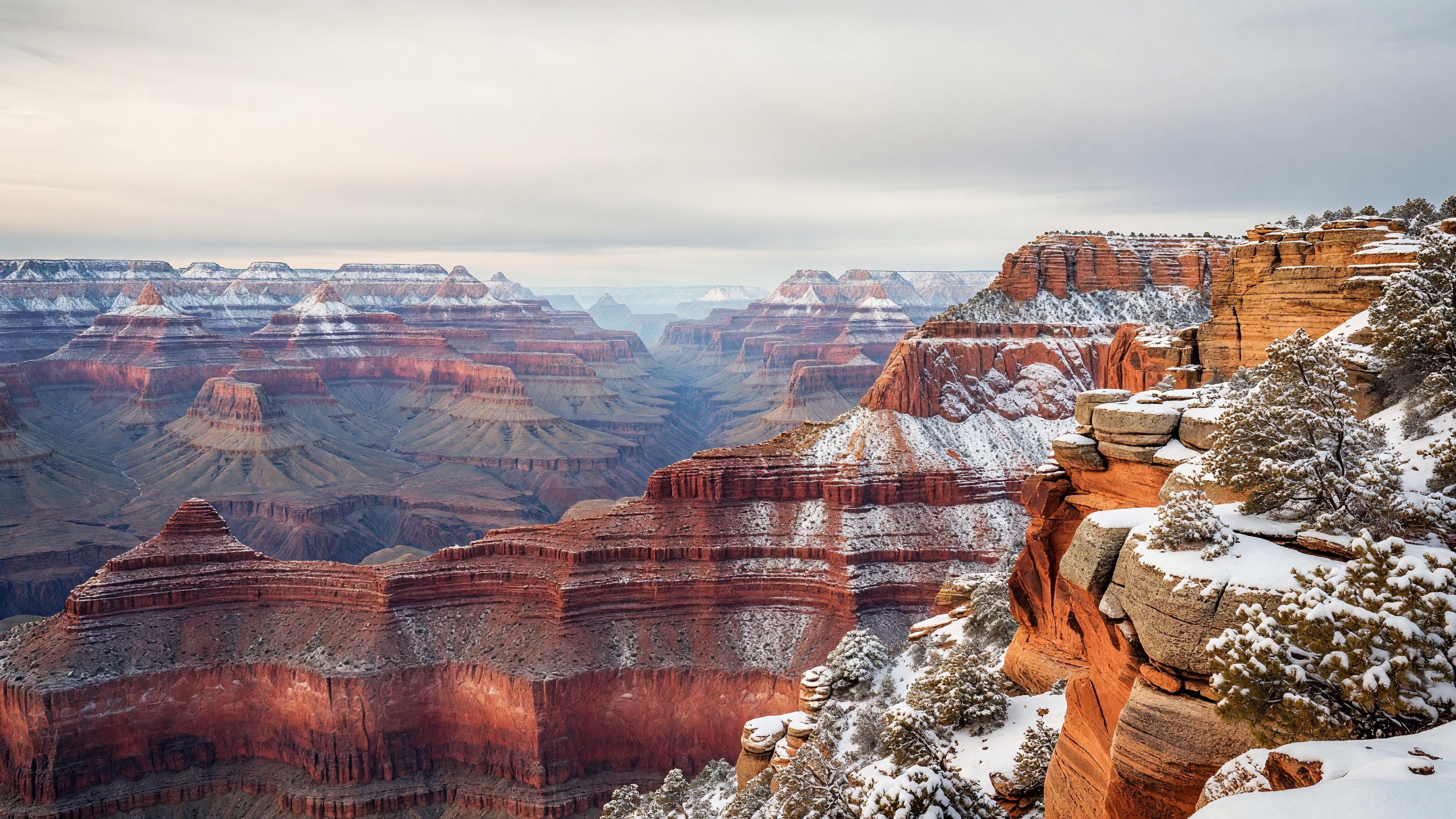
What makes December special here: Snow on the South Rim — which sits at roughly 7,000 feet — against the red-and-ochre canyon walls below creates a visual contrast that no other season provides. The canyon interior, sitting 5,000 feet lower, typically stays dry or receives only light precipitation during the same storms that deposit 2 to 6 inches of white on the rim. In December and January, you can stand at Mather Point in ankle-deep snow while looking down at a desert canyon floor. It is genuinely unusual.
Lodging: Bright Angel Lodge and El Tovar Hotel are both open year-round. El Tovar, the park’s most historic property (opened 1905), does not close for winter — a misconception that circulates online. Both properties are operated by Xanterra Travel Collection; reservations through xanterra.com open 13 months in advance. El Tovar books out quickly for the holiday window (Dec 19–Jan 2) — if you want a room there over Christmas week, 13-month advance booking is not an exaggeration. The weeks of December 1–18 are much easier to book on shorter notice.
Hermit Road: During the summer season, the 7-mile west section of Hermit Road is closed to private vehicles and served by free shuttle buses. In December, this restriction is lifted — private vehicles can drive the full road from December through February, including viewpoints at Hopi Point and Pima Point that are shuttle-only in summer. This is a meaningful upgrade to the December visit.
Accessibility: The Rim Trail between Mather Point and Hermit’s Rest is paved and generally wheelchair accessible, though icy patches form after snowfall and can persist in shaded sections. Microspikes are advisable for anyone with traction concerns.
2. Death Valley National Park, California
Death Valley’s appeal in December is straightforward: daytime temperatures at the valley floor typically run 65°F to 75°F, making it some of the finest walking weather in the country while the rest of the nation is dealing with cold. Badwater Basin (elevation −282 feet, the lowest point in North America), Zabriskie Point, Golden Canyon, and Mosaic Canyon are all accessible and excellent in December light.
Christmas Eve at Badwater: The annual tradition of watching sunset at Badwater on Christmas Eve draws a small but consistent crowd. The winter sun drops behind the Panamint Range to the west and sends long raking light across the salt flat — a setting so stark and beautiful that it has its own low-key fan base among desert photographers. There are no crowds by any other park’s standards; you might share the salt flat with 30 to 50 people.
Dark skies: Death Valley holds a Gold Tier designation from the International Dark-Sky Association, the highest designation IDA issues. December’s longer nights and generally stable desert air make this one of the best dark-sky windows in the park calendar. If you are combining a Death Valley visit with any stargazing, December nights at Mesquite Flat Sand Dunes or Eureka Dunes are exceptional.
Super-bloom preview: Death Valley’s famous spring wildflower blooms — which in high-rainfall years draw visitors from across the country — are seeded by the winter precipitation events of November through January. December is the month to watch: the NPS publishes a wildflower forecast page that tracks soil moisture and precipitation as the season develops. A wet December is one indicator of a strong February–April bloom.
Holiday hours: The Furnace Creek Visitor Center typically closes on Christmas Day. Check nps.gov/deva for confirmed hours. The park itself remains open; the roads, trails, and backcountry are accessible regardless of visitor center status.
3. Yosemite National Park, California
Yosemite Valley is accessible year-round via Highway 140 from Merced (the all-weather approach that avoids the chain-control zones that affect Highways 41 and 120). The valley floor — El Capitan, Half Dome, Yosemite Falls, Bridalveil Fall, and the meadows — is open and navigable in December with appropriate tire preparations.
Badger Pass Ski Area: This is the only NPS-operated downhill ski area in the Sierra Nevada park system, located on Glacier Point Road. Badger Pass typically opens in mid-December when snowpack permits, with four lifts, nine runs, and a ski school. Season and conditions are snowpack-dependent — check the Badger Pass page before planning a ski day, as low-snowpack years have produced shortened or canceled seasons.
Glacier Point Road cross-country skiing: After approximately December 15, Glacier Point Road above the Badger Pass junction is groomed for cross-country skiing and snowshoeing — one of the most scenic XC routes in any national park. The grooming is done by Yosemite Conservancy in coordination with NPS. Glacier Point itself (elevation 7,214 feet) offers one of the most iconic views in the park system: Half Dome and Nevada Fall framed above a snow-covered valley.
The Bracebridge Dinner: The Ahwahnee Hotel hosts its annual Bracebridge Dinner each December — a theatrical medieval-feast tradition that has run continuously since 1927. The dinner typically runs for multiple nights in December (historically around 17 seatings) and is one of the most sought-after reservations in the national park system. Tickets are distributed by lottery in the fall through the park concessioner’s website (travelyosemite.com). Walk-in tickets do not exist. If you are interested, check the concessioner’s events page in late summer or early fall for that year’s lottery window.
Crowd reality: Yosemite Valley during the Dec 19–Jan 2 window is legitimately busy. A timed-entry reservation system for peak periods has operated in recent years; check nps.gov/yose for the current year’s requirements. The weeks of December 1–18 are genuinely quiet — parking at Valley View and Tunnel View is straightforward, and the trails are empty by summer standards.
4. Yellowstone National Park, Wyoming
Yellowstone’s December access is fundamentally different from any other park on this list: the main interior road system is closed to wheeled vehicles from approximately November through mid-April. The only year-round car-accessible corridor is the North Entrance at Gardiner, Montana, through Mammoth Hot Springs and east to Cooke City — roughly 50 miles of road that stays plowed because it is also the only winter access to Cooke City.
Why come in December: That Gardiner-to-Cooke City corridor through the Lamar Valley is one of the great wildlife-watching drives in North America. In December, wolf packs are active and visible, bison herds concentrate in the valley after deeper-interior snowpack pushes them toward lower elevations, and eagles work the river corridor. The thermal features at Mammoth Hot Springs — a terraced limestone landscape fed by geothermal springs — are accessible by car year-round and photograph uniquely in cold, when steam creates frost and ice formations on the terraces.
Oversnow access: From late December through early March, Yellowstone’s interior opens exclusively via snowcoach and snowmobile through authorized concessioners. The two NPS-authorized operators are Xanterra Travel Collection (operating as Yellowstone National Park Lodges) and Yellowstone Vacation Tours, both departing from West Yellowstone. Snowcoach tours reach Old Faithful and the Canyon area. These tours book weeks to months ahead for peak winter weekends — see nps.gov/yell for current operator contacts and season dates.
5. Big Bend National Park, Texas
Big Bend’s winters are mild by virtually any standard: December daytime temperatures at river elevation typically reach the 60s to low 70s Fahrenheit, with nights dropping to the 30s in the Chisos Basin (elevation 5,400 feet) and warmer at Rio Grande Village. The entire park is accessible, including Santa Elena Canyon, the Ross Maxwell Scenic Drive, and the Chisos Mountains basin loop.
Rio Grande Village Hot Springs: A short hike from Rio Grande Village campground leads to a natural hot spring along the Rio Grande riverbank. The springs are open and accessible. Note: the NPS periodically adjusts access to this area due to border management considerations; verify current access at nps.gov/bibe before your visit, as conditions can change.
Dark skies: Big Bend holds a Gold Tier International Dark-Sky Association designation. December’s long nights and the park’s extreme remoteness (it is the largest dark-sky preserve in the lower 48) make this an exceptional stargazing destination. The Milky Way core is not visible in December (it rises in late winter–spring), but the winter night sky — Orion, the Pleiades, and the Andromeda galaxy visible to the naked eye — is excellent.
6. Joshua Tree National Park, California
Joshua Tree’s December conditions are ideal: cool desert days in the 50s to 60s Fahrenheit, cold nights at the park’s upper elevations (3,000 to 5,400 feet), and the characteristic low winter sun that produces the best light the park’s quartz monzonite boulder formations ever see.
Holiday camping: Indian Cove Campground and Jumbo Rocks Campground are both open and popular during the holiday break window (Dec 19–Jan 2). These are two of Joshua Tree’s most scenically positioned campgrounds. Sites should be reserved well in advance for this window at recreation.gov; Joshua Tree’s campsite demand during the holiday week rivals some summer weekends.
Rock climbing: The climbing community concentrates at Joshua Tree in winter — summer temperatures at the park’s lower-elevation crags make technical climbing impractical. Hidden Valley, Wonderland of Rocks, and the Saddle Rocks area are accessible and populated with climbers from December through March.
7. Everglades National Park, Florida
December marks the beginning of the Everglades’ dry season, which runs November through April. This timing is significant for wildlife viewing: as the dry season progresses, shallow-water wetlands contract around remaining water sources, concentrating wading birds, alligators, and fish in increasingly dense aggregations. By late December, the process is underway — the anhinga trail and Eco Pond are both productive.
The Anhinga Trail, accessible from Royal Palm Visitor Area, is one of the most reliably productive wildlife walks in any national park regardless of season. In December it is excellent: anhingas, herons, egrets, roseate spoonbills, and alligators are reliably present within a short walk of the trailhead. The park’s extensive mangrove network is accessible by kayak and canoe from several launch points within the park.
8. Saguaro National Park, Arizona
Saguaro’s two districts — the Rincon Mountain District east of Tucson and the Tucson Mountain District to the west — are open year-round. December daytime temperatures in Tucson typically reach the mid-60s Fahrenheit, making this one of the most accessible desert park visits in the system for visitors from cold-weather climates.
The saguaro cactus groves are best photographed in winter light: the low sun angle produces long shadows from the tall columnar cactus forms, and the absence of summer-monsoon haze means long-range clarity across the Rincon and Tucson mountain ranges. Both district visitor centers are open; verify holiday-day hours at nps.gov/sagu.
9. Hawaii Volcanoes National Park, Hawaii
Hawaii Volcanoes is open year-round and operates on a 24-hour basis, as volcanic activity does not respect business hours. The park encompasses two active volcanoes — Kīlauea and Mauna Loa — on the Big Island of Hawaii.
Kīlauea: Halemaʻumaʻu crater, within the park’s summit caldera, has been the site of intermittent lava lake activity in recent years. Activity status changes — sometimes over days — and the NPS posts updates at nps.gov/havo and at the USGS Hawaiian Volcano Observatory. December visits can coincide with active eruptions, but no specific eruptive activity can be guaranteed for any visit window. The park is worth visiting regardless of activity status: the Crater Rim Drive viewpoints, Thurston Lava Tube (Nāhuku), and the Kahuku section of the park are compelling independent of eruption status.
10. Acadia National Park, Maine
Acadia is open year-round, but December access is significantly different from summer. The Park Loop Road — the 27-mile paved circuit that passes Sand Beach, Thunder Hole, and Otter Cliffs — closes to vehicles on December 1 (or thereabouts; the exact closure date varies by year and is announced at nps.gov/acad). After closure, the road is accessible on foot, by snowshoe, and by cross-country ski.
The 45-mile carriage road network — the broken-stone roads built by John D. Rockefeller Jr. and donated to the park — remains open for winter travel and provides excellent snowshoeing and skiing when snow conditions permit. Most December visitors find the park remarkably quiet: the summer population of Bar Harbor (which hosts over 3 million park visitors annually) drops from tens of thousands daily to the year-round community of roughly 5,000. Most lodging in Bar Harbor is closed for the season; book the handful of open properties in advance.
11. Great Smoky Mountains National Park, Tennessee / North Carolina
Great Smoky Mountains has no entrance fee — one of its unique characteristics in the national park system — and no timed-entry reservation requirement. These two facts combine with the school-break timing to make it genuinely crowded during December 19–January 2. The park’s proximity to major southeastern population centers (Atlanta, Charlotte, Knoxville, Nashville) means the holiday-week visitor surge is real and concentrated at the most accessible entry points.
When it’s worth it: The weeks of December 1–18 are excellent. Cades Cove — a historic valley with open meadows, log cabins, and reliable white-tailed deer and wild turkey viewing — is accessible and quiet on a December weekday. Newfound Gap Road (US-441) through the park is maintained year-round except during active snow events. Clingmans Dome Road closes December 1 and reopens April 1, but Newfound Gap itself (elevation 5,046 feet) remains accessible and provides dramatic ridgeline views year-round.
No-fee note: The absence of an entrance fee makes the America the Beautiful Pass less relevant here than at other parks on this list — though the pass still covers fee-required facilities within the park complex.
12. Indiana Dunes National Park, Indiana
Indiana Dunes sits on the southern shore of Lake Michigan, roughly an hour east of Chicago. December and January produce the park’s most striking visual feature: ice formations on the lakeshore. As wave action freezes on the beach and rock outcroppings in sustained cold, the dunes develop ice ridges, shelf ice, and — in severe cold years — ice sheets extending onto the lake surface that create a landscape unlike any summer version of the same beach.
The winter beachscape at Indiana Dunes is one of the more undervisited experiences in the national park system. Trails are generally open year-round; the visitor center on US-12 maintains winter hours. Check nps.gov/indu for current road and trail conditions.
Holiday Hours: What Actually Closes on December 25 and January 1
NPS policy is consistent across the system: parks themselves remain open on holidays — the land, trails, and roads do not close. What closes are visitor centers and fee-collection booths. On December 25 and January 1:
- Visitor centers are typically closed or operate reduced hours
- Entrance fee collection is often suspended (you can enter without paying, though the America the Beautiful Pass is honored regardless)
- Concessioner-operated facilities (restaurants, gift shops, some lodges) may close for those specific days independently of NPS decisions
Verify the specific status of visitor centers and concessioner facilities for your destination at nps.gov/findapark — each park posts its own holiday-hours notices. Do not assume a closed visitor center means a closed park.
In-Park Lodging in December: What’s Open and What Isn’t
In-park lodge availability in December is more variable than any other month. The general pattern: concessioners operating seasonal parks (those with primary summer or fall visitation) close lodge operations between November and April. Concessioners at year-round parks — Grand Canyon, Death Valley, Yellowstone (limited) — maintain winter operations.
Open year-round:
- Grand Canyon South Rim: El Tovar, Bright Angel Lodge, Maswik Lodge, Yavapai Lodge (Xanterra)
- Death Valley: The Oasis at Death Valley (Ranch and Inn) and related properties (Oasis at Death Valley)
- Yosemite: The Ahwahnee, Yosemite Valley Lodge, Curry Village (limited cabins), Wawona Hotel (Aramark)
- Big Bend: Chisos Mountains Lodge (Forever Resorts)
Seasonal — typically closed November–April:
- Crater Lake Lodge (Crater Lake): Closes in October; opens late May
- Many Glacier Hotel (Glacier): Closes September
- Most North Rim facilities (Grand Canyon): Closed mid-October through mid-May
Xanterra and other concessioners publish closure calendars on their respective booking sites. The NPS maintains a lodging overview page linking to each park’s concessioner. Book early for open properties in the Dec 19–Jan 2 window; book any time for the quieter first three weeks of December.
The America the Beautiful Pass as a Holiday Gift
The America the Beautiful Interagency Annual Pass costs $80 and covers entrance for the pass holder plus up to three additional adults at all fee-required federal lands — national parks, national forests, BLM areas, and more — for 12 months from first use. It is widely available at park entrance stations or through the USGS store.
For a family planning even two or three national park visits in the year ahead, the math is clear: Grand Canyon entrance is $35 per vehicle; Yosemite is $35; Yellowstone is $35. Two visits pays for the pass. It makes a practical and genuinely useful holiday gift for anyone planning an outdoor trip in the year ahead — one of the few physical gifts that reliably earns its shelf space.
Frequently Asked Questions
Are national parks open on Christmas Day?
Yes. National parks — the land, trails, and roads — are open on Christmas Day. What typically closes are visitor centers and entrance fee booths. Concessioner-operated facilities (restaurants, gift shops, some lodge dining rooms) may also close on December 25 at their own discretion. Verify specific visitor center and concessioner hours at each park’s NPS page before your trip.
Which national parks are the most crowded during the December holiday break?
The Dec 19–Jan 2 school-break surge concentrates at easily accessible, family-oriented parks near major population centers. Great Smoky Mountains (accessible from Atlanta, Charlotte, and Knoxville), Grand Canyon South Rim, Joshua Tree, Yosemite Valley, and Zion are the parks where the holiday-week crowd reality most closely resembles a summer visit. Death Valley, Big Bend, and Indiana Dunes see increases but remain manageable relative to summer peaks.
Do I need a reservation to visit national parks in December?
For most parks and most of December, no. Timed-entry reservation systems at parks like Yosemite, Arches, and Glacier are generally not active outside peak summer and fall windows — but this changes. Verify current reservation requirements at nps.gov for each specific park before your visit. Campsite reservations at Recreation.gov are recommended for the holiday window at Joshua Tree and Great Smoky Mountains.
What is the best national park to visit in December with kids out of school?
For families, the Dec 19–Jan 2 window works best at parks where you can plan around the crowds: Grand Canyon South Rim (where Hermit Road is open to private vehicles in December, improving access compared to summer), Death Valley (mild temperatures, no chains required at valley elevation, genuinely uncrowded even in the holiday week), and Everglades (cool, wildlife-rich dry season at its early stages). All three have accessible viewpoints and shorter trails appropriate for varied age groups.
Is December a good time to buy an America the Beautiful Pass?
Yes. If you are purchasing the pass as a holiday gift or to use on a December park visit, buy it before first use — the 12-month clock starts at first use, not purchase. A pass purchased in December and first used in January gives you a full year running through January. For full details on pass variants, free versions for veterans and seniors, and what is covered, see our complete America the Beautiful Pass guide.
Do in-park lodges close for winter?
Many do, particularly at parks where visitation drops sharply after October. But the most iconic in-park lodges — El Tovar at Grand Canyon, The Ahwahnee at Yosemite, Chisos Mountains Lodge at Big Bend — operate year-round. Check the relevant concessioner’s booking site for specific closure dates; Xanterra publishes a lodge closure calendar. Book early for open properties during Dec 19–Jan 2.
The National Park Conservation Association publishes advocacy updates, park access reports, and policy coverage at npca.org — a useful resource for tracking funding and access changes that affect December-and-winter park operations across the system.
For the broader winter park picture beyond December — including Bryce Canyon’s snow-mantled hoodoos, Crater Lake’s massive snowpack, and the full gear and driving considerations for snow-country parks — see our complete winter parks guide.