Tuesday, August 25, 2026 is the National Park Service’s 110th birthday, and the agency has designated it a fee-free day. It is also the midpoint of National Park Week, which the Park Service has scheduled for August 22–30 this year under the theme “Celebrate America’s Story,” timed to the country’s 250th anniversary rather than the usual April slot.
A fee-free day sounds simpler than it is. It waives one specific charge, at a minority of park units, for a narrower group of visitors than in past years. Knowing which of those applies to your trip is the difference between a genuinely free park day and an unpleasant surprise at a reservation window.
What the waiver actually covers
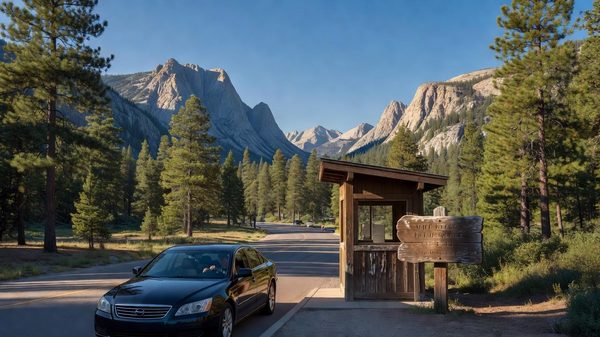
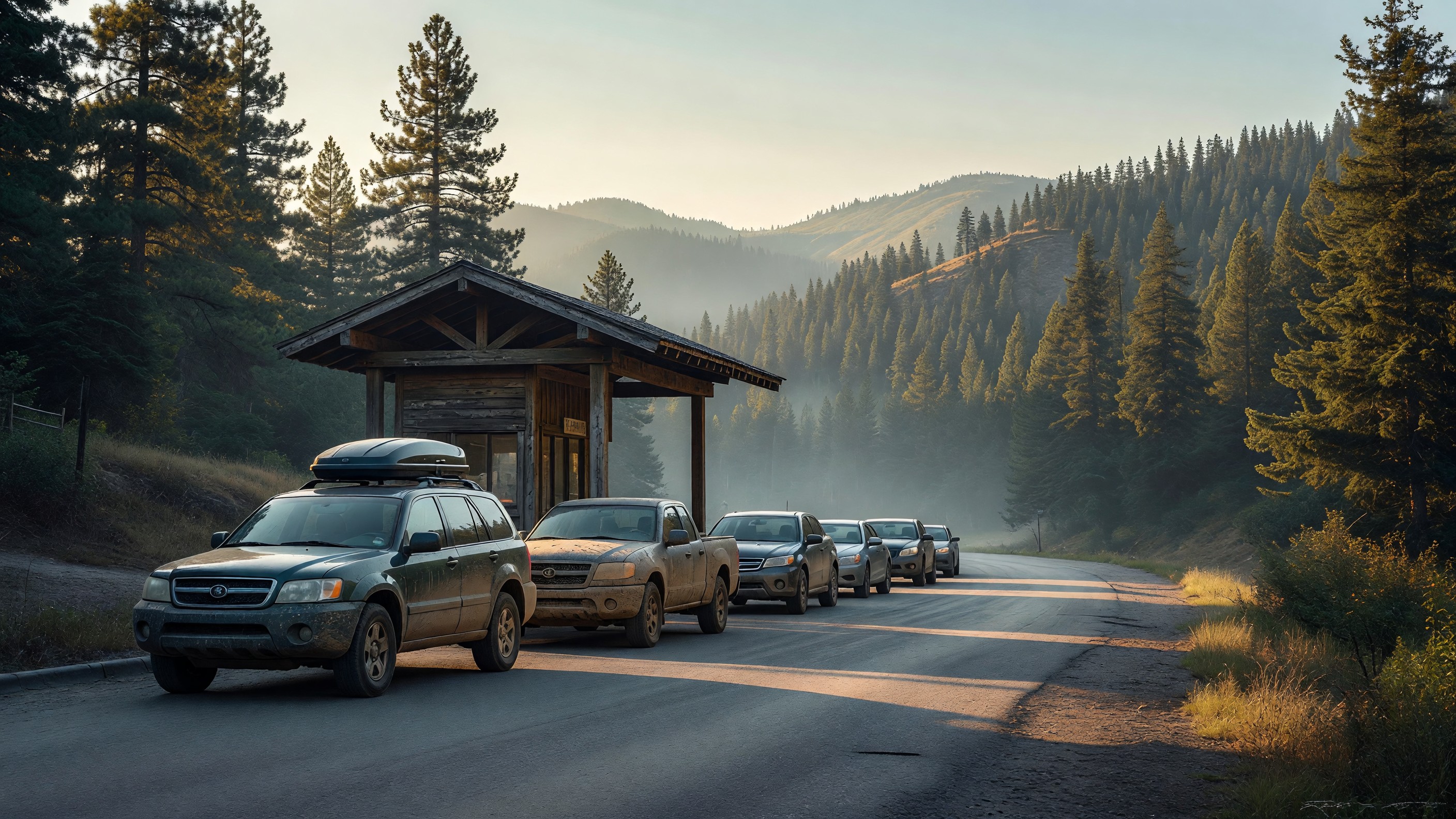
The waiver applies to the entrance fee — the per-vehicle or per-person charge collected at an entrance station or fee kiosk. Nothing else.
That matters less than most planning coverage implies, because most of the park system never charges an entrance fee in the first place. Of the National Park Service’s 430-plus units, only around 108 collect one. National monuments, national historic sites, most national seashores, and the great majority of smaller units are free to walk into on August 25 exactly as they are on any other day of the year. If your destination is one of those, the fee-free designation changes nothing about your visit except how many other people are likely to be there.
Where the waiver is worth real money is at the large fee-charging parks — the western marquee units and a handful of eastern ones — where a private vehicle entrance fee is a meaningful line in a day-trip budget. Even there, the savings vanish if you already hold an America the Beautiful Interagency Annual Pass, which covers entrance at every fee-charging federal recreation site for $80 a year. Pass holders gain nothing from a fee-free day. If you have been weighing whether to buy one, our America the Beautiful pass guide works through the break-even math.
What it does not waive
Every fee the Park Service classifies as something other than an entrance fee is still collected on August 25:
- Camping fees. Frontcountry campground reservations and walk-up sites are charged normally, at both NPS-operated and concession-operated campgrounds.
- Timed-entry and day-use reservations. These are access-management tools, not entrance fees, and they are unaffected by a fee waiver. For the 2026 season, Rocky Mountain is the only one of the five high-profile timed-entry parks still requiring a day-use reservation; Yosemite, Glacier, Arches, and Mount Rainier dropped the requirement for this season. Rocky Mountain’s window covers August 25 — standard Timed Entry runs 9 a.m. to 2 p.m. daily through October 12, Timed Entry+ Bear Lake Road 5 a.m. to 6 p.m. through October 18 — and the reservation carries a non-refundable $2 Recreation.gov processing fee that the waiver does not cover. A fee-free day does not create a reservation slot where none is available.
- Shuttle and tour tickets. Cave tours, boat tours, guided ranger programs that carry a fee, and ticketed shuttle systems are all outside the waiver.
- Lottery and special-use permits. Wilderness permits, backcountry permits, climbing permits, and the various day-hike lotteries operate on their own calendars and fee schedules.
- Commercial and group fees. Commercial tour authorizations and group entrance arrangements are handled separately.
One practical detail that catches returning visitors: all five of the parks that recently used timed entry have gone cashless. Bring a card or a phone with mobile payment for the fees that are still owed — a fee-free entrance does not mean a cash-friendly park.
The 2026 change that reshapes the day: residents only
This is the first year in which fee-free days are not open to everyone. Beginning in 2026, the Park Service applies fee-free days to U.S. citizens and residents only. In its own words on the nonresident fee page: “Beginning in 2026, fee free days at national parks will only be for U.S. residents. Non-U.S. residents will have to pay the entrance fee and nonresident fee as normal.”
That second charge is the other half of the change. Under Executive Order 14314, issued July 3, 2025, the Interior Department added a $100 per-person nonresident fee for visitors aged 16 and over at 11 of the most-visited parks: Acadia, Bryce Canyon, Everglades, Glacier, Grand Canyon, Grand Teton, Rocky Mountain, Sequoia & Kings Canyon, Yellowstone, Yosemite, and Zion. At those parks a nonresident pays the standard entrance fee plus $100 per adult — on August 25 as on any other day. Visitors aged 16 and over may be asked to show identification at the entrance station, so carry it.
Annual pass pricing splits along the same line for 2026: $80 for U.S. residents, $250 for nonresidents, with the nonresident pass covering the holder’s vehicle or the holder plus three additional adults. Passes purchased before January 1, 2026 are honored under their original terms, including for nonresident companions. If you are planning a trip with visitors from outside the U.S., the arithmetic is now specific enough to be worth doing in advance — we work through it in our guide to the 2026 nonresident fee.
For context on the calendar itself: 2026 has eight fee-free dates, and the lineup was revised this year. Martin Luther King Jr. Day and Juneteenth are no longer on it; Flag Day, June 14, was added. The remaining dates are Presidents Day, Memorial Day, Flag Day, the July 3–5 Independence Day weekend, August 25, Constitution Day on September 17, Theodore Roosevelt’s birthday on October 27, and Veterans Day.
Is August 25 worth planning around?
It has one real advantage over most of the list: it falls on a Tuesday. Fee-free days that land on a holiday weekend concentrate a full weekend’s demand into parking lots that were already full, which is why Memorial Day and the July 3–5 window are the least pleasant free days of the year at popular parks. A late-August Tuesday is a workday, school is back in session across much of the country, and the crowd is closer to normal shoulder-season volume than to holiday volume.
The honest test is whether the waiver saves you anything. If you hold a pass, it does not. If your destination is one of the 300-plus units with no entrance fee, it does not. If you are a nonresident, it does not. What is left — a resident, without a pass, driving into a fee-charging park on a Tuesday — is a genuinely good use of the day.
The rest of National Park Week may be the better draw regardless of fees. Junior Ranger Day closes the week on Sunday, August 30, Staff Saturday on August 29 puts park employees front and center, and the daily programming runs from the August 22 kickoff through the weekend. Park-level event schedules are posted on individual park pages at nps.gov, and they are worth checking before you commit to the 25th specifically: at many units the programming is the reason to go, and it is free every day of the week.
Check your destination’s fee status on its official nps.gov page before you plan around the waiver, confirm any reservation or permit you need on recreation.gov, and treat the entrance fee as the only thing the birthday actually covers.
National Parks Gallery is not affiliated with the National Park Service or any government agency. Fee and reservation policies change; confirm current requirements on nps.gov before traveling.