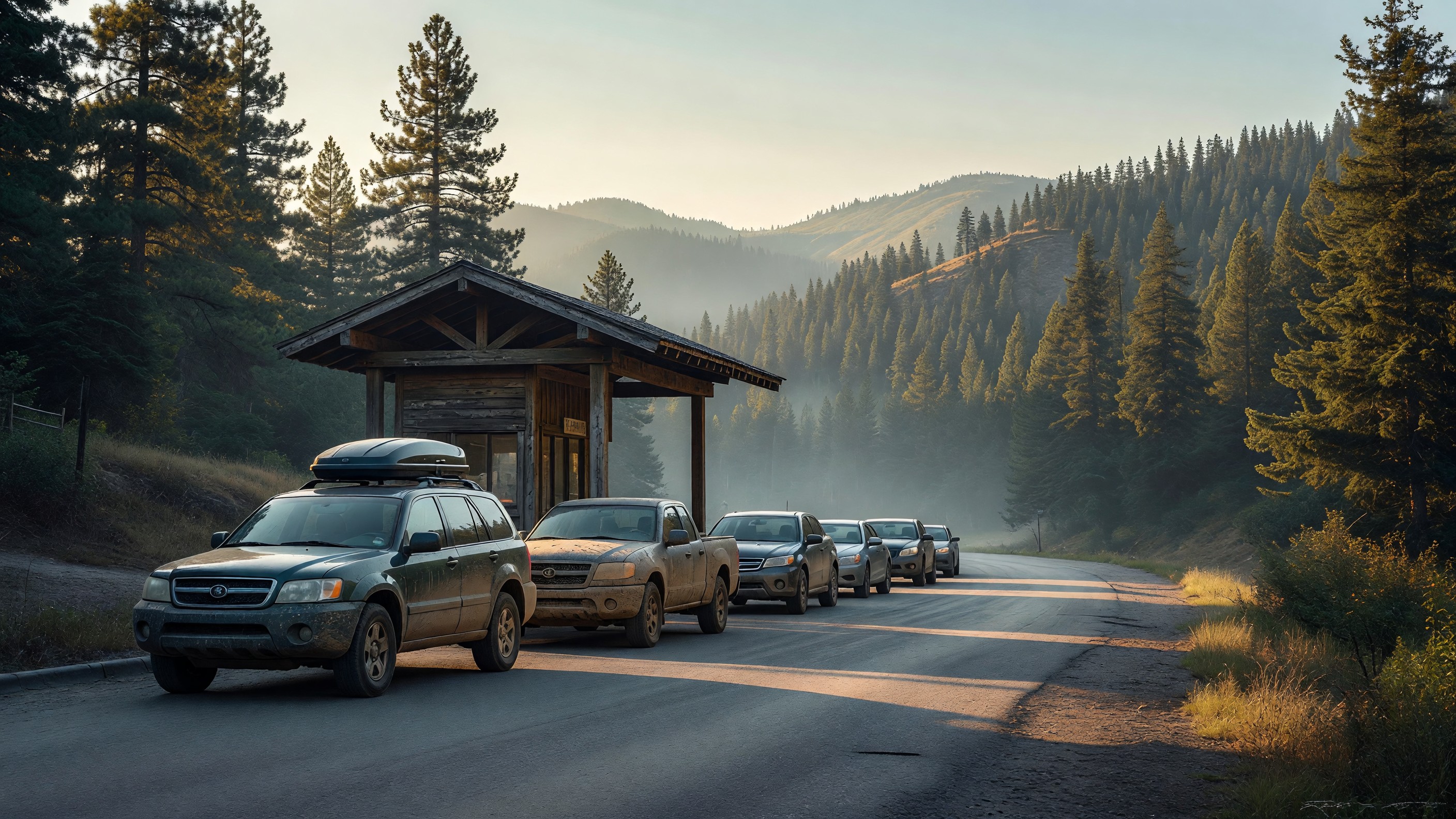
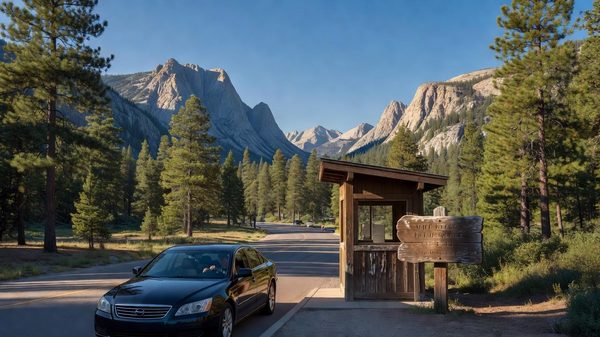
Constitution Day, September 17, commemorates the signing of the U.S. Constitution in 1787 and sits on the National Park Service’s 2026 fee-free calendar between the agency’s August birthday and Theodore Roosevelt’s in late October. It gets a fraction of the coverage the summer dates get, and for trip-planning purposes that is the point: in 2026 it lands on a Thursday, nine days after Labor Day, adjacent to no holiday weekend at all. It is the least-contested free day of the year at parks that charge entrance fees.
Why the date works when the summer dates don’t
The 2026 calendar has eight fee-free occasions spread across ten calendar days: Presidents Day, Memorial Day, Flag Day, the July 3–5 Independence Day weekend, the Park Service’s 110th birthday on August 25, Constitution Day, Theodore Roosevelt’s birthday on October 27, and Veterans Day.
Look at where those fall and the problem with most of them is obvious. Memorial Day and the July 3–5 window drop free entry onto the two heaviest travel weekends of the summer, at parks whose entrance lines and trailhead lots are already saturated. Presidents Day is a three-day weekend. Veterans Day in 2026 is a Wednesday but sits in the low season for most western parks, when high-country roads are closing.
Constitution Day is the outlier that behaves like a normal shoulder-season weekday. School is in session nearly everywhere. Summer road-trip season is over. Peak fall-foliage traffic in the East is still a few weeks out. Mid-September at a fee-charging western park is the week many regular visitors deliberately target regardless of fees — the waiver is a bonus on top of a week that was already the good week.
What the waiver covers, and the 2026 restriction
The waiver is for entrance fees only — the per-vehicle or per-person charge collected at a fee station. It applies at the roughly 108 National Park Service units that charge one. The other 300-plus units, including most national historic sites and monuments, are free to enter every day, so the designation changes nothing at those beyond the crowd.
Two 2026 rules change who benefits. First, fee-free days now apply to U.S. citizens and residents only; non-U.S. residents pay the standard entrance fee as normal. Second, at 11 heavily visited parks — Acadia, Bryce Canyon, Everglades, Glacier, Grand Canyon, Grand Teton, Rocky Mountain, Sequoia & Kings Canyon, Yellowstone, Yosemite, and Zion — non-U.S. residents aged 16 and over also pay a $100 per-person nonresident fee introduced under Executive Order 14314, on fee-free days included. Visitors 16 and older may be asked for identification at the entrance station. If your group mixes residents and nonresidents, our guide to the 2026 nonresident fee works through what each traveler owes.
And if you hold an America the Beautiful Interagency Annual Pass, a fee-free day saves you nothing at all — your $80 pass already covers entrance at every fee-charging federal site. The pass guide covers whether that math works for your year.
The fees that still apply on September 17
- Timed-entry and day-use reservations. These are not entrance fees. Rocky Mountain is the only major park still requiring a day-use reservation for the 2026 season, and September 17 is squarely inside its window: standard Timed Entry runs 9 a.m. to 2 p.m. daily through October 12, and Timed Entry+ Bear Lake Road runs 5 a.m. to 6 p.m. through October 18. The reservation itself carries a non-refundable $2 Recreation.gov processing fee, which the waiver does not touch. Book it before you drive.
- Camping. Campground reservations and walk-up fees are charged normally.
- Tours, shuttles, and ticketed programs. Cave tours, boat tours, and ticketed ranger programs are outside the waiver.
- Permits and lotteries. Wilderness, backcountry, and climbing permits keep their own fees and schedules.
Also worth knowing: the parks that recently ran timed entry have all gone cashless, so bring a card even on a day the entrance booth is waving cars through.
Where the day is actually worth using
The waiver is worth building a trip around in two situations.
A fee-charging park having its best week. Mid-September is peak elk rut in Rocky Mountain, and the meadows around Moraine Park and Horseshoe Park are the classic vantage points — bring a long lens and stay in your vehicle or well back on the road shoulder. Glacier’s Going-to-the-Sun Road is normally still open in mid-September but heading toward its seasonal closure, and the traffic is a fraction of August’s. The southern Utah parks are past their worst heat. Acadia is ahead of its foliage crush. In every case the entrance-fee waiver is a small saving layered onto genuinely better conditions.
A first visit without a pass. If you do not hold an annual pass and have been putting off a drive to a fee-charging park within a few hours of home, a September Thursday with no entrance fee is close to the ideal test run. You will find out whether the pass is worth buying for next year without paying to find out.
Where it is not worth reorganizing a trip: the Constitution-themed historic units. Independence National Historical Park in Philadelphia, Valley Forge, Federal Hall, and the Revolutionary War battlefields typically do special programming for the date, and that programming is the real draw — but these units generally do not charge an entrance fee, so nothing is being waived. Go for the ranger talks, not the savings. Individual park event calendars on nps.gov list what each site has scheduled.
Planning it
Confirm your destination actually charges an entrance fee on its official nps.gov fee page — a surprising number of visitors plan around a waiver at a park that was free anyway. Check whether any reservation, permit, or timed-entry requirement applies on the 17th and book it on recreation.gov in advance, since the free entrance does not reserve anything. If your park is in the high country, check its road status page the week of the trip; mid-September is when seasonal closures start appearing.
Then treat the day for what it is: a quiet weekday in the best month of the year at most fee-charging parks, with the gate fee taken off the top. The next chance after this one is October 27, and by then the high-country roads that make mid-September worthwhile will be closing.
National Parks Gallery is not affiliated with the National Park Service or any government agency. Fee, road, and reservation policies change; confirm current requirements on nps.gov before traveling.