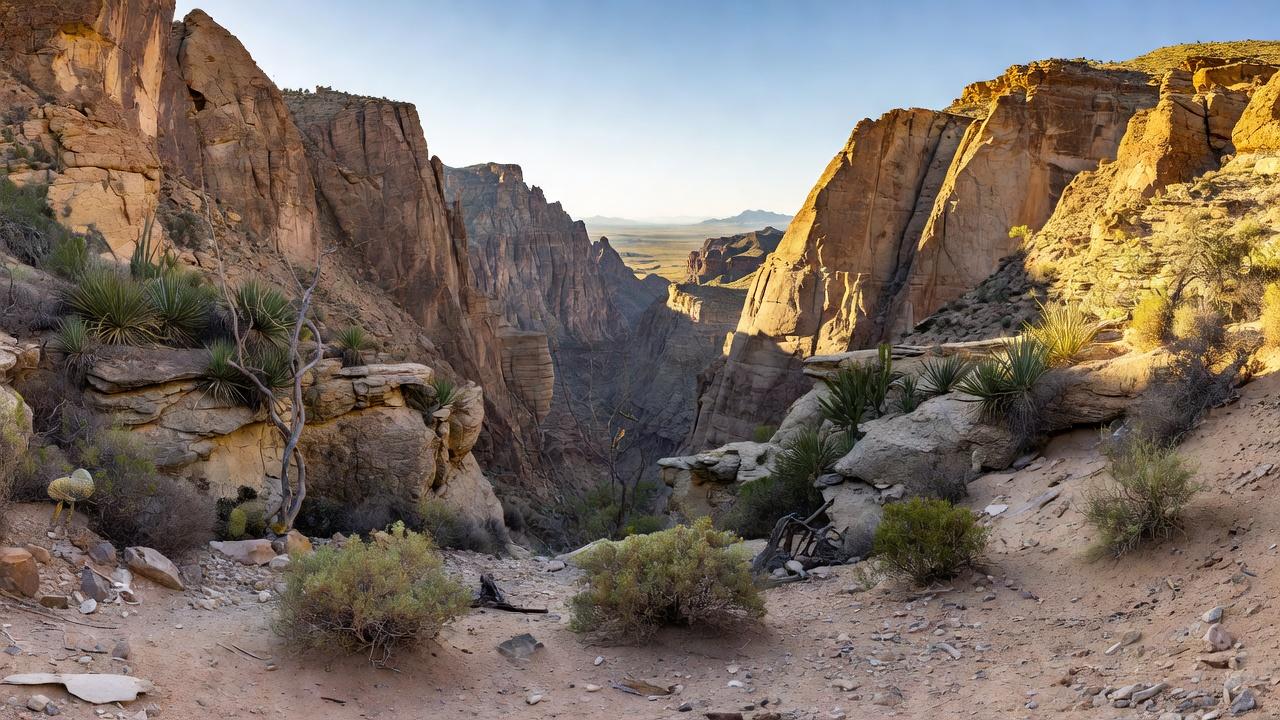
Big Bend National Park occupies a sweeping bend in the Rio Grande in the far southwest corner of Texas, protecting 801,000 acres of Chihuahuan Desert, river canyon, and mountain sky island in one of the most isolated corners of the contiguous United States. The nearest commercial airport is Midland-Odessa, more than three hours away. The nearest city of any size, El Paso, is five hours distant. This deliberate remoteness defines the Big Bend experience: you drive through an expanding void of desert and mesa, and the park slowly reveals itself as a world entirely separate from the one you left.
The Chisos Mountains: A Sky Island in the Desert
Rising from the surrounding desert floor to nearly 8,000 feet, the Chisos Mountains create their own microclimate — cool, forested, and startlingly different from the Chihuahuan Desert that extends to every horizon below. The Chisos Basin, a natural bowl formed by collapsed volcanic rock, sits at 5,400 feet and serves as the park’s main hub, containing the lodge, campground, visitor center, and the trailhead for several of the park’s most celebrated hikes.
The Lost Mine Trail (four and a half miles round-trip) climbs steadily from the basin through pine and juniper forest to a ridgeline with panoramic views of the entire park interior. The South Rim Trail (12 to 14 miles depending on route) traverses the highest accessible terrain in the park and reaches the sheer volcanic cliffs of the south rim, where the desert floor of Mexico stretches south for hundreds of miles. This is a full-day or overnight hike requiring good physical conditioning and preparation for rapidly changing weather.
The Window Pour-Off, reached by a flat five-mile round-trip trail through the basin, provides one of the park’s most dramatic viewpoints: a narrow notch where a seasonal stream pours off the basin rim with the distant desert below framed perfectly in the opening.
Santa Elena Canyon and the Rio Grande
Where the Rio Grande cuts through the Mesa de Anguila and the Sierra Ponce, it creates Santa Elena Canyon — a slot more than 1,500 feet deep, barely 30 feet wide at the river’s surface in places. The canyon trail (1.7 miles round-trip) begins at the Rio Grande bank and climbs into the canyon interior via a set of stone steps before returning along the river. The walls close overhead, the temperature drops, and the outside world ceases to exist.
River conditions at the canyon entrance vary seasonally; in wet periods, a shallow creek crossing is required to begin the trail. Check with rangers at the Castolon Visitor Center before driving the 35-minute road from the Basin.
Rafting and canoe trips through Big Bend’s river canyons — Santa Elena, Mariscal, and the Lower Canyons downstream of the park — offer multi-day wilderness float experiences. Several outfitters in the nearby community of Terlingua lead guided trips.
Birding: The Most Species-Rich National Park in the United States
Big Bend has been documented hosting more than 450 bird species — more than any other national park in the country. Its position at the intersection of multiple flyways and its habitat diversity (desert scrub, riparian cottonwood, mountain forest, and river edge) funnel both permanent residents and a remarkable variety of migrants through the park.
The Colima warbler — a Mexican species that reaches the United States only in the Big Bend Chisos Mountains — is the park’s signature rarity and the target of dedicated birders who make the hike to the Boot Spring area each spring specifically to see it. The spring migration period (April–May) brings peak diversity. The Rio Grande Village and Cottonwood Campground riparian areas attract migrant warblers, vireos, and flycatchers in numbers that rival dedicated birding hotspots anywhere in North America.
For planning a Texas parks itinerary, see the national parks planning guide and the parks directory.
Dark Skies
Big Bend is designated as an International Dark Sky Park (Gold Tier) and one of the largest protected dark sky areas in the lower 48 states. With no significant light pollution within 100 miles in most directions, the night sky at Big Bend is extraordinary — the Milky Way appears as a structural element of the sky rather than a faint smear, and the naked eye resolves objects that require binoculars in most inhabited areas. Ranger star programs at the Basin campground run regularly during the summer and early fall. For how Big Bend ranks among the top dark sky destinations in the West — including Bortle class comparisons, Milky Way season timing, and gear basics — see the Western national parks stargazing guide.
Practical Considerations
Getting there: Plan a fuel stop before entering the park — the park’s only gas station at Panther Junction charges premium prices. The nearest towns with more competitive fuel are Terlingua and Study Butte at the park’s west entrance, or Marathon at the north entrance.
Accommodations: Chisos Mountains Lodge, inside the park, requires reservations far in advance, particularly for spring and fall visits. Camping at Basin, Rio Grande Village, and Cottonwood Campground ranges from full hookup sites to primitive tent sites. Terlingua has additional lodging options.
Heat and water: Summer temperatures in the desert portions of the park regularly exceed 110 degrees. Carry a minimum of one gallon of water per person per day. Most serious hiking is best done from October through April.
Entry fee: Check NPS Big Bend for current fees. America the Beautiful passes are accepted.
Frequently Asked Questions
Is Big Bend safe near the Mexican border? The park maintains an active NPS ranger presence along the river. The NPS and State Department regularly update border safety advisories for the area; check current conditions before crossing into Mexico.
Can I cross into Mexico at Big Bend? Boquillas del Carmen, a small Mexican village, is accessible by rowboat ferry from the Rio Grande Village area when the official crossing is open — a unique legal border crossing managed by the NPS. Passport required.
What is the best season to visit? October through April offers the most comfortable temperatures for desert hiking. Spring (March–April) is peak birding season. Summer is brutally hot in the desert but cooler and pleasant in the Chisos Basin above 5,000 feet.
How many days do I need? Three nights at minimum for a meaningful visit that covers the Chisos Basin, Santa Elena Canyon, and the Rio Grande Village. A week rewards those willing to explore the park’s more remote corners.