I’ve spent time in a lot of national parks, but my first trip to Yellowstone genuinely caught me off guard — not in the dramatic scenic payoff, which I expected, but in the sheer scale of the place. You can spend a week here and feel like you’ve only scratched the surface. Yellowstone covers approximately 2.2 million acres across three states — Wyoming, Montana, and Idaho — and it sits atop one of the world’s most active volcanic systems, the Yellowstone Caldera supervolcano. Established March 1, 1872 as the world’s first national park by an Act of Congress signed by President Ulysses S. Grant, it set the template for what every national park that followed would become. That history matters on the ground: there’s a gravity to walking the Yellowstone boardwalks that you don’t quite feel the same way at parks established a century later.
The park is the centerpiece of the Greater Yellowstone Ecosystem — roughly 20 million acres of mostly intact wild land including surrounding national forests, wildlife refuges, and Grand Teton National Park to the south. That ecosystem context explains the wildlife densities here. Yellowstone isn’t just a geyser destination with some bison; it’s one of the few places in the lower 48 states where the full complement of large mammals that existed before European settlement — bison, elk, moose, grizzly bears, black bears, wolves, mountain lions, pronghorn — still operates in functional numbers. A first trip should try to see both halves of what Yellowstone offers: the geothermal features and the wildlife corridor. Most visitors prioritize one and miss the other.
The Five Entrances: Which One to Use
Yellowstone has five entrance roads, and which you use depends almost entirely on where you’re coming from — but understanding their individual characteristics helps with planning.
North Entrance — Gardiner, Montana: The only entrance that stays open to private vehicles year-round. The historic Roosevelt Arch sits at the Gardiner gateway, and the road through the Yellowstone River canyon to Mammoth Hot Springs is one of the most scenic drives in the park. If you’re visiting in winter or shoulder season, this is your access point.
West Entrance — West Yellowstone, Montana: The most heavily used entrance. West Yellowstone is a gateway town with abundant lodging, restaurants, and gear shops. This entrance puts you closest to the Upper Geyser Basin and Old Faithful — convenient if those features are your priority. Expect significant traffic congestion on summer mornings.
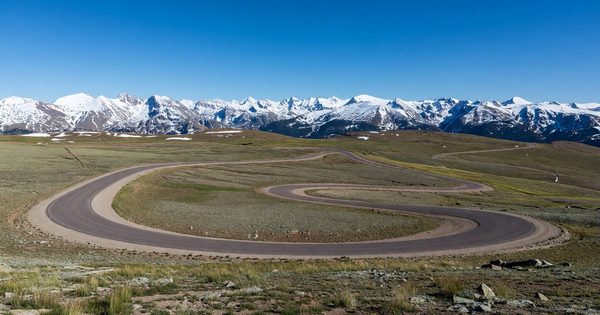
Northeast Entrance — Cooke City, Montana: The least-visited entrance and a genuine scenic approach via the Beartooth Highway (US-212), which is one of the highest paved roads in the country. The route is spectacular but the highway is seasonal (generally mid-May through October depending on snowpack). This entrance feeds directly into the Lamar Valley wildlife corridor.
East Entrance — via Cody, Wyoming: The Buffalo Bill Cody Scenic Byway from Cody to the East Entrance is a worthwhile drive in itself. This entrance puts you on the north shore of Yellowstone Lake and is a good choice if you’re combining Yellowstone with a stay in Cody.
South Entrance — via Grand Teton and Jackson, Wyoming: The logical entry point for visitors combining Yellowstone with Grand Teton National Park. Jackson is the most developed gateway town in the region, with a regional airport (JAC) offering direct flights from multiple cities. From Jackson, you drive through Grand Teton’s Rockefeller Parkway before entering Yellowstone’s south gate.
The Grand Loop: Distances Are Real
The central road network is the Grand Loop Road — a figure-8 configuration covering approximately 142 miles of paved highway that connects the major thermal and scenic areas of the park. On a map it looks manageable. In a car it takes considerably longer than you’d expect, because speed limits throughout the park are 45 mph (lower in wildlife corridors), wildlife jams can add significant unplanned stops, and the distances between major features are genuine.
A rough planning rule: budget at least two full days to drive the entire Grand Loop with meaningful stops. Three days is more honest. Some of the park’s most rewarding areas — Lamar Valley at dawn, the Norris Geyser Basin, the Canyon area — are separated by significant driving from each other. First-timers often discover on day two that they spent too long at Old Faithful on day one and now face a 60-mile drive to get to something they had planned to see.
The two loops break roughly as follows: the northern half of the figure-8 takes in Mammoth Hot Springs, the Roosevelt/Tower area, and the Canyon and Lamar Valley corridor. The southern half covers the geyser basins, Yellowstone Lake, and the Grant Village area. Most visitors with limited time should prioritize one loop fully rather than skimming both.
Geyser Basins: The Upper, Lower, Midway, and Norris
The thermal features are the defining experience of Yellowstone, and the park holds more than half of the world’s known geysers — over 500 in a park that sits atop a magma chamber roughly 50 miles wide. The boardwalk and trail systems through the major geyser basins are well-maintained and accessible, but the intensity of thermal activity varies considerably between them.
Upper Geyser Basin is home to Old Faithful and is the most visited area in the park. Old Faithful erupts on average approximately every 90 minutes, though the interval varies between roughly 60 and 110 minutes depending on the duration of the previous eruption — rangers post predicted eruption windows at the visitor center. The eruption itself lasts 1.5 to 5 minutes and reaches heights of 100 to 180 feet. It’s impressive, but the Upper Geyser Basin around it is actually more interesting than the geyser alone: Morning Glory Pool (a vivid blue-green thermal pool named for its morning glory flower shape), Grand Geyser (the tallest predictable geyser in the park at up to 200 feet, erupting roughly every 8–12 hours), and Castle Geyser are all within easy walking distance.
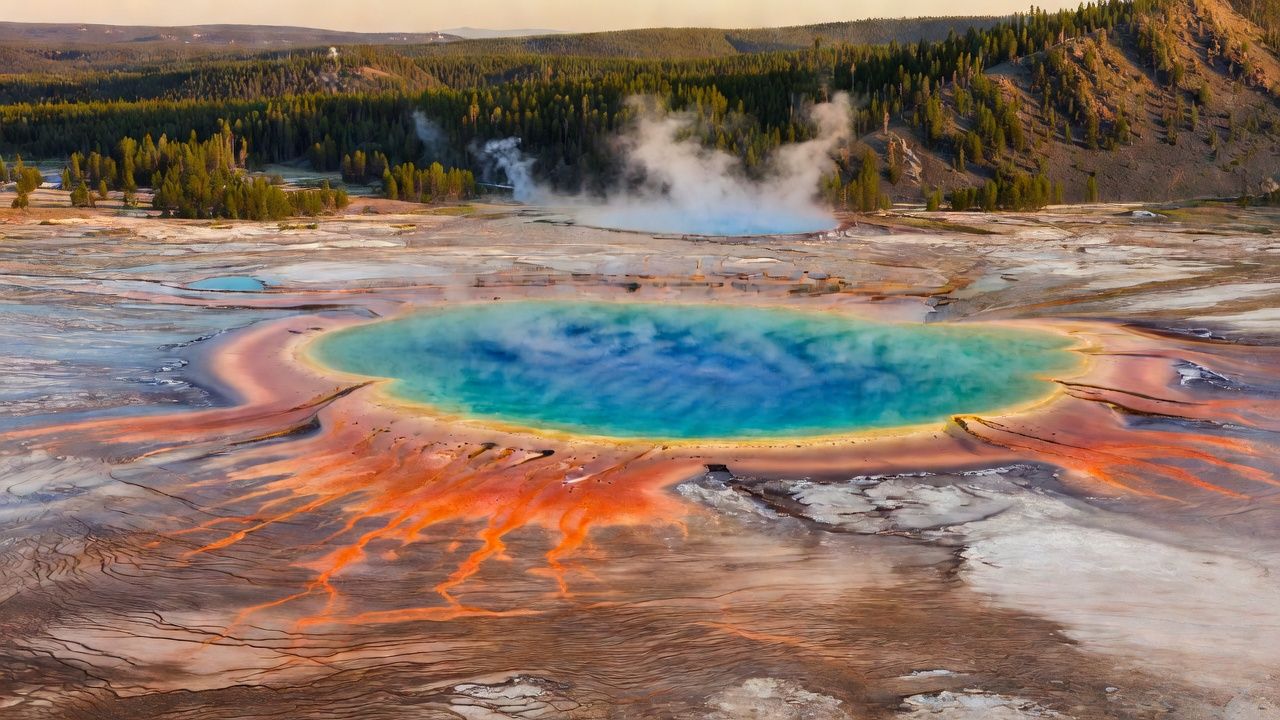
Midway Geyser Basin is where Grand Prismatic Spring sits, and if I had to name one thermal feature in the park that most first-timers underestimate until they see it in person, this is it. Grand Prismatic is approximately 370 feet in diameter — the third-largest hot spring in the world — with vivid concentric rings of orange, yellow, and green bacterial mats surrounding a deep cobalt-blue center. The problem is that you can’t see it properly from the boardwalk at water level; the view is too foreshortened. To see the full color pattern that appears in every photograph, you need to reach the Fairy Falls overlook: a roughly 1.7-mile round-trip hike (starting from the Fairy Falls trailhead south of Midway) that gains a ridge with a clear sight line down to the spring. Budget this extra time. It’s the single best photography decision you can make in the park.
Lower Geyser Basin is adjacent to Midway and gets less attention, but the Fountain Paint Pots area — a loop trail taking in boiling mud pots, fumaroles, hot springs, and two geysers — is one of the more complete thermal showcases in the park.
Norris Geyser Basin sits in the park’s northern loop and is the hottest and most geologically dynamic of the major basins. Steamboat Geyser, the world’s tallest active geyser, erupts here — though unpredictably, with intervals ranging from days to years. Even when Steamboat isn’t erupting, the Norris basin’s size (the Back Basin loop trail is about 1.5 miles) and the constant activity of its fumaroles and pools make it worth the detour.
Mammoth Hot Springs
Mammoth, near the North Entrance, is both a park administrative hub (with lodging, a visitor center, gas station, and dining) and a geological feature in its own right. The travertine terraces here are formed by a different process than the silica-based geysers and pools farther south — hot water dissolves limestone as it rises, then deposits calcium carbonate terraces at the surface. The formations are constantly changing as thermal activity shifts. Liberty Cap, a 37-foot cone created by a long-extinct hot spring vent, stands at the base of the terraces.
The town of Mammoth is also where bison, pronghorn, and elk are routinely visible near the road and in the campground area — sometimes frustratingly close to parked cars and visitors. The wildlife observation rules apply here as everywhere else in the park.
Canyon Area: The Falls of the Yellowstone
The Yellowstone River cuts through a dramatic canyon of yellow and orange rhyolite rock — the geological feature that gave the park its name — dropping over two waterfalls before the canyon deepens to about 1,200 feet. The Lower Falls at 308 feet is the larger and more dramatic of the two; the Upper Falls at 109 feet is impressive but overshadowed.
The classic viewpoint is Artist Point on the South Rim, a short paved walk from the trailhead that delivers a head-on view of the Lower Falls plunging into the canyon. This is one of the most reproduced images in the park and doesn’t disappoint. The North Rim has lookout points at Inspiration Point and Grandview Point. For a more committed option, the North Rim Trail (about 3.8 miles one-way) travels rim-edge with views into the canyon.
Lamar Valley: The Serengeti of North America
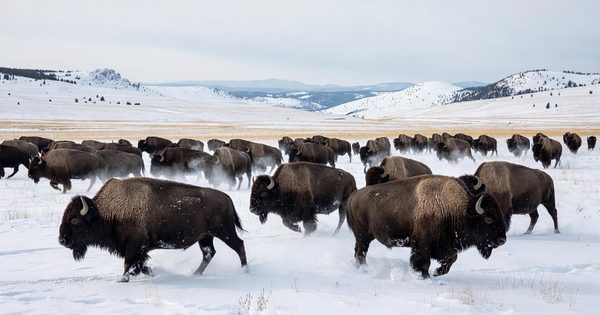
If the geyser basins are Yellowstone’s geological identity, Lamar Valley is its ecological one. The broad, glacially sculpted valley in the park’s northeast corner — accessible via the road connecting Tower-Roosevelt junction to the Northeast Entrance — functions as the park’s primary wildlife viewing corridor. Bison herds in the thousands move through Lamar’s grasslands in summer; pronghorn and mule deer occupy the open sagebrush flats; multiple wolf packs with established territories use the valley regularly; and grizzly bears are frequently visible on the hillsides flanking the valley floor.
The Lamar Valley was the reintroduction site for wolves in 1995 and 1996, when 41 wolves from Canada were released here — one of the most consequential wildlife reintroduction events in American history. Today the park supports multiple packs, and Lamar is consistently the best place in the United States to see wolves from a public road.
The strategic approach is early morning — first light to roughly 9 a.m. — when animals are most active and the golden-hour light is also best for photography. Pull-outs along the Lamar road fill with spotting scopes and photographers before dawn on peak summer mornings.
Wildlife Safety Rules You Need to Know
Yellowstone’s wildlife is wild and has injured more visitors than any other park in the system. The rules aren’t suggestions. You must stay at least 100 yards (the length of a football field) from bears and wolves, and at least 25 yards from all other wildlife including bison. Bison, despite their grazing behavior, are fast — capable of sprinting at 30 mph — and have gored visitors who got too close while attempting photographs. The park’s injury record shows bison as the most frequent cause of visitor injuries.
Carry bear spray in the backcountry and know how to use it before you need it. Most gear shops in gateway towns rent or sell it. In the developed geyser basin areas and on popular trails near the road, bear encounters are uncommon; in the backcountry and in Lamar Valley at dawn, the calculus changes.
Lodging: Xanterra Runs the In-Park Properties
All in-park lodging at Yellowstone is operated by Xanterra Travel Collection under a National Park Service concession contract. There is no private hotel development inside park boundaries. The main properties are:
Old Faithful Inn — The centerpiece property, a 1904 National Historic Landmark built in rustic log architecture, located adjacent to Old Faithful. Rooms in the historic Old House section have the most character; the modern wings are more comfortable. This is the most in-demand lodging in the park.
Lake Yellowstone Hotel — On the shore of Yellowstone Lake, this 1891-era Colonial Revival property is the oldest building in any national park. The Sun Room with its lakefront views is one of the more elegant settings in the park system.
Mammoth Hot Springs Hotel — The only in-park property that remains open in winter (in addition to Old Faithful Snow Lodge), making it the base for winter visitors accessing the park via the North Entrance.
Old Faithful Snow Lodge — A more recently built property near Old Faithful that serves both summer and winter seasons.
Roosevelt Lodge — Located in the Tower-Roosevelt area in the park’s northeast, offering western-style cabins and the closest in-park lodging to the Lamar Valley wildlife corridor.
Canyon Lodge and Cabins — The largest lodging facility in the park by room count, situated in the Canyon Village area near the falls of the Yellowstone River.
The booking reality is severe: Xanterra opens reservations approximately 13 months in advance, and Old Faithful Inn summer dates sell out within hours of release. If you have a specific summer date in mind, set a calendar reminder and be online the moment reservations open. The Xanterra Yellowstone booking system is at yellowstonenationalparklodges.com. For visitors who miss the in-park window, the gateway towns of Gardiner and West Yellowstone offer independent lodging with day-trip access.
Backcountry and Campsite Permits
Yellowstone has more than 900 miles of backcountry trails and approximately 300 designated backcountry campsites. A permit is required for all overnight backcountry camping and can be reserved in advance through Recreation.gov or obtained in person at backcountry offices no more than 48 hours before the trip start date. Frontcountry campgrounds split across two reservation systems: Bridge Bay, Canyon, Madison, Grant Village, and Fishing Bridge RV Park are concessioner-operated and book through Yellowstone National Park Lodges (not Recreation.gov) with a 13-month advance window; NPS-operated campgrounds including Mammoth, Norris, Lewis Lake, and Slough Creek book through Recreation.gov on a 6-month rolling window. Campgrounds inside the park fill completely by mid-morning on summer peak days. For a full breakdown of each campground and booking strategy, see How to Reserve Yellowstone Campsites. Yellowstone does not operate a park-entry vehicle reservation system — only specific campground, lodging, and backcountry permits require advance booking.
Winter Visitation
Winter transforms Yellowstone into a different park, accessible only through specific entry points and via specific modes of transport. The North Entrance at Gardiner remains the only road open to private vehicles through the winter season. All other roads inside the park are groomed snowpack, not plowed pavement, and are accessible only by over-snow vehicle: snowcoach or snowmobile.
The primary winter concession operations run December through early March. Xanterra and a handful of other NPS-authorized concessionaires operate snowcoach tours from West Yellowstone and Gardiner to interior park destinations including Old Faithful, Mammoth, the Grand Canyon of the Yellowstone, and Lamar Valley. Snowmobiles are also permitted in the park via guided tours with authorized outfitters — unguided snowmobile access to the backcountry road system requires a permit.
The winter experience is quieter, more intimate, and genuinely spectacular. Bison stand in thermal fog near geyser vents; wolves are easier to track in snow; the thermal features steam dramatically against sub-zero air. Madison and Mammoth campgrounds operate year-round. Old Faithful Snow Lodge and Mammoth Hot Springs Hotel are the only open in-park lodging options in winter — reserve these well in advance.
Summer Crowds and How to Manage Them
Peak season runs mid-June through Labor Day, with July the most congested month. The two busiest bottlenecks are the Old Faithful boardwalk and Grand Prismatic’s lower viewing area at Midway — both fill quickly after 9 a.m. on summer mornings. The Old Faithful visitor center parking lot reaches capacity before 10 a.m. on peak days.
Practical mitigation: arrive at Old Faithful before 8 a.m., time the geyser eruption, then walk the Upper Geyser Basin before the crowds arrive. Do Grand Prismatic in the afternoon (later-day light is also better for the Fairy Falls overlook photography angle). Reserve any in-park campsite or accommodation as far in advance as possible. Consider late June or September — both shoulder periods with better availability and less congestion.
Photography Notes
Three shots that define first-timer photography in Yellowstone:
Grand Prismatic from Fairy Falls overlook — hike the 1.7-mile round-trip to gain the ridge above Midway Geyser Basin. Midday light works better here than at most landscape subjects because the steam tends to blow away when the wind picks up in afternoon.
Lower Falls from Artist Point — morning light puts the canyon walls in shadow with the falls backlit; the late-afternoon golden hour lights the south canyon face. Both are worth the trip to Artist Point.
Lamar Valley wildlife at dawn — plan to be parked in the valley pull-outs 30 minutes before first light. Bring a telephoto lens of at least 400mm for wolves and distant bears. A spotting scope (some visitors share) helps locate subjects before you raise the camera.
Gateway Towns
Gardiner, Montana is the only year-round gateway, a small town at the North Entrance with a good selection of motels, a few restaurants, and direct access to the Mammoth area.
West Yellowstone, Montana is the largest gateway town, with the widest range of lodging and dining options and the most developed infrastructure for park visitors. The Yellowstone Gateway Museum here provides solid context on park history.
Jackson, Wyoming (with adjacent Grand Teton National Park) functions as the southern gateway and regional airport hub. It’s larger, more tourist-oriented, and more expensive than the northern gateways — but the proximity to Grand Teton makes a combined trip natural and logical.
Accessibility
The geyser basin boardwalk systems are among the most accessible trails in the national park system. The entire Upper Geyser Basin loop is on hardened paved and boardwalk surface; Grand Prismatic’s lower boardwalk at Midway is fully accessible; the Artist Point viewpoint at Canyon is paved. Accessible vehicle pull-outs are marked throughout the park. The Fairy Falls overlook trail involves a half-mile walk on a packed gravel surface and a short rocky scramble to the viewpoint — not fully accessible, but manageable for many visitors with moderate mobility. Xanterra properties have accessible room options bookable through the standard reservation system.
For full accessibility information, the official Yellowstone NPS accessibility page details trail surfaces, restroom locations, and accessible programs.
Frequently Asked Questions
Does Yellowstone require a timed entry or vehicle reservation system? No. As of 2026, Yellowstone does not operate a park-entry vehicle reservation or timed-entry permit system. You can drive in without advance registration at any entrance. What requires advance booking are specific campgrounds (through Recreation.gov), in-park lodging (through Xanterra at yellowstonenationalparklodges.com), and backcountry overnight permits.
How often does Old Faithful erupt? Old Faithful erupts approximately every 60 to 110 minutes, with an average interval of roughly 90 minutes. The exact interval varies based on the duration of the previous eruption — longer eruptions are followed by longer waits. Predicted eruption times are posted at the Old Faithful Visitor Education Center.
Which Yellowstone entrance is closest to Old Faithful? The West Entrance at West Yellowstone, Montana is the closest entrance to Old Faithful and the Upper Geyser Basin — roughly 30 miles by road. The South Entrance (from Grand Teton) also provides relatively direct access to the Geyser Basin via the Grand Loop.
When is the best time to see wolves in Yellowstone? Lamar Valley in the northeast corner of the park is the primary viewing area. Dawn and dusk in the shoulder seasons — late September through November and March through early May — offer the best combination of wolf activity, clear sightlines (before full leaf-out), and smaller crowds. Summer dawn viewing in Lamar is also productive but draw larger crowds of wildlife watchers.
How far is Yellowstone from Grand Teton National Park? The South Entrance of Yellowstone connects directly to the John D. Rockefeller Jr. Memorial Parkway, which meets Grand Teton’s north boundary. The drive from the South Entrance to Jackson Lake Lodge in Grand Teton takes approximately 45 minutes. Most visitors combine both parks in a single trip — plan at minimum 5–7 days total for both parks.
Is it safe to hike alone in Yellowstone’s backcountry? Solo hiking is permitted but requires the same precautions as anywhere in grizzly country: carry bear spray, make noise in brushy terrain, hike in groups when possible, and store food and scented items in bear boxes at designated backcountry sites. Obtain a backcountry permit through Recreation.gov or a park backcountry office. The NPS bear safety page on nps.gov/yell is the authoritative source for current park-specific protocols.
Plan Your Trip: Authoritative Resources
- Official Yellowstone NPS website: nps.gov/yell — road conditions, closures, fee information, and current ranger program schedules
- Backcountry permits and some campground reservations: Recreation.gov — required for overnight backcountry camping and several frontcountry campgrounds
- In-park lodging: Xanterra Yellowstone National Park Lodges — Old Faithful Inn, Lake Yellowstone Hotel, Mammoth Hot Springs Hotel, Old Faithful Snow Lodge, and campgrounds
- Yellowstone Volcano Observatory: USGS Yellowstone Volcano Observatory — current seismic and volcanic monitoring data; the authoritative source on caldera activity
- Advocacy and conservation updates: National Parks Conservation Association (npca.org) — independent organization monitoring NPS policy and park conditions
For the world’s most active volcano park comparison, see our guide to Hawaii Volcanoes National Park — Kīlauea and Mauna Loa on the Big Island, where eruption-aware planning is as important as the visit itself.