February is when Yellowstone trips get made or missed. If you’re reading this now, you’re probably planning a summer trip and wondering whether you’re already too late. The answer depends on which campground you want — and which booking system controls it. Yellowstone runs two parallel reservation systems with two completely different lead times, and mixing them up is the single most common planning mistake I see.
The short version: the five campgrounds operated by the park’s concessioner — Yellowstone National Park Lodges — accept reservations up to 13 months out, on the 5th of each month. The NPS-operated campgrounds run through Recreation.gov on a 6-month rolling window. Miss the concessioner window in January or February for July and August, and you’re chasing cancellations.
Yellowstone has roughly 2,000 campsites spread across 12 frontcountry campgrounds — a mix of concessioner-operated reservable sites, NPS-operated sites bookable through Recreation.gov, and a small number of first-come-first-served options. Understanding which campground falls into which category, and what that means for your booking calendar, is what this guide is designed to deliver.
The Two Booking Systems You Need to Understand
Before getting into individual campgrounds, it’s worth being explicit about how the two reservation systems work — because they are genuinely different, and the difference determines your strategy.
Yellowstone National Park Lodges (concessioner-operated campgrounds)
Five campgrounds are operated by Yellowstone National Park Lodges, the park’s authorized concessioner: Madison, Canyon, Bridge Bay, Grant Village, and Fishing Bridge RV Park. Reservations for these campgrounds open on the 5th of each month, for the same month 13 months into the future.
What that means in practice: on February 5, you can book any date in February of the following year. On March 5, you can book any date in March of the following year. If you want a site at Madison Campground on July 15, the booking window opened on January 5 — when the full month of January + 13 months ahead (January of the following year) became bookable, and the rolling monthly window progressively added each subsequent month. Reservations open at midnight Mountain Time online (through yellowstonenationalparklodges.com) or at 7 a.m. Mountain Time by phone.
For July and August dates, this means the booking window for concessioner campgrounds is effectively January and February, not June or July. By the time most people start thinking seriously about their summer trip, these campgrounds are already substantially booked.
Recreation.gov (NPS-operated campgrounds)
The NPS-operated campgrounds — including Mammoth, Norris, Lewis Lake, Slough Creek, Tower Fall, and Indian Creek — book through Recreation.gov on a standard 6-month rolling window, releasing each day’s availability at 10 a.m. Eastern Time, exactly 6 months before that specific date.
For a July 15 arrival at an NPS campground, the window opens January 15 at 10 a.m. ET. For August 1, it opens February 1. This system is continuous rather than monthly batch — every day’s sites become available 6 months out, day by day.
Understanding which system applies to your target campground is the prerequisite for everything else in this guide.
The Five Concessioner-Operated Campgrounds
Madison Campground
Madison is the most strategically located campground in the park for a first Yellowstone trip. Situated at the confluence of the Firehole and Gibbon Rivers, it sits roughly equidistant from Old Faithful to the south (16 miles), Norris Geyser Basin to the north (14 miles), and the West Entrance to the west (14 miles). The Madison River valley running past the campground is a reliable bison and elk corridor — it’s one of the few campgrounds where meaningful wildlife sightings happen within walking distance of your tent.
The campground has 278 individual sites and 3 group sites, with a mix of tent-only, RV, and combination sites. No hookups — this is a tent-and-dry-camping RV situation. Flush toilets and running water. Elevation is approximately 6,800 feet.
Madison is open from late April through early November — the longest season of any Yellowstone frontcountry campground. It’s family-friendly and well-organized, but it is also the most sought-after campground in the park. Book on January 5 for July dates.
Reservations: Yellowstone National Park Lodges. Opens 5th of each month, 13 months out.
Canyon Campground
Canyon is the central hub campground for the park’s interior, situated adjacent to Canyon Village near the Grand Canyon of the Yellowstone. The Yellowstone River’s dramatic upper and lower falls — the iconic canyon viewpoints — are roughly 2 miles from camp. It’s the primary base for exploring both the canyon section and the road north toward Tower and Lamar Valley.
Canyon has 272 sites — one of the larger campgrounds — with flush toilets, running water, and a dump station for RVs. No hookups. Sites are in a forested setting.
Canyon Village is the park’s most developed interior hub: full restaurant, general store, gas station, medical clinic, and visitor center. For families or first-timers who want amenities close, Canyon is the practical choice.
Reservations: Yellowstone National Park Lodges. Opens 5th of each month, 13 months out.
Bridge Bay Campground
Bridge Bay is the lakeside campground — 431 sites on the northern shore of Yellowstone Lake, the largest freshwater lake above 7,000 feet in North America. The campground is large, the sites vary considerably in quality (lakeside vs. interior forest), and the setting is distinctive.
Bridge Bay Marina, adjacent to the campground, offers boat rentals, guided fishing trips on Yellowstone Lake, and evening lake cruises — activities that set this campground apart from the park’s interior options. Flush toilets, dump station, no hookups.
The campground is open late May through mid-September. Request a lakeside loop when booking; the interior loops are functional but lose the water views that make Bridge Bay’s location special.
Reservations: Yellowstone National Park Lodges. Opens 5th of each month, 13 months out.
Grant Village Campground
Grant Village sits on the southwestern shore of Yellowstone Lake, approximately 2 miles from the South Entrance highway and 17 miles from Old Faithful. It’s the southern gateway campground — the practical first stop for visitors arriving through the South or East Entrances, and the closest major campground to the Grand Teton–Yellowstone corridor.
The campground has 430 sites in a lodgepole pine forest. Flush toilets, dump station, no hookups. Grant Village services include a restaurant, general store, visitor center, and gas station nearby.
A note for planning: the Grant Village area sometimes has early-season atmospheric smoke from the hydrothermal features concentrated in low spots in calm air. It dissipates quickly, but light sleepers should know this is a thermal-area characteristic.
Reservations: Yellowstone National Park Lodges. Opens 5th of each month, 13 months out.
Fishing Bridge RV Park
Fishing Bridge is categorically different from every other campground in Yellowstone. It’s RV-only, hard-sided required — no tent camping, no soft-sided campers, no pop-up trailers. The reason is direct: Fishing Bridge sits in one of the park’s most active grizzly bear areas, where grizzlies seasonally concentrate near the Yellowstone River’s outlet from Yellowstone Lake to feed on spawning trout. The hard-sided requirement is a bear safety protocol, not a preference.
Fishing Bridge is the only campground in Yellowstone with full hookups: water, electric (50 or 30 amp), and sewer are available at all 310 sites. If you’re traveling in a hard-sided RV and want full hookups inside the park, Fishing Bridge is your only option.
Because there are no bear boxes at Fishing Bridge (your RV is the food storage), all scented items — food, cooking equipment, toiletries, dog food — must remain inside your hard-sided vehicle or RV when unattended.
Fishing Bridge is open mid-May through mid-September.
Reservations: Yellowstone National Park Lodges. Opens 5th of each month, 13 months out. Book early — the combination of full hookups and in-park location makes this one of the most competitive reservations in the system.
The NPS-Operated Campgrounds (Recreation.gov)
Mammoth Campground
Mammoth is Yellowstone’s only year-round campground, open 365 days. It sits adjacent to Mammoth Hot Springs and the Albright Visitor Center, at the North Entrance highway — which is also the only park entrance open to vehicles year-round. The terraced travertine hot spring formations at Mammoth are among the park’s most distinctive geological features and are within walking distance of camp.
The campground has 85 sites across multiple loops. Flush toilets, running water in season.
Reservations: Recreation.gov for most of the year. During peak season (April 15–October 15), reservations are required — book 6 months out. Outside that window, during the winter months, Mammoth operates first-come-first-served.
A note on wildlife: Mammoth’s open terrain and proximity to the North Entrance road means elk are genuinely common within the campground loops, particularly in early morning and late evening. They are not tame. Maintain distance.
Norris Campground
Norris sits adjacent to Norris Geyser Basin — the hottest and one of the most geologically active geyser fields in the park — on the central interior road between Madison and Mammoth. The location makes it a useful base for exploring both the geyser basins to the south and the canyon and northern areas.
Norris has 112 sites in a forested setting. NPS-operated, bookable through Recreation.gov on the 6-month window.
Important note for 2025: Norris Campground has been listed as temporarily closed in recent reporting. Check current status at nps.gov/yell before including it in your itinerary — campground closures at Yellowstone have been ongoing due to post-2022 flood infrastructure repairs and road construction projects.
Lewis Lake Campground
Lewis Lake is the southernmost campground in the park, on the shore of Lewis Lake near the South Entrance. It’s the quietest and most remote-feeling of Yellowstone’s frontcountry campgrounds — smaller, more intimate, and accessed by fewer visitors who haven’t planned ahead.
The campground has 85 sites in a lodgepole pine forest, with Lewis Lake accessible for non-motorized boating and fishing. Vault toilets (not flush). No hookups, no dump station. NPS-operated via Recreation.gov.
Lewis Lake typically opens in mid-June — later than the southern campgrounds — due to its elevation and proximity to the Continental Divide. It closes for the season in early November.
Reservations: Recreation.gov, 6-month rolling window. Lewis Lake is meaningfully easier to book than the concessioner campgrounds — it fills, but the booking pressure is lower. A viable backup for visitors with South Entrance arrival plans.
Slough Creek Campground
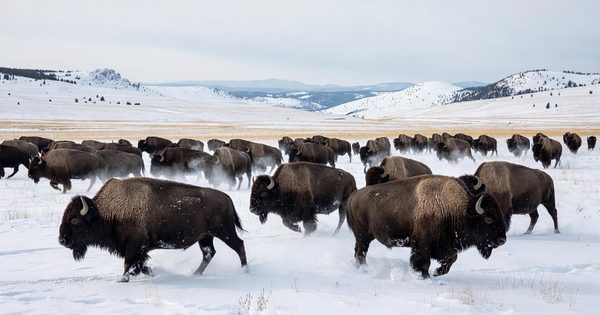
Slough Creek is the campground that wildlife photographers and serious Yellowstone naturalists talk about in reverent tones, and for good reason. Its 16 sites sit in the Lamar Valley wildlife corridor — arguably the richest wildlife-viewing landscape in the lower 48 states. Bison herds move through routinely. Wolf pack activity from the Lamar Canyon pack and other packs is documented here more regularly than anywhere else in the park. Grizzly bear sightings in the valley are common in early and late season.
Slough Creek is accessed via a 2-mile dirt road off the Northeast Entrance Road, roughly 6 miles east of Tower Junction. The site requires a basic high-clearance vehicle in wet conditions, though a standard 2WD vehicle manages the road under normal conditions.
The campground has 16 sites and is NPS-operated. As of 2025, Slough Creek is fully reservable via Recreation.gov — all sites book through the standard 6-month rolling window. This is a recent change from its historical first-come-first-served operation; the transition to reservations means you no longer have to arrive before dawn to secure a site, but you do have to plan 6 months out.
Slough Creek is open mid-June through early October.
If the Lamar Valley wildlife experience is your primary reason for visiting Yellowstone, Slough Creek is the campground to target.
Reservations: Recreation.gov, 6-month rolling window. All 16 sites bookable. Opens mid-June.
Tower Fall Campground
Tower Fall’s 32 sites sit in the northern interior near Tower Junction, close to the Tower Fall waterfall overlook (a 0.4-mile trail to a platform above a 132-foot drop) and the junction connecting Lamar Valley to the south. It’s a small, forested campground with a genuine backcountry feel compared to the larger concessioner sites.
Tower Fall is NPS first-come-first-served. During peak season (July–August), sites fill by 6–7 a.m. — plan to arrive early on weekdays, and very early on weekends.
2025 construction note: The Canyon to Tower corridor (Dunraven Pass) is under active road reconstruction. Expect delays on the road between Canyon Village and Tower Junction. The campground itself remains operational, but access logistics should be verified at nps.gov/yell before your visit, as road project timelines shift.
Reservations: None — first-come-first-served only. Arrive early.
Indian Creek Campground
Indian Creek (70 sites) sits in the northern interior between Mammoth and Norris, in an area of open meadows and lodgepole forest near Sheepeater Cliffs. It’s historically a quieter and less-visited campground than the southern concessioner sites, popular with visitors who prefer a less-developed atmosphere and are exploring the Mammoth–Norris corridor.
2026 status: Indian Creek reopens June 12, 2026 after being closed in 2025 for road improvement work on the Mammoth–Norris route. The campground closes September 14, 2026. Reservations are through Recreation.gov on the standard 6-month rolling window.
Pebble Creek Campground
Pebble Creek (27 sites) occupies the far northeastern corner of the park, near the Northeast Entrance on the Cooke City corridor. It’s the most remote frontcountry campground in Yellowstone, with excellent access to the Pebble Creek Trail (which climbs into a high alpine basin) and proximity to the Lamar Valley wildlife corridor.
2026 closure: Pebble Creek remains closed due to flood damage from the catastrophic June 2022 Yellowstone flooding. The campground sustained infrastructure damage and has not reopened since. No definitive reopening date has been announced — the closure extends through 2026 and likely beyond as flood recovery work continues.
Booking Strategy: How to Stack Your Reservations
For concessioner campgrounds (Madison, Canyon, Bridge Bay, Grant Village, Fishing Bridge)
The strategic move for summer dates is to book on January 5 for July dates and February 5 for August dates (or whatever month’s window opens on the 5th, 13 months out). Set a calendar reminder and be online at midnight MT or calling at 7 a.m. MT. The most competitive campgrounds — Madison and Bridge Bay — can approach full within hours of the booking window opening for peak summer dates.
If you miss the window or find your target dates gone:
- Check cancellations on yellowstonenationalparklodges.com — cancellations do appear, particularly in the 30-60 day window before arrival as plans change
- Stack a backup campground at booking time — book your second choice simultaneously with your first to have a fallback
- Consider Recreation.gov NPS campgrounds as a simultaneous parallel booking — Lewis Lake, Slough Creek, or Mammoth may have availability when concessioner sites don’t
For Recreation.gov NPS campgrounds
For NPS campgrounds on Recreation.gov’s 6-month window, the identical logic applies: be online at 10 a.m. ET exactly 6 months before your target arrival date. Slough Creek’s 16 sites book quickly because demand from wildlife-focused visitors is high relative to the small inventory.
Recreation.gov’s alert notification feature lets you set a campsite-specific alert and receive an email when a previously booked site becomes available due to cancellation. For popular campgrounds where you’ve missed the initial window, setting alerts is worth the effort — cancellations surface regularly, especially 2-4 weeks before peak summer dates.
RV Considerations
- Full hookups: Fishing Bridge RV Park only (hard-sided required). If full hookups are essential, this is your only in-park option.
- No-hookup RV camping: Madison, Canyon, Bridge Bay, and Grant Village all accept RVs but without hookups. Dump stations are available at Canyon and Bridge Bay.
- Length limits: Most Yellowstone campgrounds have site-specific length maximums — RVs over 40 feet have very limited options. Check individual campground pages at yellowstonenationalparklodges.com or Recreation.gov for size restrictions before booking.
For a broader look at how Yellowstone compares to other parks for RV planning — including hookup availability, road restrictions, and dump station logistics across the NPS system — see RV-Friendly National Parks: Site Reservations, Hookups, and Road Restrictions.
Group Sites
Madison Campground has 3 group sites for parties of 9–75 people. Group sites book through Yellowstone National Park Lodges and have a separate booking process — contact the concessioner directly for group site reservations.
Accessibility
Several campgrounds have ADA-accessible sites designated in the booking system. Madison, Canyon, Bridge Bay, and Grant Village all have accessible sites available. Specify accessibility requirements when booking to see designated sites.
Backcountry Camping: The Lottery System
Yellowstone’s backcountry is managed through a lottery-based early access system followed by a general walk-in window.
Early Access Lottery (peak season):
- Applications accepted: March 1–20 on Recreation.gov
- Application fee: $10 (non-refundable)
- Lottery results released approximately March 25
- If selected, you receive a booking window in April to choose specific campsites and dates
General reservation window:
- Opens April 26 and runs through October 31
- Both online (Recreation.gov) and in-person at any Yellowstone backcountry office
- Many sites are held back from the lottery and are available in the general window
Walk-in permits:
- Available at backcountry offices starting 48 hours before the trip departure date
- A percentage of sites at each campground are held for walk-in permits only
Peak season for backcountry permits is defined as May 15–October 31. The most sought-after backcountry destinations — Shoshone Lake, the Thorofare, and the Heart Lake area — tend to fill even in the general window. Apply in the lottery if a specific itinerary matters to you.
Bear canisters are required for all Yellowstone backcountry camping.
The full backcountry permit process is documented on Recreation.gov’s Yellowstone permit page and the NPS permits page.
Bear Safety and Food Storage (This Is Not Optional)
Every Yellowstone campground — frontcountry and backcountry — requires strict food storage. This is not a guideline; it’s a federal regulation with real enforcement consequences.
Frontcountry rules:
- All food, cooking equipment, coolers, scented personal care products, and garbage must be stored in the bear box provided at each campsite or inside a hard-sided vehicle when not in active use
- At Fishing Bridge RV Park, your RV is the food storage — there are no bear boxes, so everything must go inside your rig
- Do not take food or anything scented into your tent
Generator quiet hours: Most Yellowstone campgrounds prohibit generator use between 8 p.m. and 8 a.m. Check individual campground rules, as hours vary slightly.
Leave No Trace: Pack out all trash — Yellowstone operates a pack-in, pack-out policy. Campground dumpsters are bear-resistant; use them, and close them fully.
When to Abandon and Try First-Come-First-Served
If concessioner sites are booked and Recreation.gov options are thin, the first-come-first-served strategy can work — but it requires early arrival and flexibility.
Best FCFS campground options:
- Tower Fall (32 sites): Fill by 6–7 a.m. on summer days. Feasible if you’re already inside the park and can drive to the campground before dawn, or if you’re arriving mid-week in late June or September.
- Mammoth (winter/shoulder season): First-come outside the April 15–October 15 reservation window; in-season reservations required.
For peak July–August weekends, FCFS options at Yellowstone are genuinely unreliable as a primary strategy. Have a backup plan.
Camping Outside the Park: National Forest Alternatives
When in-park options are full, the surrounding national forests offer a range of developed and dispersed camping within 35 miles of the park entrances.
Custer Gallatin National Forest (Montana, northern/western sides):
- Eagle Creek Campground: 2 miles from the North Entrance in Gardiner. Basic developed sites, no hookups.
- Rainbow Point Campground: On Hebgen Lake, approximately 10 miles north of the West Entrance. Bookable via Recreation.gov.
- Dispersed camping is allowed throughout the forest away from developed recreation areas — no reservations required, no fees. See Custer Gallatin National Forest camping pages for current regulations and fire restrictions.
Shoshone National Forest (Wyoming, eastern side):
- Threemile Campground: 3 miles from the East Entrance, 21 seasonal sites on the North Fork of the Shoshone River. Available late summer through early fall.
- Wapiti Campground: 22 miles from the East Entrance along the Buffalo Bill Scenic Byway, 41 sites.
- Bookable via Recreation.gov.
Bridger-Teton National Forest (Wyoming, southern side):
- Dispersed camping in the John D. Rockefeller Memorial Parkway corridor just south of Yellowstone and north of Grand Teton.
For visitors combining Yellowstone and Grand Teton, the campgrounds within Grand Teton National Park — particularly Colter Bay — provide an excellent alternative base with full Recreation.gov reservations. Grand Teton’s park profile covers those campgrounds in detail.
Frequently Asked Questions
How far in advance can I book Yellowstone campgrounds?
It depends on which campground. The five concessioner-operated campgrounds (Madison, Canyon, Bridge Bay, Grant Village, Fishing Bridge) book through Yellowstone National Park Lodges with windows opening on the 5th of each month, 13 months in advance — giving you the longest lead time in the park. NPS-operated campgrounds (Mammoth, Norris, Lewis Lake, Slough Creek, Tower Fall) book through Recreation.gov on a 6-month rolling window, with sites released daily at 10 a.m. ET.
Is Madison campground first-come-first-served?
No. Madison is a concessioner-operated campground and is fully reservable through Yellowstone National Park Lodges. Reservations open on January 5 for all July dates (13 months out). For peak summer dates, Madison typically books up within days of the window opening. There is no walk-up option.
What is the only Yellowstone campground with full hookups?
Fishing Bridge RV Park is the only campground in Yellowstone National Park with full hookups (water, electric, and sewer at all 310 sites). It is also RV-only, with a hard-sided vehicle requirement due to active grizzly bear habitat. No tent camping is permitted.
Can I camp in Yellowstone without a reservation?
Yes, but options are limited. Tower Fall Campground (32 sites) operates first-come-first-served; arrive by 6–7 a.m. during summer. Mammoth Campground operates first-come during the off-season (before April 15 and after October 15); during peak season it requires Recreation.gov reservations. For summer peak season, relying on first-come options alone is risky — a reservation backup is strongly recommended.
How hard is it to get a campsite reservation at Yellowstone in July?
Very competitive for the concessioner campgrounds. Madison, Canyon, and Bridge Bay for July dates are often fully booked within the first week of the booking window opening in January. By late January, most peak July weeks at the concessioner campgrounds are gone. Recreation.gov NPS campgrounds (booked 6 months out in January) are more obtainable but still fill quickly for peak dates. Setting up Recreation.gov cancellation alerts is useful if you’ve missed the initial window.
Where can I camp near Yellowstone if the park is full?
The Custer Gallatin National Forest (Montana) has over 60 designated campgrounds within 35 miles of the park, including Eagle Creek (2 miles from the North Entrance) and Rainbow Point on Hebgen Lake near the West Entrance. Shoshone National Forest (Wyoming) offers developed campgrounds near the East Entrance including Threemile and Wapiti Campgrounds, bookable via Recreation.gov. Dispersed camping is available in both forests at no cost outside developed areas; check fs.usda.gov for current fire restrictions and regulations.
What is the cancellation policy for Yellowstone campground reservations?
For concessioner campgrounds (Yellowstone National Park Lodges): cancellations more than 48 hours before check-in receive a refund minus a cancellation fee. Cancellations within 48 hours typically forfeit the full payment. For Recreation.gov NPS campgrounds, the standard Recreation.gov cancellation policy applies — cancellations made more than 2 days (48 hours) before arrival receive a partial refund; check recreation.gov for the current fee schedule.
Campground operating dates, closure status, and reservation system details change each season — Pebble Creek and Norris remain closed for 2026 due to flood recovery and infrastructure issues; Indian Creek reopens June 2026. Always verify current status at nps.gov/yell/planyourvisit/campgrounds.htm and Recreation.gov before finalizing plans. For the full Yellowstone visitor experience beyond campgrounds — geysers, wildlife corridors, entrance strategy, and lodging — see our Yellowstone National Park visitor guide.
External resources: Yellowstone National Park Lodges reservations, Recreation.gov Yellowstone gateway, NPS Yellowstone permits & reservations, Custer Gallatin National Forest campgrounds near Yellowstone, NPCA Yellowstone park page.