There are 63 national parks in the United States. Add in the full National Park System — monuments, historic sites, seashores, recreation areas, parkways, preserves — and you’re looking at more than 400 units spread across every state. The National Park Service recorded over 325 million recreation visits in a recent year. And the single most common question from someone planning their first trip is still the most honest one: Where do I even start?
The answer isn’t one park. It’s a framework. The right first park for a family flying in from Atlanta with five days in late June is not the same park as the right first park for a solo photographer driving from Phoenix on a long weekend in October. Matching the park to your actual constraints — time, season, physical ability, interests, and starting location — is the work this guide does for you.
Work through the five axes in order. Your answers narrow the field quickly.
Axis 1: Time Available
This is the first filter because it eliminates more options faster than any other variable. Every park can be visited in theory; most parks deserve more time than a weekend allows.
Long Weekend (2–3 Days)
Two to three days is enough time to do justice to a single park if you stay focused. Choose a park with a concentrated visitor experience — one where the signature features are within an hour of each other, not spread across a multi-day drive.
Best picks for a long weekend by region: Acadia (Maine), Shenandoah (Virginia), Cuyahoga Valley (Ohio), Indiana Dunes (Indiana), Rocky Mountain (Colorado), Joshua Tree (California), Channel Islands (California), Olympic or Mount Rainier (Washington).
What to avoid on a long weekend: Parks where the core experience requires 4–5 days to appreciate — Yellowstone, Glacier, Grand Canyon North and South Rim combined, Denali. You can visit these parks in a weekend, but you’ll spend most of it driving between features and leave feeling like you saw 20 percent of what the park is.
5-Day Trip
Five days is the sweet spot for a single iconic park with a serious itinerary, or for a two-park pairing where the parks are geographically close.
Single-park 5-day picks: Yellowstone (covers Grand Loop with time for Lamar Valley dawn runs), Yosemite (Valley plus Tuolumne if roads are open), Grand Canyon South Rim plus day hike into the Canyon, Great Smoky Mountains (every major section), Glacier (Going-to-the-Sun Road plus two or three hikes).
Two-park 5-day pairings: Grand Teton + southern Yellowstone; Zion + Bryce Canyon; Shenandoah + Skyline Drive + one day in Harpers Ferry National Historical Park (NPS unit adjacent); Acadia + Gulf of Maine coastal drive.
10+ Day Trip
Ten or more days opens up multi-park itineraries — the reason most first-timers who do a 10-day trip become repeat visitors for life. The defining itineraries at this length are covered in the road trip section below.
Multi-Park Road Trip
A dedicated section below. Short version: the Mighty 5 Utah route and the Pacific Northwest Big 3 are the two most-established first-timer road trip circuits.
Axis 2: Season
Season is often more important than park choice. The same park visited in October and July can be two completely different experiences — in crowds, weather, access, and what’s actually open.
Summer (June–August)
Peak season everywhere. Pros: everything is open, wildflowers are at elevation peaks, days are long, Junior Ranger programs are running. Cons: parking lots fill before 8 a.m. at popular parks, campsite reservations require booking 6 months out, entrance queues at popular parks can add 30–60 minutes.
Best summer parks (relative to crowds): Olympic and Mount Rainier are notably less crowded than equivalent-prestige parks in the Southwest. Cuyahoga Valley and Indiana Dunes are excellent summer parks precisely because they lack the national name recognition that drives peak-hour gridlock. Grand Teton in summer is a step less crowded than adjacent Yellowstone despite equivalent scenery.
Parks to approach carefully in summer: Yosemite Valley (consider visiting in May or September instead), Zion (extremely crowded June–August on the Narrows and Angels Landing approaches), Acadia’s Cadillac Mountain (vehicle reservation required during summer peak weeks — check nps.gov/acad before visiting).
Summer parks to avoid: Death Valley in July and August is genuinely dangerous for first-time visitors. Daytime temperatures routinely exceed 115°F (46°C). Emergency evacuations of unprepared visitors occur every summer. If your first trip is summer and your starting point is Phoenix or Las Vegas, go to Zion or the Grand Canyon instead.
Fall (September–November)
The best season for most parks, and the insider answer to “when should I go?” Crowds drop sharply after Labor Day even while conditions remain excellent through October at most parks. Fall foliage windows add a visual dimension not present in summer.
Best fall parks: Acadia (peak foliage typically mid to late October), Shenandoah’s Skyline Drive (mid-October through early November), Great Smoky Mountains (October foliage is the park’s peak visitation, but shoulder weeks — mid-September and early November — are quieter with comparable color), Zion and Bryce Canyon (September and October are arguably better than summer — cooler, less crowded, and the red rock color against blue sky is sharpest).
Yellowstone in fall: The elk rut in late September and early October, when bulls bugle and gather harems, is one of the most spectacular wildlife experiences in North America. This is the one case where fall actually draws more photographers and wildlife watchers than shoulder season elsewhere — but overall visitor counts are still lower than July.
Winter (December–February)
Most non-desert parks operate at reduced capacity in winter. Many roads close. Campgrounds that require reservations shift to first-come-first-served or close entirely. But the parks that stay open — and the parks specifically built for winter visits — offer experiences that don’t exist in any other season.
Best winter parks: Crater Lake (snow-covered rim and the deepest blue lake in North America against white — extraordinary photography), Joshua Tree (the single best time to visit — mild temperatures, no crowds, clear night skies), Great Smoky Mountains (winter fog in the hollows, ice on the waterfalls, near-zero crowds at mid-week), Sequoia (the General Sherman Tree in snow is one of the great images in American landscape photography).
What closes in winter: Going-to-the-Sun Road at Glacier is closed from approximately late October through late June — the road cannot be accessed in winter. Many Glacier Hotel and Jackson Lake Lodge at Grand Teton close from October through May. Most High Country areas at Yosemite are snow-covered and inaccessible. Confirm current-year status at nps.gov for any park you’re visiting in the November–March window.
Spring (March–May)
Spring is the wildflower and waterfall season. Snowmelt drives waterfalls to their maximum volume — Yosemite Falls is most powerful in April and May, not July. Wildflowers bloom sequentially from desert to alpine as temperatures rise.
Best spring parks: Death Valley (February through April — wildflower blooms in good years turn the valley floor yellow and purple; check current bloom reports at nps.gov/deva), Shenandoah (April–May dogwood bloom on Skyline Drive), Great Smoky Mountains (April–May wildflower season — the park has one of the most diverse wildflower assemblages in North America east of the Rockies), Zion (April–May before summer crowds, with the Virgin River running full).
Axis 3: Physical Ability
The default park-planning assumption — hike everywhere — excludes a large portion of visitors. The national park system is more accessible than most people realize, but the experience varies dramatically by park and by the physical ability axis you’re planning for.
Mobility-Limited Visitors
Several parks offer genuinely excellent experiences for visitors with limited mobility. The key is knowing which visitor infrastructure was designed for accessibility and which was retrofitted grudgingly.
Best parks for mobility-limited visitors: Acadia (the 45-mile carriage road network is crushed gravel, accessible for most mobility devices and hand cycles; the Island Explorer bus system is fully accessible), Cuyahoga Valley (Towpath Trail is flat and paved for most of its length; Brandywine Falls has a paved accessible overlook), Great Smoky Mountains (Laurel Falls trail is paved; Clingmans Dome has a steep but paved path; Oconaluftee Island Park is flat and accessible), Shenandoah (Skyline Drive is fully drivable for 105 miles with frequent accessible overlooks and picnic areas — almost all of the park’s signature scenery is visible from the road or from short, paved spur paths).
For a comprehensive breakdown of ADA trails, accessible lodging, and ranger programs, see Best Accessible National Parks: ADA Trails, Lodging, and Ranger Programs.
Families with Toddlers (Ages 2–6)
The primary filter: flush toilets and short hikes. Everything else is secondary.
Best toddler parks: Acadia (carriage roads for bike rides, Echo Lake for calm swimming, flush toilets at both campgrounds), Great Smoky Mountains (free entry, flush toilets at major campgrounds, Oconaluftee Visitor Center has a river boardwalk toddlers navigate happily), Cuyahoga Valley (Beaver Marsh boardwalk, Bridal Veil Falls trail — flat, short, and rewarding). Yellowstone also works with toddlers specifically because the boardwalk geyser loops don’t require hiking ability — a stroller can cover most of the Upper Geyser Basin.
Casual Hikers (Day Hikes Under 6 Miles)
Most first-time visitors fall into this category. The good news: every iconic park has excellent day-hike options in the 2–6 mile range that access the park’s signature features.
High-return day hikes for casual hikers: Jordan Pond Loop at Acadia (3.3 miles, nearly flat), Angels Landing approach trail at Zion (5.4 miles round trip — the final chain-assisted section is optional and should be skipped by anyone uncertain about heights or trail exposure), Rim Trail at Grand Canyon South Rim (13 miles one-way but fully accessible to walk any segment), Hidden Falls and Inspiration Point at Grand Teton (2.4 miles round trip from the ferry dock — one of the best short hikes in the system), Emerald Lake Trail at Rocky Mountain National Park (3.6 miles round trip, visits three glacier-carved lakes).
Advanced Backpackers
Parks with iconic backpacking circuits are covered in detail in the multi-day backpacking routes guide. The short list for first-time backpackers who want a park-defining overnight: Bright Angel Trail into Phantom Ranch at Grand Canyon (requires lottery reservation months in advance), the Wonderland Trail at Mount Rainier (93-mile loop — one of the defining long trails in the Northwest), Enchanted Valley at Olympic (21 miles round trip to an extraordinary hanging valley).
Axis 4: Interests
Wildlife
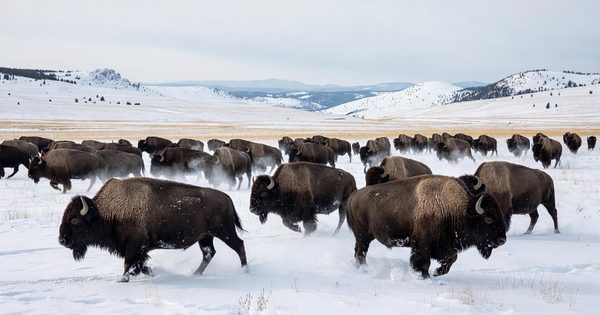
First-choice park: Yellowstone. No other park in the contiguous US concentrates megafauna — bison, elk, wolves, grizzly bears, pronghorn — at such reliable density in such accessible terrain. The Lamar Valley corridor in the northeast section of the park is the core wildlife-watching zone: wolves have been spotted from the road nearly every morning in recent years (no guarantee, but unusually high odds for a managed wilderness). Hayden Valley is the bison and grizzly corridor. The thermal basins attract elk and bison year-round.
If Alaska is accessible: Denali. The Denali Park Road penetrates 92 miles into one of the largest intact wilderness areas in North America. Private vehicles are not permitted past Mile 15 — visitor access is by park bus. The wildlife density for caribou, grizzly bears, Dall sheep, and wolves is extraordinary, but access requires booking park buses months in advance through recreation.gov.
Geology
The American West is a geology museum at landscape scale. Grand Canyon is the most iconic — 1.8 billion years of geologic time exposed in a single vertical section. For first-timers interested in geology specifically: Zion (Navajo Sandstone crossbeds and slot canyons), Bryce Canyon (hoodoo formation through freeze-thaw cycles — ranger talks explain the mechanism well), Arches (the thinnest arches in the world, still active in their formation processes), Carlsbad Caverns (one of the most accessible cave systems in the country — the Big Room self-guided tour covers 1.25 miles and requires no technical skills).
Dark Skies
The National Park System protects some of the largest dark-sky reserves in the continental US. For first-timers focused on stargazing: Bryce Canyon is a designated International Dark Sky Park at 8,000-foot elevation with ranger-led astronomy programs in summer; Capitol Reef is one of the least-visited Mighty 5 Utah parks and has extraordinary dark skies with minimal surrounding light pollution; Big Bend in Texas has the lowest measured light pollution of any US national park in the lower 48. For a full guide to the best western parks for dark-sky observation, see Best Parks for Stargazing in the American West.
Family Fun (All Ages)
The best “family fun” parks are not always the ones with the most dramatic landscapes — they’re the ones with the most activity variety and the least logistical friction.
Top family fun parks: Great Smoky Mountains (free entry, accessible from a third of the US population, river wading, Junior Ranger, wildlife viewing from the road), Yellowstone (geyser boardwalks and bison sightings that require no hiking ability from a five-year-old), Acadia (carriage road bike rides, ocean swimming, excellent Junior Ranger program), Grand Canyon South Rim (two-day achievable itinerary — the rim trail views are accessible to any age).
Photography
The defining first-trip photography itinerary is the Arizona Strip circuit: Zion (Narrows, Canyon Overlook, Watchman Sunrise) → Bryce Canyon (Bryce Amphitheater sunrise, Fairyland Hoodoos) → Capitol Reef (Fruita historic district, Chimney Rock) → Arches (Delicate Arch at sunset, Windows Section) → Canyonlands (Mesa Arch at sunrise — one of the most-photographed scenes in Western landscape photography). This route is 7–10 days driving and is the core of the Mighty 5 Utah itinerary below.
The California combo — Yosemite (Tunnel View, Valley reflection ponds, Half Dome from Glacier Point) plus Death Valley in spring or fall (sand dune abstracts, Zabriskie Point at dawn, salt flat textures at Badwater) — is a strong alternative for photographers based on the West Coast.
History and Cultural Sites
The NPS manages hundreds of sites with deep cultural and historical significance beyond the natural parks. First-time visitors focused on history should look beyond the “63 national parks” list: Gettysburg (Civil War battlefield — the NPS visitor center is one of the best interpretive museums in the federal system), Mesa Verde (Ancestral Puebloan cliff dwellings — guided tours of Cliff Palace and Balcony House are among the most extraordinary archaeological site experiences accessible to the public), Congaree (South Carolina’s old-growth bottomland forest preserves one of the tallest temperate deciduous canopies in the world, with cultural history of the Congaree people and early settlers layered into its trail system), Florissant Fossil Beds in Colorado (a 34-million-year-old fossil deposit that has yielded more than 1,700 identified insect species and dozens of plant species — extraordinary for first-timers who assume “national park” means only scenic landscapes).
Axis 5: Starting Location
Geography shapes logistics. A five-day trip to Glacier National Park from Atlanta involves two flights and a rental car; the same trip from Seattle is a five-hour drive. Match your starting city to parks within realistic range.
From New York City
Long weekend: Acadia, Maine (6-hour drive, or fly to Bangor then 1 hour). Shenandoah, Virginia (5-hour drive — the full length of Skyline Drive from Front Royal is doable in two days).
5-day: Acadia (full itinerary including Park Loop Road and carriage roads), or fly to Denver for Rocky Mountain National Park.
From Chicago
Long weekend: Cuyahoga Valley, Ohio (5-hour drive — the most underrated accessible national park in the Midwest), Indiana Dunes National Park (1.5-hour drive — free admission, excellent birding and swimming, and often overlooked because of its proximity to urban Chicago).
5-day: Drive to Badlands, South Dakota (10 hours — worth doing as a drive if you stop at Starved Rock State Park and the Wisconsin Dells corridor en route), or fly to Denver for Rocky Mountain.
From Atlanta
Long weekend: Great Smoky Mountains (3.5-hour drive from Atlanta — one of the most accessible major national parks from the Southeast). Congaree, South Carolina (3.5-hour drive — excellent for a low-key, uncrowded first-park experience).
5-day: Great Smoky Mountains full itinerary (Cades Cove, Clingmans Dome, Alum Cave, Cataloochee Valley), or fly west to Grand Canyon or Zion.
From Denver
Long weekend: Rocky Mountain National Park (1.5-hour drive — Trail Ridge Road, Bear Lake corridor, and Longs Peak views). Great Sand Dunes National Park (3.5-hour drive — genuinely unusual first-park experience, sand dunes against a 14,000-foot backdrop).
5-day: Rocky Mountain plus two or three days at Great Sand Dunes, or drive southwest to Mesa Verde.
From Seattle
Long weekend: Mount Rainier (1.5-hour drive — Paradise and Sunrise are outstanding day-hike destinations). Olympic (2–3-hour drive — three ecosystems in one park: rainforest, glacier peaks, and Pacific coast).
5-day: The Pacific NW Big 3 — Olympic, Mount Rainier, and North Cascades National Park — is a natural 7-day loop but can be condensed to 5 days by choosing one ecosystem per park rather than trying to cover each park completely.
From Los Angeles
Long weekend: Joshua Tree (2.5-hour drive — best in fall or spring; avoid summer). Channel Islands (ferry from Ventura Harbor, approximately 90 minutes crossing to Santa Cruz Island — the closest wild island experience to a major US metro; Channel Islands National Park is served by Island Packers ferry, with day trips and overnight camping both available).
5-day: Drive to Zion and Bryce Canyon (5-hour drive from LA to Zion entrance — forms the western anchor of the Mighty 5 Utah itinerary), or fly to Seattle for the Pacific NW circuit.
From Phoenix
Long weekend: Grand Canyon South Rim (3.5-hour drive — the rim trail, Mather Point, and the Desert View Drive east section are achievable in two days). Saguaro National Park (within city limits — an underrated first-park experience entirely accessible on a half-day trip from Phoenix).
5-day: Grand Canyon full itinerary plus Zion (5 hours from Grand Canyon South Rim), or the eastern segment of the Mighty 5 (Arches, Canyonlands) via Salt Lake City connection.
Recommended Road Trip Itineraries for First-Time Multi-Park Visitors
The Mighty 5 Utah (7–10 Days Recommended)
The five national parks of southern Utah — Zion, Bryce Canyon, Capitol Reef, Arches, and Canyonlands — form one of the most geographically concentrated collections of landscape superlatives in the world. The loop is approximately 700 miles and can be driven in either direction. The standard clockwise direction from Las Vegas runs: Las Vegas → Zion (2 days) → Bryce Canyon (2 days) → Capitol Reef (1 day) → Canyonlands (1 day) → Arches (2 days) → Moab → Salt Lake City.
Realistic timing: 7 days is the minimum to do each park justice without spending most of each day in the car. 10 days allows one or two nights in each park’s gateway town, a slot canyon excursion in the Grand Staircase-Escalante area between Bryce and Capitol Reef, and the option to drive Dead Horse Point State Park overlooking Canyonlands before arriving in Moab.
Permit note: Arches currently operates a timed-entry pilot for peak season. Check current requirements at nps.gov/arch before booking — the Arches permit window opens 30 days and 3 days before arrival. Zion Canyon shuttle is mandatory for Zion Canyon floor access during peak season; no private vehicles are permitted on the canyon floor road from approximately early April through late October.
The Pacific Northwest Big 3 (7–10 Days from Seattle)
Olympic (2–3 days — Hoh Rain Forest, Hurricane Ridge, Kalaloch Coast), Mount Rainier (2 days — Paradise wildflower meadows, Skyline Trail), North Cascades (2 days — Diablo Lake, Chain Lakes Loop). This circuit is approximately 600 miles from Seattle and can be driven as a loop with reasonable daily distances.
Geographic note: All three parks are within roughly a 3-hour radius of Seattle. The driving distances are manageable, the ferry crossing from Anacortes to the San Juan Islands (a half-day detour not in the NPS system but adjacent to North Cascades) is a natural add-on for the full Pacific Northwest experience.
What NOT to Do on a First National Parks Trip
First-timers frequently make the same logistical mistakes. These are the most common:
Don’t try to do Yellowstone, Glacier, and Grand Teton in five days. Yellowstone alone deserves five days. Grand Teton and Yellowstone share a gateway and are easily combined in 7–10 days. Adding Glacier requires an additional 3-hour drive and at least two full days — making it a 12-day trip minimum. Attempting all three in five days means five hours of driving per day and seeing each park through a windshield.
Don’t visit Death Valley in July or August. This bears repeating. The park is extraordinary in October through April. In midsummer, it is one of the hottest places on Earth. First-timers underestimate how quickly heat illness sets in when air temperature is 120°F and ground temperature exceeds 140°F. If you’re in the region in summer, go to Zion or the North Rim of the Grand Canyon instead.
Don’t plan to summit Half Dome without preparation. Half Dome requires a permit lottery (Day-of permits released at 7 a.m. via recreation.gov), appropriate footwear (approach shoes or hiking boots — not trail runners on the cables section), and a genuine comfort with vertical exposure. The cables section involves grabbing a cable anchored to polished granite on a 45-degree slope above a 4,800-foot drop. It is not technically dangerous if you follow protocol, but it is not a casual hike.
Don’t rely on cell service for navigation inside parks. Most major parks have minimal or no cell coverage in interior zones. Download offline maps for your destination before you arrive — maps.me with the relevant regional park map downloaded works reliably without signal, and NPS park apps have offline functionality.
Don’t wait until you arrive to check permit and reservation requirements. The timed-entry and permit landscape changes annually. What was first-come-first-served in 2023 may require a reservation in 2025. Check the specific park’s nps.gov page before you travel, not the travel blog you read six months ago.
Permits, Reservations, and When to Book
The permit and reservation landscape has changed significantly in the past five years. Here is what first-time visitors need to know:
Recreation.gov is the central booking platform for NPS campsite reservations, timed-entry vehicle permits, guided tour tickets (Half Dome, Cliff Palace at Mesa Verde, King’s Palace at Carlsbad Caverns), and backcountry permits at most parks. Create an account before you need it — the checkout process at 6:59 a.m. on a booking release morning is not the time to create a new password.
The standard campsite booking window is six months to the day before your arrival date, released at 7 a.m. Mountain Time. Exceptions: Yosemite Valley campgrounds open five months out on the 15th of each month; Acadia opens six months out on the first of each month. The most sought-after sites (Upper Pines at Yosemite, Madison at Yellowstone, Elkmont at Great Smoky Mountains) sell out within minutes.
In-park lodge reservations for top properties require 6+ months advance booking. Old Faithful Inn at Yellowstone, Many Glacier Hotel at Glacier, El Tovar at the Grand Canyon, and Crater Lake Lodge are among the most sought-after property reservations in the US hospitality system. For summer stays at any of these, booking in January or February for the same year is standard. Old Faithful Inn typically books out for summer within hours of the Xanterra release window opening. Check xanterra.com for Yellowstone, Grand Canyon, and Crater Lake lodge bookings; glacierparkcollection.com for Glacier’s properties.
Some permits are lottery-based, not first-come. Half Dome cables at Yosemite, Coyote Buttes North (“The Wave”) in Grand Staircase-Escalante, backcountry permits at popular parks, and float trips through the Grand Canyon are allocated by lottery. Entering the lottery months before your planned trip — and planning alternate itineraries in case you don’t win — is the correct approach.
Frequently Asked Questions
What is the best national park for a first-time visitor from the East Coast?
Acadia National Park in Maine is the strongest all-around first-park recommendation for East Coast visitors. It has an excellent carriage road cycling network, free shuttle system, outstanding Junior Ranger program, and accessible day-hiking on the Jesup Path, Ocean Path, and Jordan Pond Loop. For visitors from the Mid-Atlantic, Shenandoah offers Skyline Drive and a two-to-five-day itinerary without air travel.
How many national parks can I realistically visit in one week?
Two or three parks with geographic proximity is realistic for a satisfying week-long trip. The Mighty 5 Utah circuit covers five parks but requires 7–10 days — doing it in five days means spending most of each day in the car. Two-park combinations that work well in a week: Yellowstone and Grand Teton, Zion and Bryce Canyon, Acadia and White Mountain National Forest (not NPS but adjacent), Olympic and Mount Rainier.
When is the best time of year to visit national parks to avoid crowds?
Mid-September through October is the most reliable window for reduced crowds with good conditions at most parks. School calendars drive a sharp drop in family visitors after Labor Day, while weather at most parks remains excellent through October. The exception is fall foliage parks — Acadia, Shenandoah, and Great Smoky Mountains peak in mid-to-late October and actually see higher crowds during foliage peak weeks.
Do I need the America the Beautiful Pass?
If you’re visiting two or more fee-charging national parks in a calendar year, the $80 America the Beautiful Interagency Annual Pass is almost certainly worth buying. A single entry to most national parks is $35; two entries cover the pass cost. The pass covers the entry fee for the pass holder and all accompanying passengers in a single vehicle (or up to three additional adults at fee-per-person parks). Great Smoky Mountains and Cuyahoga Valley charge no entrance fee regardless — the pass doesn’t apply there, but it applies everywhere else on this list. Full details in the America the Beautiful Pass complete guide.
What should a first-time visitor to Yellowstone know before going?
Book campsites and lodging 6+ months in advance. Note that Yellowstone does not operate a park-entry vehicle reservation system — only campground, lodging, and backcountry permits require advance booking. Do not approach bison under any circumstances; maintain 25 yards minimum distance and do not attempt to pass them on foot. Carry bear spray on every hike and know how to use it. Check current road conditions and geyser eruption predictions at nps.gov/yell.
Is the Grand Canyon worth visiting as a first national park?
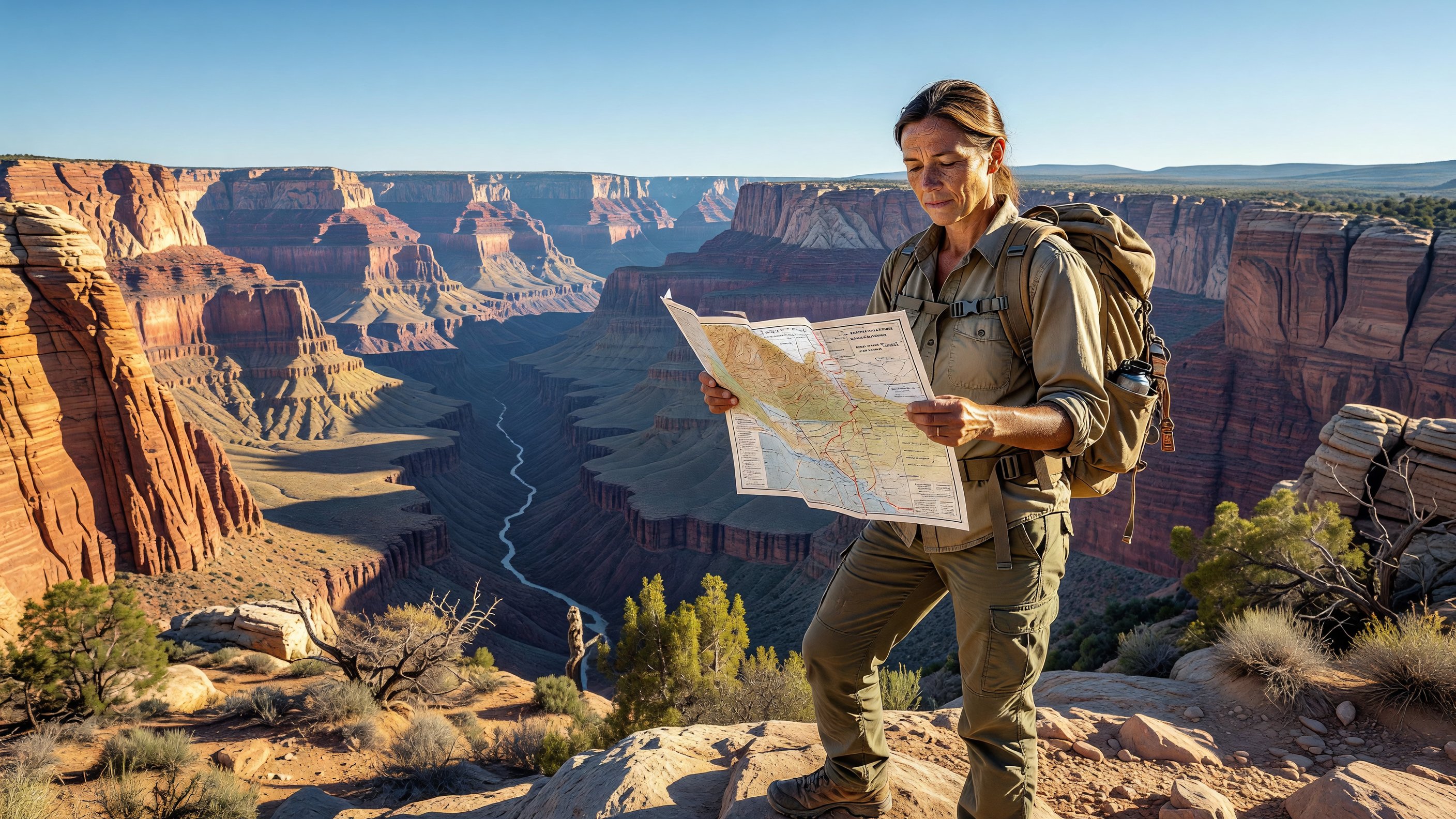
Yes, if you manage expectations correctly. The South Rim is genuinely overwhelming on first sight — the scale of the canyon is a perceptual experience that photographs don’t capture. Two days on the South Rim covers the key overlooks, a descent to the 1.5-mile Resthouse on the Bright Angel Trail (achievable as a day hike for most visitors), and the Desert View Drive east section. What the Grand Canyon is not: a park where you can casually hike to the river and back in a day. The Bright Angel Trail to the Colorado River is 9.5 miles each way with a 4,380-foot descent — not a day hike without specific preparation.
How far in advance should I book lodging near national parks?
For summer stays at parks with limited in-park lodging (Glacier, Yellowstone, Grand Canyon, Yosemite), 6 months in advance is the minimum. For the most sought-after properties — Old Faithful Inn, Many Glacier Hotel, El Tovar, Crater Lake Lodge — 12 months in advance is the realistic target. For gateway town accommodations (Springdale at Zion, Gardiner at Yellowstone’s North Entrance, Bar Harbor at Acadia), 3–6 months is typical for summer availability.
Reservations for NPS campgrounds and park activities are available at Recreation.gov — the official booking platform for the National Park System. For background on each park’s conservation status and advocacy issues, the National Parks Conservation Association maintains current park-by-park reporting. For first-time visitors planning to visit multiple parks: the America the Beautiful Pass guide covers the one purchase that makes multi-park trips significantly cheaper. Park-specific planning guides on this site cover individual parks in detail — starting with the parks most likely to be your first trip: Acadia National Park, Great Smoky Mountains, Yellowstone National Park, Rocky Mountain National Park, and Zion National Park.