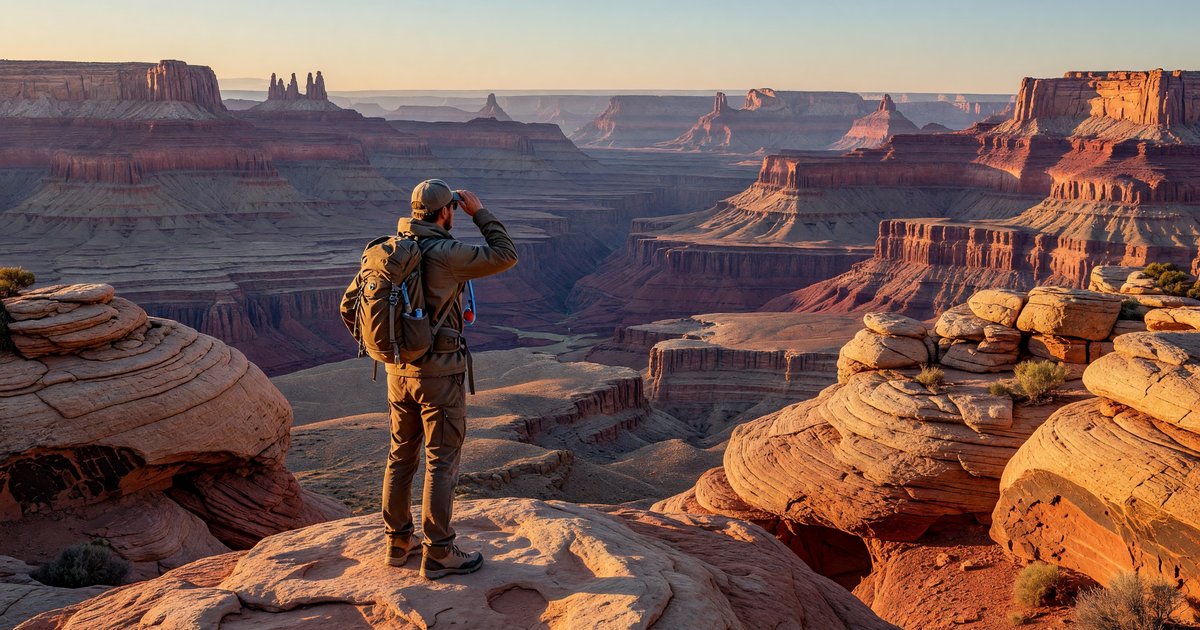
Solo travel in national parks is a different undertaking than going with a group — and in most respects, a better one. You move at your own pace. You stop when the light is right. You eat when you’re actually hungry. The park reveals itself on your schedule, not on a vote.
But the practical considerations are real. A solo traveler carries no backup — no one to go for help if something goes wrong on trail, no one to split the driving with, no one to hold your camera for a non-selfie portrait. The parks that work best for solo visitors are ones that reduce these friction points structurally: shuttle systems that eliminate parking anxiety and single-car logistics, gateway towns walkable enough to be safe at night, lodges that function as social spaces where solo travelers naturally meet other people, and trails well-marked enough that a first-time visitor isn’t navigating blind.
This guide ranks ten national parks specifically for solo travel utility — not just for scenic quality, where almost every park qualifies. Each entry covers transit access, lodging character, safety logistics, and the photography-specific considerations that matter when you’re shooting alone.
What Makes a Park Work for Solo Travelers?
Before the ranked list, it’s worth naming the criteria explicitly, because they’re different from standard “best parks” rankings.
Shuttle system availability. A free or included shuttle changes the solo experience fundamentally. It eliminates the driving-fatigue problem on long park roads, removes the parking-spot anxiety that solo travelers can’t split with a partner (“you stay, I’ll circle”), and allows a solo traveler to exit a trail at any point without having to return to a single fixed trailhead. Parks with shuttle systems are substantially more solo-friendly than parks without them.
Walkable gateway town. A gateway town you can walk at night matters more than people admit. When you finish a day hike alone at 6 p.m., having a main street with restaurants, a coffee shop, and a gear store you can access on foot — without unlocking a car in an empty parking lot — is a genuine safety and comfort factor. Springdale (Zion), Bar Harbor (Acadia), and Joshua Tree town all clear this bar. Some gateway towns do not.
Social lodging. There’s a meaningful difference between lodging that isolates you in a private room and lodging that functions as a social node. In-park historic lodges — Old Faithful Inn, Many Glacier Hotel, Crater Lake Lodge, Bright Angel Lodge — are architecturally and operationally social: large common rooms, communal dining, communal porches, and a visitor base of people who’ve all just done the same thing and want to talk about it. Solo travelers who want to meet people should weight in-park lodge availability heavily.
Accessibility of ranger programs. Ranger-led programs are the solo traveler’s natural solution to the “I should have someone with me on the backcountry trail” problem. A free ranger hike gives you a trail companion, a local expert, and a group — with no commitment beyond showing up. Parks with robust ranger-led programming (Glacier, Acadia, Grand Canyon, Yellowstone) are more accessible to solo visitors.
Cell and communication coverage in the gateway town. This is distinct from backcountry coverage, which is poor everywhere. What matters is whether you can make a safety check-in call or send a message from your lodging or from the main visitor area. In most gateway towns, this works. It matters because it allows you to maintain the one non-negotiable solo safety practice: letting someone know your itinerary and expected check-in time.
The Top 10 National Parks for Solo Travelers
1. Zion National Park, Utah
Zion earns the top position because it solves the solo-travel logistics problem at the system level. The Zion Canyon Shuttle — a free, mandatory-use transit system that runs from spring through fall — replaces every solo-driving anxiety in the park with a simple boarding sequence. You park once in Springdale or at the Visitor Center, board the shuttle, and access every major trailhead without navigating an unfamiliar canyon road alone.
For solo travelers, this matters most at the end of the day. You finish the Riverside Walk or the Watchman Trail as the light fades, board a shuttle back to the Visitor Center, and walk into Springdale on your own terms. No dark parking lot navigation, no lone car retrieval.
Springdale is unusually walkable for a national park gateway town. The main street has restaurants, outfitters, and lodging all within a five-minute walk, and the park entrance is at the end of the street. The town has a real pedestrian character that most park gateway towns don’t replicate.
Permit-required experiences for solo travelers: Angel’s Landing now requires a permit via the NPS lottery system (seasonal and day-before draws through Recreation.gov). This is worth doing solo — the chain section focuses individual attention and the views from the summit are unobstructed. The Subway backcountry route also requires a permit and should only be attempted by solo hikers with canyon navigation experience; it involves route-finding through a technical drainage. The Riverside Walk to the Narrows entry requires no permit for day hiking.
Photography. The canyon orientation at Zion creates a sunrise-to-midday-to-sunset light sequence that favors solo photographers who can move on their own schedule. The slot canyon walls in The Narrows glow at midday — a shooting window that group photographers often miss because the group consensus says “too hot.” Solo, you go when the light says go.
Bear safety: Zion has no grizzlies. Black bear activity is relatively low in the main canyon; the main wildlife concerns are rattlesnakes on sun-warmed rocks and flash-flood watch on the Narrows.
See the complete Zion National Park visitor guide for permits, trail conditions, and shuttle timing.
2. Acadia National Park, Maine
Acadia’s position on this list is anchored by two structural advantages: Bar Harbor is genuinely walkable, and the Island Explorer shuttle is one of the best free transit systems in the national park network.
The Island Explorer runs from late June through mid-October, connecting Bar Harbor with every major park destination — Jordan Pond, Sand Beach, Thunder Hole, the Cadillac Summit Road approach, and the Schoodic Peninsula routes. No timed-entry reservation required. For a solo traveler, the practical value is that you can park your car or arrive without one and spend days in the park without driving. The system is fare-free, funded by a partnership that includes L.L.Bean and the Friends of Acadia.
Bar Harbor’s walkability gives Acadia a different feel from most Western parks. The town has a real main street — restaurants, bookshops, outfitters — within five minutes of every inn. The village green has benches. The ferry pier has a view. A solo traveler can finish a long day hike, clean up, and walk to dinner without driving.
Carriage roads for solo cyclists and hikers. The 45-mile carriage road network that John D. Rockefeller Jr. funded is one of the best solo hiking and cycling resources in any national park. Compacted gravel, gentle grades, no motorized vehicles, and excellent signage. You can ride or walk for hours without a navigation challenge. Bikes rent from multiple Bar Harbor outfitters.
Photography. Cadillac Mountain at sunrise, the Jordan Pond reflection before 9 a.m., and Otter Cliffs at golden hour are all achievable alone with a camera and a tripod. The Island Explorer means you’re not driving in the dark before a sunrise shot.
See the complete Acadia National Park visitor guide for shuttle routes, Cadillac summit road reservations, and fall foliage timing.
3. Grand Canyon National Park — South Rim, Arizona
The Grand Canyon South Rim operates a free shuttle system year-round across four routes: Village Route (year-round), Kaibab/Rim Route (year-round), Hermits Rest Route (March–November), and Tusayan Route (seasonal). This is one of the few parks where a solo traveler can arrive at Grand Canyon Village without a car and access the full Rim trail and most of the developed visitor experience via shuttle.
Year-round access matters for solo travel planning. The South Rim doesn’t close seasonally; it’s fully operational in January, which happens to be one of the better months for solo visits — fewer crowds, good photographic light, and affordable lodging rates.
Bright Angel Lodge is the standout social lodging option for solo travelers. The lodge and adjacent cabins at the rim are historic (Fred Harvey/Xanterra property), have a communal dining room, and attract a visitor base interested in extended canyon exploration. Conversations at the rim-view dining area start naturally. Book well in advance — summer and shoulder-season dates fill quickly.
Rim Trail for solo hiking. The 13-mile South Rim Trail is paved in sections, well-signed, and follows the canyon edge between trailheads. It’s accessible to solo visitors at all fitness levels, unlike the corridor trails that descend into the canyon (Bright Angel and South Kaibab require physical fitness, carry warnings against going solo on summer days, and demand careful solo-specific planning around heat and water).
Safety consideration for inner canyon solo hiking: The NPS explicitly recommends against hiking below the rim in a single day trip during summer. In winter, solo day hikers can descend Bright Angel to the 1.5-Mile Resthouse comfortably. Any solo overnight in the canyon requires a backcountry permit and solid pre-trip preparation — this is not a beginner solo destination below the rim.
4. Bryce Canyon National Park, Utah
Bryce Canyon’s shuttle system runs free from April through October — the seasonal window when the park is at its most accessible and most visited. The route covers all major viewpoints and trailheads from Ruby’s Inn and the Visitor Center to Bryce Point, eliminating the parking-lot competition that plagues peak-season days.
The hoodoo formations are compact enough that the main Bryce Amphitheater is navigable in a half day, making Bryce a good solo day-trip from a Kanab or Panguitch base. Solo photographers specifically: the east-facing amphitheater receives excellent morning light. The Sunset Point–Sunrise Point ridge at dawn, alone, with low angle light on the hoodoos, is among the cleanest compositions in the Southwest.
Bryce Canyon City (the gateway area around Ruby’s Inn) is small but functional — a few restaurants, a general store, and lodging clustered near the park entrance. Not a town in the Springdale sense, but enough for a solo traveler’s needs.
Stargazing. Bryce Canyon is an International Dark Sky Park, and its high elevation (around 8,000 feet at the rim) and low light pollution make it one of the better solo stargazing destinations in the lower 48. The Milky Way over the hoodoos is a genuine photography experience.
Combined Utah visit. Zion and Bryce Canyon are approximately 80 miles apart on Highway 89; a solo circuit covering both parks in four to five days is a standard itinerary. The drive between them passes through Kanab, a good midpoint base.
5. Glacier National Park, Montana
Glacier is more logistically demanding for solo travel than the parks above it on this list, but it earns its place because of two structural advantages: Amtrak access and ranger-led programming.
Amtrak Empire Builder. The Empire Builder route runs from Chicago to Seattle and Portland with stops at East Glacier Park (seasonal, April–October) and West Glacier year-round, with the city of Whitefish a few miles west. For a solo traveler who doesn’t want to drive 400+ miles from a major airport, arriving by train at East Glacier and staying at Many Glacier Hotel is a legitimate logistics path. East Glacier Park station is less than a mile from Glacier Park Lodge. West Glacier is within the park boundary.
Many Glacier Hotel. This is the most social of Glacier’s in-park lodges — the large Swiss chalet-style structure on Swiftcurrent Lake functions as a social hub during summer months, with a dining room, lounge, and a visitor base almost entirely composed of people who have been hiking all day and want to talk about it. It’s an unusually easy place to meet other solo travelers.
Ranger-led hikes. Glacier runs one of the most active free ranger-hike programs in the national park system. Daily ranger-led hikes in the Many Glacier, St. Mary, and Apgar areas give solo travelers a safe group option for otherwise backcountry-scale routes.
Bear safety. Glacier has an active grizzly bear population. Solo hiking in bear country requires different behavior than hiking with a group: carry and know how to use bear spray, make regular noise on trail (call out on blind corners, avoid earbuds), and understand that NPS guidelines actively recommend against solo hiking in grizzly habitat. The ranger-led hike programs are specifically valuable for solo visitors in Glacier for this reason. If you’re hiking alone, stay on popular trails during daylight hours and treat the bear spray as essential gear, not optional.
6. Yellowstone National Park, Wyoming
Yellowstone is exceptional in natural character and has clear solo-travel advantages in its in-park lodging — but it carries one significant constraint that drops it in the solo-travel ranking: the park requires a car for meaningful exploration. Yellowstone’s roads span roughly 142 miles of the Grand Loop, and there is no park-operated internal shuttle system for general visitor use. Without a vehicle, you see a small fraction of the park.
With a vehicle, Yellowstone is accessible and social. Old Faithful Inn is one of the great social lodging experiences in the national park system — the lobby’s seven-story log structure with its fireplace and balcony walkways attracts solo travelers, and conversations happen. The in-park lodge network (Xanterra-operated) spans Old Faithful Inn, Lake Yellowstone Hotel, Canyon Lodge, and others, all with communal dining.
Wildlife watching. The Lamar Valley in the northeast quadrant is among the best large-mammal wildlife watching in the lower 48 — wolf packs, bison herds, pronghorn, and raptors. Solo wildlife photography in Lamar Valley at dawn is the kind of experience this park is genuinely built for.
Safety note. Yellowstone’s thermal features — geysers, hot springs, mud pots — carry a serious ground-stability risk that’s distinct from other parks. Every year visitors leave boardwalks and suffer serious or fatal burns from falling through thin thermal crusts. Solo travelers should stay on designated boardwalks and trails around all thermal areas without exception. This is not a “recommended” guideline; it is genuinely dangerous ground.
7. Crater Lake National Park, Oregon
Crater Lake is among the most manageable solo park destinations in the West. The lake’s caldera rim is navigable on a single Rim Drive circuit in one day — 33 miles, fully paved, with pullouts at every significant viewpoint. For a solo photographer, this structure means you can plan your route precisely, know exactly where you’ll be at golden hour, and not rely on a group consensus.
Crater Lake Lodge is a well-run social lodge experience at the rim, with a dining room that overlooks the lake directly. Solo diners are comfortable here. The lodge is open late May through mid-October; winter visits are possible but require a different planning approach as the lodge closes.
The Blue. Crater Lake’s water color — the deep, almost saturated cobalt blue of the world’s deepest lake in the United States — is one of the few natural subjects that genuinely looks like the photographs of it. Solo photographers who have only seen this on screens are consistently surprised. The circumnavigation of the rim gives 33 miles of perspective on this subject.
One caution. Rim Village and the lodge area represent essentially the full visitor infrastructure. Crater Lake is not a park you base yourself in for a week without a car — a short visit of one to two days is appropriate for most travelers, and the park combines well with a southern Oregon road trip through the Rogue River–Siskiyou corridor.
8. Olympic National Park, Washington
Olympic’s geography — three distinct ecosystems (alpine, rainforest, wilderness coast) within a single park — makes it unusual among solo travel destinations. The park is accessible from Port Angeles, a real mid-sized town with restaurants, accommodations, and ferry service to Victoria, British Columbia.
For solo travelers arriving from Seattle: the Washington State Ferries Bainbridge or Kingston route connects Seattle to the Olympic Peninsula without a long drive around the Sound. This is one of the few national parks where a Pacific Northwest urban resident can access a major backcountry experience with a combination of ferry and short drive.
The Hoh Rain Forest and the Quinault Rain Forest are among the most otherworldly environments in North American parks — mossy old-growth Sitka spruce and western hemlock under nearly constant cloud cover. Solo hiking through the Hoh is quiet in a way that few parks achieve. The main visitor center area is staffed and well-marked.
Photography. The wilderness coast section — Rialto Beach, Ruby Beach, the sea stacks at sunset — is a technically accessible solo photography subject. Wide-angle compositions of the stacks at blue hour work regardless of experience level.
9. Joshua Tree National Park, California
Joshua Tree is a counterintuitive solo travel destination: the backcountry is genuinely remote and some of it is serious wilderness, but the developed areas and gateway town are unusually accessible and community-oriented.
Joshua Tree town (technically Twentynine Palms is the nearest full-service town, but Joshua Tree town has the character) has a small main street culture driven by the climbing and artist communities that have lived there for decades. Cafés, used bookshops, galleries — the town functions as a real place, not just a park gateway. Solo travelers who arrive expecting a remote outpost are pleasantly surprised.
The climbing community. Joshua Tree is one of the premier traditional rock climbing destinations in North America, with over 8,000 named climbs on the park’s granite formations. The climbing community is structurally social — partners are needed, and solo travelers who climb are routinely matched by climbers at the base of crags. If you’re a solo climber, Joshua Tree is where you go to not be alone.
Dark sky photography. Joshua Tree is an International Dark Sky Park at moderate elevation with low local light pollution and a dramatic foreground subject — the sculptural silhouettes of the Joshua trees themselves. Milky Way photography over a Joshua tree silhouette is a technically achievable solo subject with a tripod and basic astrophotography settings. The park’s flat topography means you can park along a dirt road and walk 200 yards to a composition.
Summer note. Summer temperatures in Joshua Tree regularly exceed 100°F and can approach 110°F. Joshua Tree is a fall, winter, and spring park for most visitors. The climbing community peaks October through April.
10. Yosemite Valley, California
Yosemite’s logistics have become complex enough that solo travel here requires more planning than any other park on this list — but the resources available to solo travelers, once understood, are genuinely good.
YARTS bus service. The Yosemite Area Regional Transportation System (YARTS) connects the valley with Merced (with Amtrak connections), Fresno (near Fresno Yosemite International Airport), Mammoth Lakes, and Sonora. This makes a carless Yosemite trip legitimately possible — fly to Fresno, take YARTS to the valley, stay at Curry Village (Half Dome Village). The park’s internal free shuttle system then handles movement within the valley.
Curry Village / Half Dome Village. This in-valley accommodation is the most social lodging option for solo travelers — canvas tent cabins and hard-sided units at moderate cost, a communal cafeteria, and a visitor base that skews outdoor-active and conversational. The social character of Curry Village is part of the Yosemite experience.
Valley floor walkability. Yosemite Valley is, for a national park, quite walkable — the Mirror Lake loop, the Bridalveil Fall trail, and the Cook’s Meadow loop all connect via the valley floor trail network. A solo traveler without a car can access these on the internal shuttle and on foot.
Reservation complexity. Yosemite has operated a peak-season reservation system for valley entry. Verify current reservation requirements against the NPS Yosemite site before your trip — the system has changed year to year and solo travelers who show up expecting walk-up access during peak season have been turned away.
Half Dome cables. The Half Dome permit lottery is one of the most competitive in the park system. Solo travel to the top of Half Dome is possible but should only be considered by solo hikers with significant experience — the cables section above the subdome is exposed and weather-sensitive, and the round trip from the valley floor is 14–16 miles with 4,700 feet of gain. Permits are required and issued via lottery through Recreation.gov.
Practical Solo Safety: What Actually Matters
Share your itinerary — every time, every park
The single most effective solo safety practice has nothing to do with gear. Before every day hike, tell someone your specific plan: which trail, which direction, your expected return time, and what to do if they don’t hear from you. This can be an email, a text, or a note left at your lodging. Without this, a solo traveler who gets hurt or lost has no passive rescue trigger. With it, someone will initiate a search if you don’t check in.
Satellite communication devices
For any solo hiking beyond popular day trails, a satellite communicator is worth carrying. Garmin InReach devices send GPS-tracked SOS messages via the Iridium satellite network from anywhere on earth, regardless of cell coverage. Personal Locator Beacons (PLBs) are one-way devices (no two-way messaging) that work similarly. The Garmin InReach Mini is the category standard — compact, around $350 with a subscription, and the difference between a survivable incident and a fatal one in a remote-park scenario. National Park Service backcountry rangers recommend satellite communicators for all solo backcountry travel.
Wildlife awareness for solo hikers
Bear country (black bears): Make noise on trail. Carry bear spray if required or recommended for the area. Store food in provided bear boxes at campgrounds. Black bear encounters are almost always resolved by making yourself large and speaking firmly.
Grizzly country (Glacier, parts of Yellowstone): Different protocols apply. Carry bear spray accessible (not buried in your pack), make consistent noise on blind-corner trails, hike with others when possible. Playing dead during a defensive grizzly attack; fighting back during a predatory attack. Know the difference. NPS Glacier has detailed guidance. Consider ranger-led hikes as your primary access method for backcountry-character trails.
Rattlesnakes: Common in the Southwest desert parks (Zion, Joshua Tree, Grand Canyon, Bryce). Watch where you put your hands and feet on rocky terrain. Give them space. Most bites occur when a snake is stepped on or handled.
Heat: Underestimated and overclaims more park visitors than wildlife. In desert parks, carry substantially more water than you expect to need (at minimum 1 liter per hour in summer conditions), start early, and know your turnaround temperature.
Women-specific safety
The data on assault risk in national parks is consistently lower than in comparable urban settings — most solo female travelers report their biggest safety concern is wildlife and terrain, not other people. That said, a few practices reduce risk without requiring paranoia:
- Avoid broadcasting solo status — don’t announce to strangers on trail that you’re alone.
- Campsites with other campers nearby are safer than remote dispersed sites.
- Trust your read on social situations. If a conversation or campsite interaction feels off, it’s fine to move on without explanation.
- Rangers are accessible, known, and uniformed — they’re a resource, not just an emergency contact.
- Photography permits for commercial work (selling prints, publishing for clients) require additional NPS permitting at most parks. Check individual park permit pages before shooting commercially.
The broader point: national parks are among the more naturally supervised outdoor environments in the country. Popular trails during daylight hours at any of these parks are genuinely low-risk for solo travel. The backcountry at night in remote parks is a different calculation.
Frequently Asked Questions
Is it safe to visit national parks alone?
Yes, for the vast majority of experiences. Popular trails at major parks during daylight hours have consistent ranger presence, well-marked routes, and regular foot traffic. The realistic solo travel risks are terrain, wildlife, and weather — the same risks that exist for group travel, managed with preparation, a shared itinerary, and appropriate gear. Statistical assault rates in national parks are substantially lower than in comparable urban environments.
Which national parks can you visit without a car?
Zion (shuttle + walkable Springdale), Acadia (Island Explorer + walkable Bar Harbor), Grand Canyon South Rim (free year-round shuttle), and Yosemite Valley (YARTS bus from Fresno/Merced + internal shuttle) all support genuine carless visits. Glacier is accessible by Amtrak Empire Builder to East Glacier or West Glacier, with limited park transit once inside. For all other parks, a rental car or personal vehicle remains the practical requirement for meaningful access. International visitors navigating driver’s license requirements and rental logistics alongside transport planning will find a fuller treatment in the National Parks Guide for International Visitors.
What should I bring when hiking alone in a national park?
Beyond standard day-hike gear (water, food, navigation, first aid, appropriate clothing), solo hikers should carry: a fully charged phone with the park’s offline map downloaded, a personal locator beacon or satellite communicator for backcountry trails, bear spray in parks where bears are present, and a written or photographed copy of your itinerary to leave with your lodging or a contact. A whistle is useful and weighs nothing.
Do national parks offer guided hikes for solo visitors?
Yes. Most major parks offer free ranger-led hikes and programs during peak season — Glacier, Acadia, Grand Canyon, Yellowstone, and Yosemite all have robust ranger interpretation programs listed on their NPS park pages. Ranger hikes are a legitimate and underused resource for solo travelers who want trail companionship or want to access backcountry-character terrain more safely.
Is solo travel in national parks practical for photographers?
Particularly practical. Photography benefits from the solo traveler’s ability to stay until the light is right, return to a location multiple days, and make decisions based on conditions rather than group consensus. Parks with shuttle systems (Zion, Acadia, Grand Canyon South Rim) are especially useful because you’re not dependent on a vehicle to reach trailheads at odd hours. A tripod, a satellite communicator, and a solid offline map are the photographer-specific additions to the standard solo gear list.
Do I need a commercial photography permit to shoot in national parks for personal use?
No. Personal-use photography — including professional-quality photography for portfolio, personal publication, or social media — does not require a permit at national parks. Commercial photography (shooting for a paying client, for advertising, or for commercial media) typically requires a permit. The NPS defines the distinction on individual park pages; when in doubt, contact the park’s public affairs office before your visit. See NPS photography permit guidance for the current framework.
What’s the best season for solo travel in national parks?
Shoulder seasons — May through June and September through October — offer the best combination of conditions for solo travel. Crowds are lighter than peak summer, weather is generally stable, and services (shuttles, lodges, ranger programs) are fully operational. Winter visits are possible at most parks listed here and provide genuine solitude, but require more gear preparation and reduce some infrastructure availability.
Plan your visit with current conditions, permit schedules, and trail closures at nps.gov. For wilderness safety resources and park advocacy, visit the National Parks Conservation Association. YARTS bus routes and schedules are listed at yarts.com. Satellite communicator options and PLB registration guidance are covered by the National Oceanic and Atmospheric Administration at beaconregistration.noaa.gov.