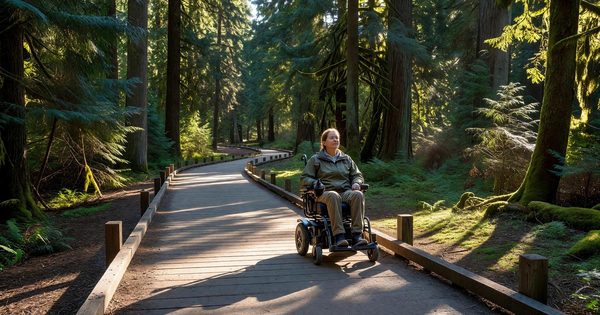
National parks are not only for the young and trail-fit. Some of the most rewarding park experiences — sitting on the porch of the Old Faithful Inn as the geyser erupts, driving Going-to-the-Sun Road through Glacier’s peaks, watching a bison herd cross the valley from a Yellowstone boardwalk — require no more physical exertion than a comfortable walk. For senior travelers, the national park system offers something genuinely rare: world-class natural scenery made accessible through a combination of park infrastructure, free shuttle systems, paved rim trails, and a network of in-park lodges that eliminates the tent-camping requirement entirely.
The key is matching the park to the traveler, not the other way around. A senior traveler who walks three miles a day without difficulty has different needs than one managing a hip replacement recovery. Both can have exceptional trips — the park choices and itinerary structure just look different. This guide covers 12 parks ranked for senior-friendliness, the pacing principles that make multi-day park travel sustainable, and the practical tools — starting with the Senior Pass — that make the whole undertaking better value.
The Senior Pass: Your First Step Before Booking Anything
Before you plan a single itinerary, handle the Senior Pass. It is the most consistently underused tool in senior park travel, and leaving it unpurchased before your first trip is a straightforward financial mistake.
What it is: The America the Beautiful Senior Pass is an interagency pass available to US citizens and permanent residents age 62 and older. It covers entry fees at over 2,000 federal recreation sites — national parks, national monuments, national forests, Bureau of Land Management recreation areas, and more. At a park like Yellowstone or Grand Canyon where the standard vehicle entry fee is $35, a single visit recoups a meaningful fraction of the pass cost.
Two versions:
Senior Annual Pass — $20 (plus a processing fee if ordered by mail from store.usgs.gov). Valid for 12 months from first use. Covers the pass holder plus all vehicle occupants at per-vehicle fee sites, or the pass holder plus up to three additional adults at per-person fee sites.
Senior Lifetime Pass — $80 (plus a processing fee if ordered by mail). Never expires. If you visit even a handful of parks over the coming years, the lifetime pass almost certainly pays for itself over four or five annual renewals.
The math is simple: four annual passes at $20 each cost $80 — the same as one lifetime pass. Anyone planning to visit parks regularly in the years ahead should buy the lifetime version at the first opportunity.
Eligibility and purchase: US citizens or permanent residents age 62 or older. Proof of age and citizenship (driver’s license, passport, or government-issued ID) is required. Purchase in person at any federal recreation fee site (no waiting, immediate issuance), online at Recreation.gov, or by mail through the USGS Store — note that mail orders take up to three weeks, so in-person or Recreation.gov digital purchase is faster. The pass is non-transferable (signed by the pass holder) but covers all occupants of a private vehicle at vehicle-fee sites.
For travelers who also have a permanent disability, the Access Pass is issued free of charge and includes a 50% discount on some amenity fees — see the America the Beautiful Pass guide for a full breakdown of all eight pass variants.
Pacing Principles for Senior Park Travel
The most common mistake in senior park planning is not choosing the wrong park — it is treating the trip like a younger traveler’s itinerary and finding out on day three that fatigue has made the whole thing miserable. These principles apply regardless of which parks you choose.
Cap driving at 4 hours per travel day. Long drive days are the hidden energy drain of national park travel. A 7-hour drive day to reach a park, followed by a 5-hour park day, followed by a 6-hour drive to the next stop, will exhaust anyone within three days. Instead, plan arrival and departure days as travel-only days with no park activity, keep in-transit driving to 4 hours or less, and let the park days be the focus.
Build in one rest day per 3–4 days of activity. A rest day is not a failure of planning — it is the thing that makes the rest of the trip possible. For a 10-day park trip, two scheduled rest days (days 4 and 8, roughly) allow recovery time that prevents cumulative fatigue from compounding. Use rest days for lodge-based activities: sitting on a porch, visiting a visitor center at leisure, doing a 30-minute gentle walk rather than a 3-hour trail.
Altitude adjustment is not optional above 7,000 feet. Several of the most popular parks — Grand Canyon South Rim (6,900 ft), Bryce Canyon rim (8,000–9,100 ft), Yellowstone (7,000–8,000 ft average), Rocky Mountain — sit at elevations that require a physiological adjustment period. Symptoms of altitude sickness include headache, fatigue, shortness of breath, and nausea. For senior travelers — particularly those with cardiovascular or respiratory conditions — arriving at elevation and immediately beginning a full day of walking is the setup for a miserable first day.
Plan at least one arrival day with minimal exertion before any activity above 7,000 feet. Hydrate aggressively — altitude increases fluid loss, and dehydration amplifies every symptom. Avoid alcohol on arrival day at altitude. If you are on blood pressure or diuretic medications, discuss the altitude plan with your physician before the trip. None of this is cause for avoidance — it is cause for planning.
Use shuttle systems whenever available. Free park shuttles eliminate driving fatigue inside parks, reduce parking anxiety, and allow flexible exits from trails at any shuttle stop rather than requiring a return to a fixed trailhead. Parks with robust shuttle systems (Acadia, Bryce Canyon, Grand Canyon South Rim, Yosemite) are structurally better for senior travel regardless of mobility level.
Prioritize lodge-based over camping-based itineraries. In-park historic lodges — Old Faithful Inn, Many Glacier Hotel, Crater Lake Lodge, Bright Angel Lodge, Paradise Inn — put you inside the park experience without any camping logistics. No tent setup after a long walk. No sleeping on the ground. No camp kitchen. The social character of in-park lodges (communal dining rooms, common porches, a visitor base who all did the same thing today and want to talk about it) is also a genuine benefit for senior travelers who have found that group travel logistics are exhausting to manage.
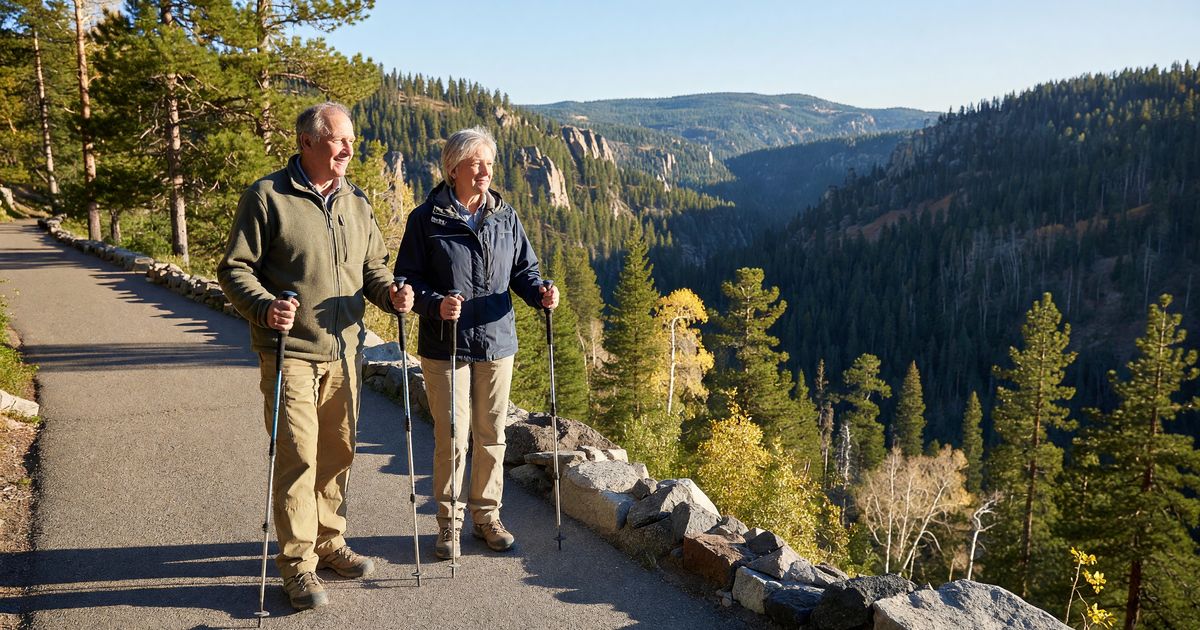
Trekking poles are worth the space in your luggage. On uneven terrain — boardwalk edges, gravel paths, trail roots — a pair of collapsible trekking poles provides meaningful balance support and reduces joint stress on descents. Many gateway towns and in-park gear shops offer rental options if you prefer not to travel with them. Crater Lake, Glacier, and Yellowstone gateway towns all have outfitter shops with rentals.
12 National Parks Ranked for Senior Travelers
The parks below are ranked by overall senior-friendliness — a composite of accessible infrastructure, shuttle quality, lodge availability, manageable distances within the park, and proximity to medical services in the gateway area. Parks at the top of the list work well for senior travelers across a broad range of fitness levels; parks lower on the list are still excellent but require more selective itinerary planning.
1. Acadia National Park, Maine
Acadia earns the top position because its infrastructure was essentially designed for visitors who want to experience a beautiful park at a relaxed pace without a car. The Island Explorer — a free, propane-powered shuttle system funded in part by a partnership with L.L.Bean and the Friends of Acadia — runs from late June through mid-October, connecting Bar Harbor with every major park destination: Jordan Pond House, Sand Beach, Thunder Hole, Cadillac Mountain Road, the Schoodic Peninsula routes. No timed-entry reservation required. You park once (or arrive by bus from Bangor airport) and ride all day.
Senior-friendly specifics:
- Carriage roads: The 45-mile network of compacted-gravel carriage roads that John D. Rockefeller Jr. financed in the early 20th century is the best flat-to-gentle walking resource in any national park. Smooth, well-signed, motor-vehicle-free, and ranging from easy flat loops to gradual climbs. A walker with a cane or rollator can cover miles of Acadia without the surface instability of natural trails.
- Bar Harbor’s walkability: Restaurants, shops, and accommodations are all within a 10-minute walk of each other. You can finish a day on the Island Explorer and walk to dinner.
- Jordan Pond House: The traditional popovers-and-tea service at Jordan Pond House (open seasonally, in-park dining on the lawn or inside) is a genuine Acadia institution. The paved walkway from the shuttle stop to the building is accessible; the lawn area is uneven but manageable.
- Lodging: Bar Harbor has a full range of inn and hotel options; park camping is not required. In-park lodging options are limited (a few cottages managed by the park concessioner), so most senior travelers stay in Bar Harbor and commute in by shuttle.
- Medical proximity: Bar Harbor has a hospital (Mount Desert Island Hospital). Bangor is 1 hour south with a full regional medical center.
- Senior Pass accepted: Yes — standard NPS fee site.
See the Acadia National Park visitor guide for Island Explorer routes, Cadillac Mountain road reservation requirements, and fall foliage timing.
2. Bryce Canyon National Park, Utah
Bryce Canyon is one of the most visually dramatic parks in the national system and one of the most accessible for senior travelers who are primarily interested in viewing rather than strenuous hiking. The hoodoo amphitheater — the park’s defining feature — is viewable from a series of rim overlooks reachable by the free seasonal shuttle or by short paved walks from parking areas.
Senior-friendly specifics:
- Shuttle system: Free, runs April through October, covering all major viewpoints from Ruby’s Inn through Bryce Point. Eliminates the parking competition that peaks during summer months.
- Rim trail: A paved section of the Rim Trail connects Sunrise Point to Sunset Point (approximately 1 mile, relatively flat, exceptional views into the amphitheater). This short stretch is the single best senior-accessible hike in Bryce Canyon — flat surface, railing sections, and the most photographed viewpoint in the park.
- Viewpoint access from parking: Even outside shuttle hours, Bryce Point, Inspiration Point, Sunset Point, and Sunrise Point are all within a short walk (under 0.3 miles) from parking areas.
- Altitude note: The Bryce rim sits at 8,000–9,100 feet. This is above the threshold where altitude adjustment matters — plan a low-activity arrival day, hydrate, and limit exertion on day one. The first evening in Bryce is not the time for a full rim walk.
- Lodging: The Lodge at Bryce Canyon (NPS concessioner, in-park) is available in season. Ruby’s Inn outside the park entrance offers motel and hotel rooms at various price points.
- Medical proximity: The nearest hospital is in Panguitch (20 miles north) or Cedar City (80 miles southwest). Bryce is more remote than parks like Acadia or Grand Canyon — this is worth noting for travelers with active medical conditions.
- Senior Pass accepted: Yes.
3. Grand Canyon National Park — South Rim, Arizona
The Grand Canyon South Rim is among the most senior-accessible parks in the western United States, in part because the NPS has invested significantly in its year-round visitor infrastructure. The free shuttle system runs continuously across four routes: the Village Route (year-round), the Kaibab/Rim Route (year-round), the Hermits Rest Route (March–November), and the seasonal Tusayan Route from the IMAX theater to the park entrance.
Senior-friendly specifics:
- Rim Trail: The South Rim Trail runs 13 miles between South Kaibab Trailhead and Hermits Rest, paved along its most-visited eastern section, with continuous shuttle stops. Senior travelers can walk as much or as little as they like, board a shuttle at any stop, and exit at any point. The trail is level and follows the canyon rim — no significant elevation change.
- Yavapai Geology Museum: Accessible, free, and directly on the rim with floor-to-ceiling windows overlooking the canyon. One of the best single-stop accessible experiences in the park.
- Lodge options: Bright Angel Lodge and El Tovar Hotel are on the rim, accessible, and have dining. El Tovar is the historic grand lodge of the South Rim and is worth booking well in advance for the rim-view rooms. Bright Angel Lodge cabins are more affordable and offer a more casual character.
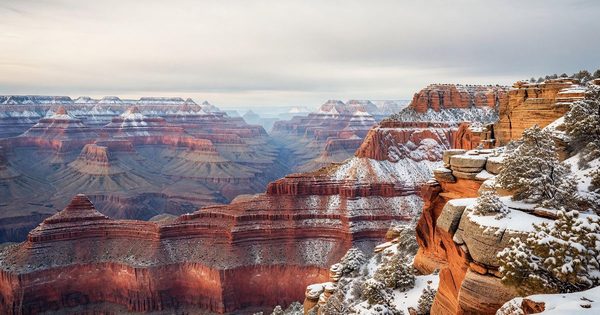
- Year-round access: Grand Canyon South Rim does not close seasonally. Winter visits (November–March) offer smaller crowds, reasonable weather at the rim, and dramatic snow-and-canyon photography. Lodge and shuttle service continues year-round.
- Altitude: The South Rim is at approximately 6,900 feet. Meaningful for travelers arriving from sea level — one day of acclimatization before canyon-rim walking is wise.
- Inner canyon hiking: NPS does not recommend day hiking below the rim for senior travelers without solid physical conditioning. The inner canyon adds another 2,000–4,000 feet of descent and ascent, significant heat in summer, and limited shade. The rim experience is the appropriate framing for most senior visitors.
- Medical proximity: Grand Canyon Village has a clinic (South Rim Medical Clinic, year-round). Flagstaff Medical Center is 80 miles south.
- Senior Pass accepted: Yes.
See the Grand Canyon South Rim visitor guide for shuttle timing, dining reservations, and permit details.
4. Yellowstone National Park, Wyoming
Yellowstone requires a car for meaningful exploration — no park-wide internal shuttle exists — but for senior travelers who are comfortable driving and staying in in-park lodges, it is one of the most rewarding parks in the system. The key is planning the itinerary around the lodge network and allowing a minimum of 2–3 nights inside the park. One-night Yellowstone visits are not senior-friendly logistics.
Senior-friendly specifics:
- Boardwalk access: The majority of Yellowstone’s iconic thermal features — Old Faithful and the Upper Geyser Basin, Grand Prismatic Spring overlook boardwalk, Mammoth Hot Springs terraces, Norris Geyser Basin — are accessible on paved or compacted-gravel boardwalks. You do not hike to see Yellowstone’s signature features. You walk on well-maintained flat surfaces.
- Old Faithful Inn: The historic lodge is the single best in-park lodging experience in the national park system for senior travelers. Communal dining, a seven-story log lobby with a central fireplace, and a visitor base actively sharing the same experience. Rooms range from historic inn rooms (shared baths) to modern motel-style units. The inn is seasonal (May–October).
- Wildlife driving: The Lamar Valley in Yellowstone’s northeast quadrant offers exceptional wildlife watching from a car — bison herds, wolf packs, pronghorn, and raptors. Senior travelers can experience this from the roadside with binoculars without leaving the vehicle.
- Distances within the park: Yellowstone’s Grand Loop covers roughly 142 miles. This is why the 2–3 night minimum matters — trying to cover Upper Geyser Basin, Mammoth, Grand Canyon of the Yellowstone, and Lamar Valley in one day is exhausting. Spread the regions across days.
- Altitude: Yellowstone averages 7,000–8,000 feet. Arrival-day acclimatization is important, particularly for travelers arriving from the east.
- Medical proximity: West Yellowstone (MT) and Gardiner (MT) are the closest gateway towns with clinic access. The nearest hospital is in Bozeman (90 miles from West Yellowstone).
- Senior Pass accepted: Yes.
The Yellowstone National Park visitor guide covers campsite reservations, geyser eruption schedules, and driving routes.
5. Yosemite Valley, California
Yosemite Valley’s infrastructure makes it well-suited for senior travelers who approach it correctly — the internal free shuttle, the valley’s walking paths, and the accessible lodging at Yosemite Valley Lodge and the Ahwahnee Hotel together create a genuinely senior-friendly base experience.
Senior-friendly specifics:
- Valley Shuttle: Free, continuous, covers all major valley destinations — Yosemite Falls trailhead, Happy Isles, Mirror Lake junction, Curry Village (Half Dome Village), the Ahwahnee, and Yosemite Village. Senior travelers who stay in the valley do not need to drive once parked.
- Flat valley walks: The Cook’s Meadow loop (approximately 1 mile, flat, paved), the Bridalveil Fall trail (0.5 miles round trip, paved), and the Valley floor trail network are all accessible at a gentle pace. Views of El Capitan, Half Dome, and Bridalveil Fall are available from these easy routes.
- The Ahwahnee: One of the great historic park lodges in the US, accessible, and worth a splurge for special occasions. The Great Lounge is a communal room that rewards an afternoon of sitting and watching other visitors.
- Reservation requirements: Yosemite operates seasonal timed-entry reservation requirements for valley access. Verify current requirements at nps.gov/yose before booking — the system has changed year to year and walk-up day access is not always possible during peak season.
- Altitude: Valley floor is approximately 3,900 feet — significantly lower than the parks above. Less altitude acclimatization required.
- Medical proximity: Yosemite Valley has a medical clinic (Yosemite Medical Clinic, year-round). Modesto is approximately 1.5 hours west.
- Senior Pass accepted: Yes.
6. Crater Lake National Park, Oregon
Crater Lake’s park structure is naturally suited to senior travel: the primary visitor experience is a 33-mile Rim Drive circuit that showcases the lake from a continuous series of pullouts and viewpoints, all accessible from a car or a short walk. The lake itself — a deep caldera filled with some of the purest water in North America — is a visual experience that needs no hiking to appreciate.
Senior-friendly specifics:
- Rim Drive: Fully paved, 33 miles, with pullouts at every significant viewpoint. A senior traveler who cannot walk more than 100 yards can still see the majority of Crater Lake’s iconic perspectives from the car.
- Crater Lake Lodge: Accessible ground-floor rooms available; the historic lodge dining room overlooks the lake directly. Open late May through mid-October. Reservations should be made well in advance for summer months. The lodge’s porch — a broad wooden deck at the rim’s edge — is the best place in any national park to sit and look at a lake.
- Rim Village: A short accessible walk from lodge to Rim Village visitor center and viewpoint. The Rim Village area is accessible for mobility-limited visitors.
- One-day structure: Crater Lake is manageable as a single long day (5–6 hours for the full Rim Drive circuit) or as a 2-night destination with a day devoted to the drive and another to the shorter walks and visitor center programs.
- Medical proximity: Klamath Falls (60 miles south) has a full hospital. Crater Lake is one of the more isolated parks on this list — worth noting for travelers with active medical needs.
- Senior Pass accepted: Yes.
7. Mount Rainier National Park, Washington
Mount Rainier does not require long hikes to deliver extraordinary mountain scenery. Both the Paradise and Sunrise visitor areas are accessible by car and offer immediate mountain views from the parking area — in good weather, the views of the volcano itself and the surrounding glaciers are among the best in any park accessible by road.
Senior-friendly specifics:
- Paradise visitor area: At approximately 5,400 feet on the south flank of the mountain, the Henry M. Jackson Memorial Visitor Center at Paradise is accessible and includes panoramic views from the visitor center itself. The paved sidewalk loop from the visitor center parking area provides views of the Muir Snowfield and surrounding flower meadows (July–August peak).
- Sunrise visitor area: At 6,400 feet on the northeast flank, Sunrise is the highest point in the park reachable by road. The short accessible boardwalk from the Sunrise Visitor Center provides views of Emmons Glacier and the summit without significant walking.
- Avoid high-elevation trails: The backcountry and high-elevation trails at Rainier are steep and demanding — not appropriate for senior visitors seeking a comfortable experience. The accessible infrastructure at Paradise and Sunrise is the appropriate framing.
- Lodging: National Park Inn (Longmire area, year-round) and Paradise Inn (Paradise area, seasonal) are the in-park lodge options. Ashford, the gateway town, has additional lodging.
- Altitude note: Paradise and Sunrise are modest elevation increases from the Puget Sound region — not as significant as Colorado or Utah parks — but travelers with pulmonary conditions should note the change.
- Medical proximity: Enumclaw (40 miles northwest) has hospital access. Tacoma and Seattle are within 1.5–2 hours.
- Senior Pass accepted: Yes.
8. Glacier National Park, Montana
Glacier is one of the most logistically complex parks on this list for senior travelers — distances within the park are substantial, and bear-country protocols add a layer of preparation that some parks don’t require. But its unique combination of Amtrak access, exceptional in-park lodges, and free shuttle system makes it viable and, for the right traveler, exceptional.
Senior-friendly specifics:
- Going-to-the-Sun Road: The 50-mile scenic road across the Continental Divide is one of the great scenic drives in North America, with continuous mountain views. The road opens to full vehicle access seasonally (typically late June through mid-October, depending on snow) and requires a timed-vehicle reservation during peak season. This is a driving experience that delivers full visual access to Glacier’s mountain landscape from a car.
- Free shuttle system: The free Going-to-the-Sun Road shuttle (seasonal) covers the entire road corridor, allowing senior travelers to exit at Logan Pass or any other stop without managing complex turning-around-on-a-mountain-road logistics. Highly recommended.
- Amtrak Empire Builder: The Empire Builder runs from Chicago to Seattle/Portland with stops at East Glacier Park (seasonal, late May through late September) and West Glacier (year-round) as well as Whitefish (year-round, 25 miles from the park). For senior travelers who prefer not to drive a rental car hundreds of miles from a major airport, arriving by train at East Glacier and staying at Glacier Park Lodge or Many Glacier Hotel is a legitimate and comfortable travel path. Many Glacier Hotel is accessible only from the east entrance (St. Mary/Many Glacier corridor).
- Aramark lodges: Many Glacier Hotel, Lake McDonald Lodge, and Glacier Park Lodge (East Glacier) are all historic in-park lodges with dining and a social atmosphere. Many Glacier Hotel is the most social — the Swiss chalet on Swiftcurrent Lake has a dining room, a lounge, and a visitor base composed almost entirely of people who have been hiking all day and want to talk.
- Medical proximity: Kalispell Regional Medical Center is approximately 35 miles west of West Glacier (via US-2). This is the full regional hospital for the area. Whitefish has urgent care.
- Senior Pass accepted: Yes.
9. Sequoia and Kings Canyon National Parks, California
The giant sequoias are among the most emotionally affecting natural features in North America, and access to the best of them requires only modest walking. General Sherman Tree — the world’s largest tree by volume — is reached via an accessible 0.5-mile paved path from the upper trailhead parking area, with a shuttle from the lower Giant Forest Museum as an alternative.
Senior-friendly specifics:
- General Sherman accessible trail: The paved 0.5-mile trail from the upper Sherman Tree trailhead involves a descent and return ascent of approximately 100 feet — the only significant grade on an otherwise smooth surface. Shuttle access from Giant Forest Museum eliminates the descent entirely (arrive by shuttle at the bottom, walk the short flat section to the tree, return via shuttle).
- Free Giant Forest shuttle: Seasonal free shuttle connects Lodgepole, Wuksachi Lodge, Giant Forest Museum, and the Sherman Tree area. Senior travelers can base at Wuksachi Lodge and access all major sequoia sites without driving the narrow park roads.
- Wuksachi Lodge: The primary in-park lodging, accessible, with a dining room. Reservations fill early for summer months. The lodge is at approximately 7,200 feet — altitude acclimatization applies on arrival day.
- Big Trees Trail: A 1.3-mile accessible loop through the Giant Forest meadow adjacent to the museum. Flat, paved, surrounded by large sequoias throughout.
- Medical proximity: Visalia (65 miles west) has a full hospital. The nearest urgent care to the Giant Forest area is in Three Rivers (Kaweah Health Three Rivers, approximately 40 miles).
- Senior Pass accepted: Yes (covers both Sequoia and Kings Canyon, which are jointly managed).
10. Olympic National Park, Washington
Olympic is unusual in offering three completely distinct ecosystems within a single park — alpine meadows, temperate rainforest, and wilderness coast — all accessible by separate driving routes from the Port Angeles hub. Senior travelers can sample each environment in a 3–4 day trip without committing to demanding trails.
Senior-friendly specifics:
- Hurricane Ridge: At 5,200 feet, the Hurricane Ridge Visitor Center is accessible by road (17 miles from Port Angeles, paved). The paved viewpoint at the top provides direct views of the Olympic peaks and the Strait of Juan de Fuca. A paved accessible loop behind the visitor center (approximately 0.5 miles) gives immediate mountain meadow access. The road is subject to winter closure — confirm conditions with the park before a late-season visit.
- Hoh Hall of Mosses: The Hall of Mosses loop at the Hoh Rain Forest Visitor Center (1.2 miles, primarily flat, compacted gravel surface) is one of the most accessible and visually distinctive short trails in any national park. Massive old-growth Sitka spruce draped in club moss. The surface is not fully paved but is generally manageable for walkers with canes or hiking poles.
- Multiple accessible short options: The Rialto Beach walk, the Madison Creek Falls trail (0.2 miles to a waterfall, accessible), and the Lake Crescent paved shoreline section all offer short accessible walks across different park ecosystems.
- Port Angeles as a hub: Port Angeles is a real mid-sized city (grocery stores, pharmacies, restaurants, full lodging range) rather than a small gateway town. The ferry to Victoria, BC operates from Port Angeles for travelers building a longer Pacific Northwest itinerary.
- Medical proximity: Olympic Medical Center in Port Angeles provides year-round hospital services — one of the better medical-access situations of any park on this list.
- Senior Pass accepted: Yes.
11. Cuyahoga Valley National Park, Ohio
Cuyahoga Valley is the most accessible park on this list in every sense — geographically (between Cleveland and Akron), physically (flat terrain, paved towpath, level boardwalks), and logistically (no long drives, no altitude, no bear-country protocols). It is also the most overlooked national park for senior travelers, because it does not carry the iconic Western visual brand of Yellowstone or the Grand Canyon.
What Cuyahoga Valley offers is genuinely excellent for the right trip.
Senior-friendly specifics:
- Cuyahoga Valley Scenic Railroad (CVSR): A heritage railroad that runs through the park on scheduled excursions, the CVSR allows senior travelers to experience the river valley, forest, and open meadow corridors without walking. Accessible boarding at multiple stations (Rockside, Peninsula, Brecksville). The railroad is operated by a park concessioner; schedules and fares at cvsr.com. A CVSR day pass is an excellent non-driving, non-hiking park day for senior visitors.
- Brandywine Falls boardwalk: The 1.5-mile round-trip trail to Brandywine Falls includes a substantial boardwalk section descending to a viewing deck above the 65-foot waterfall. The boardwalk has handrails throughout. Some parts of the trail are natural surface — the boardwalk section is the senior-appropriate portion.
- Ohio & Erie Canal Towpath Trail: 20+ miles of paved or compacted-gravel trail following the historic canal corridor, flat, through forest and meadow. The towpath is appropriate for walkers at any pace; road cycling is also popular. The Peninsula section of the towpath is particularly accessible, with the station stop right at the trail.
- No altitude, no bear country: Cuyahoga Valley sits at approximately 700–900 feet elevation. No altitude adjustment needed. No bear spray required.
- Lodging: Cuyahoga Valley has limited in-park lodging (Inn at Brandywine Falls, a small bed and breakfast inside the park). Most senior travelers stay in Akron or Hudson, Ohio, with full hotel options within 15–20 minutes.
- Medical proximity: Akron is 20–30 minutes south with major hospital systems. Cleveland is 30–40 minutes north.
- Senior Pass accepted: Yes.
12. Great Smoky Mountains National Park, Tennessee/North Carolina
Great Smoky Mountains is the most-visited national park in the United States — approximately 13 million visitors annually — and its driving-accessible infrastructure reflects that. For senior travelers who are primarily road-touring, Smokies has a good set of accessible options. The park requires careful timing to avoid weekend and summer peak crowds, which can make driving inside the park genuinely miserable.
Senior-friendly specifics:
- Cades Cove driving loop: The 11-mile Cades Cove loop road is one of the best wildlife-watching drives in the East — white-tailed deer, black bear, wild turkey, and red fox are all regularly visible from the car. Open year-round (except Wednesday and Saturday mornings in summer when it is reserved for cyclists/walkers). Pullouts are plentiful; the loop takes 1.5–3 hours depending on stopping.
- Newfound Gap overlook: At 5,046 feet on the Tennessee-North Carolina border, the Newfound Gap overlook is the highest point in the park accessible by road (US-441). Paved parking area, accessible restrooms, and sweeping views of the Smokies ridgeline.
- Sugarlands Visitor Center: Located just inside the Tennessee entrance at Gatlinburg, Sugarlands has a 20-minute orientation film, accessible exhibits, and is the main base for ranger programs. Ranger-led walks and programs are scheduled seasonally from this visitor center — a good first stop for senior travelers who want structured programming.
- Roaring Fork Motor Nature Trail: A 5.5-mile one-way paved loop through old-growth forest, accessible from downtown Gatlinburg. Waterfall pullouts and historic homestead sites without significant walking required.
- Crowd and timing consideration: Great Smoky Mountains is significantly more crowded than the other parks on this list. Summer weekends and fall foliage weeks (mid-October) see traffic delays on park roads. Senior travelers are strongly advised to visit on weekdays and to arrive early — the Cades Cove loop and Newfound Gap road are best before 10 a.m.
- Altitude: Cades Cove is approximately 1,800 feet; Newfound Gap is 5,046 feet. The elevation change is not as dramatic as Western parks, but travelers with pulmonary concerns should note the Newfound Gap elevation.
- Medical proximity: Gatlinburg has urgent care. The University of Tennessee Medical Center in Knoxville is approximately 40 minutes from the Sugarlands entrance.
- Senior Pass accepted: Yes — Great Smoky Mountains has no standard vehicle entry fee, but the Senior Pass covers amenity fees (camping, etc.) at fee sites within the park.
Altitude Acclimatization for Senior Travelers
Several of the parks above sit at elevations where altitude sickness is a realistic risk for travelers arriving from sea level or low-elevation home bases. Grand Canyon South Rim (6,900 ft), Bryce Canyon rim (8,000–9,100 ft), Yellowstone average (7,000–8,000 ft), Wuksachi Lodge at Sequoia (7,200 ft), and Grand Teton (adjacent to Yellowstone) all exceed the 7,000-foot threshold where effects become common.
What happens physiologically: At altitude, reduced atmospheric pressure means each breath delivers less oxygen. The body responds by breathing faster, increasing heart rate, and eventually (over 2–3 days) increasing red blood cell production. During that adjustment period, headache, fatigue, shortness of breath on mild exertion, and poor sleep are common. These symptoms are not dangerous for most healthy adults but are uncomfortable and will affect how much you enjoy your first day.
Practical approach:
- Plan arrival day at altitude as a rest-and-adjust day. Light walking, good hydration, no alcohol, early bedtime.
- Hydration at altitude: aim for 3–4 liters of water per day, more than you would at home elevation. Dry mountain air increases fluid loss even without exertion.
- If you take diuretics (for blood pressure or heart conditions), discuss your altitude travel plan with your cardiologist or primary care physician before the trip. Diuretics increase fluid loss and can interact with altitude-induced dehydration.
- Signs requiring medical attention: severe headache that does not resolve with rest and water, confusion, difficulty walking, persistent vomiting, or shortness of breath at rest. These symptoms warrant descent and evaluation; do not try to sleep them off at altitude.
Travelers with existing cardiovascular disease, COPD, sleep apnea (particularly moderate-to-severe), or pulmonary hypertension should discuss Western park altitude travel with their physician before booking.
Medication Management and Travel Insurance
Two practical planning items that senior travelers routinely under-address:
Medication logistics:
- Bring substantially more medication than you expect to need — a minimum of 3–5 days’ extra supply. Pharmacy access in remote park gateway towns is limited (Bryce Canyon, Crater Lake) to nonexistent inside park boundaries.
- Carry all medications in your carry-on/personal luggage, not checked baggage or stored vehicle baggage. If a bag is lost, your medication supply should not be.
- Temperature-sensitive medications (insulin, certain biologics) require specific storage handling in hot car interiors or cold mountain climates. Plan storage logistics before arriving.
- A summary of current medications, dosages, and prescribing physicians — one page, in your wallet — is useful if you need emergency care away from home.
Travel insurance:
- Standard travel insurance does not cover pre-existing conditions unless purchased within the policy’s specified window after initial trip payment (typically 14–21 days). For senior travelers with active medical conditions, the timing of insurance purchase matters.
- Medical evacuation coverage is worth particular attention for remote western parks. A helicopter evacuation from Glacier or Yellowstone’s backcountry can cost $10,000–$50,000 without coverage.
- The National Park Conservation Association’s npca.org maintains advocacy resources and visitor planning information; for insurance product research, look at programs specifically designed for senior travelers through organizations like AARP.
Ranger Programs: The Underused Senior Travel Resource
Free ranger-led programs — walks, talks, evening programs, and interpretive demonstrations — are available at virtually all major national parks during peak season. For senior travelers, ranger programs serve a dual purpose: structured interpretation that adds context to what you are seeing, and group access to experiences that individual travelers might otherwise avoid.
Every park on this list runs some form of ranger programming during its primary season. Schedules are listed on each park’s NPS page (nps.gov/[park-code]/planyourvisit/ranger-programs.htm) and at visitor center bulletin boards. Arrive 15 minutes early — popular walks fill their informal capacity quickly and rangers typically cannot refuse people who show up.
Road Scholar (formerly Elderhostel) offers structured educational travel programs that are specifically designed for older adults, several of which involve extended national park programs with expert-led interpretation, group logistics, and accommodations handled. Road Scholar programs remove the planning burden entirely and are worth considering for senior travelers who want an organized group experience rather than independent logistics. Program listings at roadscholar.org.
Frequently Asked Questions
What is the Senior Pass for national parks?
The Senior Pass is an interagency pass available to US citizens and permanent residents age 62 or older. The annual version costs $20 and is valid for 12 months; the lifetime version costs $80 and never expires. Both cover the pass holder (plus vehicle occupants at per-vehicle fee parks) at over 2,000 federal recreation sites including all national parks. Purchase in person at any federal fee site, or digitally at Recreation.gov.
Is the Senior Annual Pass or Senior Lifetime Pass a better value?
For most senior travelers who plan to visit parks more than once in the next several years, the $80 lifetime pass is the better value. Four annual renewals at $20 each cost the same $80 — so the lifetime pass breaks even by year five and then costs nothing for every subsequent park visit. The annual pass is a reasonable starting point for seniors uncertain whether they will visit regularly.
Can I visit national parks as a senior without hiking?
Yes. Many of the most iconic park experiences in the United States require no more than a short walk from a parking area or shuttle stop. Yellowstone’s geyser basins, Grand Canyon rim views, Glacier’s Going-to-the-Sun Road, Bryce Canyon’s rim overlooks, Crater Lake’s Rim Drive circuit, and the General Sherman Tree in Sequoia are all accessible to senior travelers who cannot or prefer not to hike.
What national parks have the best accessible shuttles?
Acadia (Island Explorer, late June–mid-October), Bryce Canyon (free seasonal shuttle), Grand Canyon South Rim (free year-round, multiple routes), and Yosemite Valley (free year-round) have the strongest shuttle systems for senior travelers. Glacier’s Going-to-the-Sun Road shuttle is also excellent during its seasonal operation. These are the parks where senior travelers can arrive without depending on a car for in-park access.
How do I handle altitude at national parks?
Plan at least one low-activity arrival day before exerting yourself at parks above 7,000 feet (Grand Canyon South Rim, Bryce Canyon, Yellowstone, Sequoia/Wuksachi). Drink 3–4 liters of water daily at altitude. Avoid alcohol on arrival day. If you are on diuretics or have cardiovascular or pulmonary conditions, discuss altitude travel with your physician before booking Western park trips.
Are there national park options specifically designed for older adults?
Road Scholar (formerly Elderhostel) offers organized educational travel programs to national parks designed for older adults, including group logistics, expert interpretation, and pre-selected accommodations. Their programs remove the independent planning burden and are a strong option for senior travelers who prefer a structured group experience. See roadscholar.org for current program listings.
What should I look for in national park lodging as a senior traveler?
Prioritize in-park historic lodges (Old Faithful Inn, Many Glacier Hotel, Crater Lake Lodge, Bright Angel Lodge) for their social character and proximity to park features. Verify accessible room availability when booking — most in-park lodges have accessible rooms but they are limited and fill early. Avoid assuming camping-only parks (or parks where the lodge fills a year in advance) will have accessible lodging available on short notice. Book early, specifically request ground-floor or accessible rooms, and confirm details with the lodging operator directly.
Do national parks offer medical services?
Major parks with year-round visitor infrastructure — Grand Canyon, Yellowstone, Yosemite — have on-site clinics or medical services. Most parks do not have hospitals; the nearest full medical care is typically in the gateway town. When planning a trip, identify the nearest hospital to the park you are visiting and its distance from your planned base. Olympic (Port Angeles), Cuyahoga Valley (Akron/Cleveland), and Great Smoky Mountains (Knoxville) have the best nearby medical infrastructure of the parks on this list.
Plan your visit with current conditions, permits, and accessibility information at nps.gov. The Senior Pass is available in person at any federal fee site or online at Recreation.gov. The USGS Store at store.usgs.gov processes mail orders for physical pass cards. Park advocacy and conservation resources are available from the National Parks Conservation Association. Road Scholar educational travel programs for older adults are at roadscholar.org. For a full breakdown of America the Beautiful pass variants including the Access Pass for visitors with permanent disabilities, see the America the Beautiful Pass guide. For parks ranked specifically by ADA trail and wheelchair accessibility, see Best Accessible National Parks.