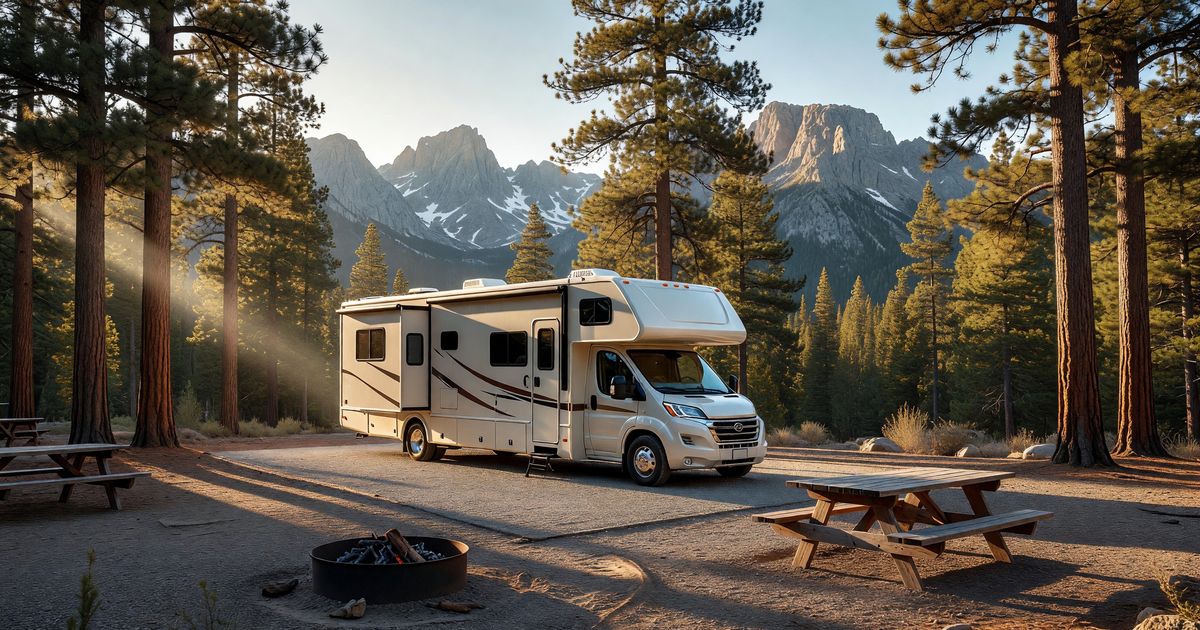
RV travel through national parks is a different planning problem than tent camping — and the differences are not subtle. Vehicle-length restrictions on winding mountain roads can make entire sections of a park inaccessible. Full-hookup sites are unusual in the NPS system; the majority of campgrounds are dry or electric-only, which changes your water and sewage management calculus entirely. Generator hours are enforced, and quiet hours in many parks begin at 10 p.m. Dump stations exist at most major parks but are not always near the campground where you need them.
The good news: a handful of parks are genuinely excellent for RV travelers, with purpose-built RV facilities, lenient vehicle-length policies, and full-hookup sites that book through a predictable reservation window. This guide ranks twelve parks by their overall RV utility — not scenic quality, where almost every park qualifies — and gives you the operational specifics that actually matter when you’re planning the trip.
A few baseline realities before the list:
Most NPS campgrounds are tent-or-RV, no hookups. Electric-only, electric-and-water, and full-hookup (electric, water, sewer) sites exist in the system but are far from the norm. Plan to dry camp at most parks, with water and sewage management handled through your onboard tanks and scheduled dump station visits.
Vehicle-length restrictions on park roads are the biggest planning constraint RV travelers underestimate. Many of the most scenic drives in the NPS — Generals Highway in Sequoia, Stevens Canyon Road at Mount Rainier, the Zion–Mount Carmel Highway in Utah — have posted length or width restrictions. A 40-foot Class A that technically fits the campground may be legally barred from the road that leads to it.
Booking windows vary by operator. NPS-operated campgrounds book through Recreation.gov on a 6-month rolling window. Concessioner-operated campgrounds (Yellowstone National Park Lodges, Grand Teton Lodge Company, Aramark, Delaware North) have their own systems and timelines — often 12–13 months out for the most competitive sites.
1. Yellowstone National Park, Wyoming
The only full-hookup campground in the entire park, and it books 6 months out.
Yellowstone National Park is the benchmark for RV travelers in the NPS system because it contains the only full-hookup campground in any major western national park: Fishing Bridge RV Park. Located on the north shore of Yellowstone Lake in the park’s east sector, Fishing Bridge offers 310 sites with 50-amp/30-amp electrical service plus water and sewer connections — a genuine full-hookup operation in a park where every other campground is dry.
The hard-sided requirement is the defining constraint. Fishing Bridge sits in active grizzly bear habitat along the Yellowstone River corridor, and the NPS prohibits soft-sided rigs — pop-ups, tent trailers, soft-side folding campers, and any RV with a tent-style slide-out. Hard-sided Class A, Class C, fifth wheels, and conventional travel trailers are permitted. The rule is enforced; rangers check on arrival.
Site specifics: The Upper Loop has 172 paved sites accommodating rigs up to 95 feet combined length. The Lower Loop has 138 gravel sites suited to rigs 30–35 feet. Pull-through options are available in the upper loop.
Booking: For 2026, reservations are still made through Yellowstone National Park Lodges (yellowstonenationalparklodges.com). Beginning with the 2027 season, reservations will transition to Recreation.gov. Book as early as the window opens — Fishing Bridge is the most competitive RV campground in the NPS system.
Generator hours: 8:00 a.m.–8:00 p.m. daily. Generators must not exceed 60 decibels at 50 feet. Quiet hours run 10:00 p.m.–6:00 a.m.
Dump station: Available near the campground entrance. Note that the dump station may be closed early and late in the season due to freezing.
Road restrictions: Yellowstone’s Grand Loop Road has no formal length limit for through-travel, though the Northeast Entrance Road narrows in spots that challenge very large rigs. Confirm current conditions with the park before driving anything over 35 feet on secondary roads.
Slide-out clearance: Fishing Bridge’s paved sites are wide enough for standard single and double slide-outs. Verify specific site width against your rig before confirming a Lower Loop gravel site.
For detailed Yellowstone campground booking windows across all campgrounds, see How to Reserve Yellowstone Campsites.
2. Grand Teton National Park, Wyoming
Two full-hookup campgrounds, both operated by Grand Teton Lodge Company.
Grand Teton offers better RV infrastructure than its southern neighbor Yellowstone for most rigs: two full-hookup campgrounds, both accessible via US-89/191 without the road-restriction concerns that plague other parks.
Colter Bay RV Park is the larger option — 114 full-hookup sites (102 pull-through, 12 back-in) with sewer, water, and 20/30/50-amp electric service. It sits adjacent to Jackson Lake, a 10-minute walk from the Colter Bay Village marina, laundry, and showers. The 2026 season runs May 4–October 9. Reservations via Recreation.gov on a 6-month rolling window (Grand Teton Lodge Company cannot accept campground reservations directly).
Headwaters Campground at Flagg Ranch is the other full-hookup option — 97 full-hookup pull-through RV sites plus 34 tent sites and 40 camper cabins, all with sewer, water, and 20/30/50-amp electric. Located in the John D. Rockefeller, Jr. Memorial Parkway between Yellowstone and Grand Teton, Flagg Ranch is ideal for travelers doing both parks. The 2026 season runs June 7–October 3.
Generator hours: Both campgrounds follow the park standard of 8:00 a.m.–8:00 p.m. Quiet hours are 10:00 p.m.–8:00 a.m.
Dump stations: Available at both facilities.
Road restrictions: The primary approach roads (US-89/191/26) have no RV-specific length restrictions. Teton Park Road has no formal limit but has tight curves near Jenny Lake — rigs over 30 feet should use the bypass. Signal Mountain Road: RVs over 21 feet are prohibited.
3. Glacier National Park, Montana
No hookups at any campground, but large RV-capable sites at Apgar and Fish Creek.
Glacier is an honest dry-camping park — not a single NPS campground in the park has electric, water, or sewer hookups. What Glacier does offer for RV travelers are two large, well-equipped campgrounds near the west entrance with spacious sites and operational dump stations.
Apgar Campground is the largest in the park at 194 sites, year-round, with 25 sites accommodating RVs and trailers up to 40 feet. Flush toilets, running water, dump station, and showers available in season. Located at the foot of Lake McDonald, directly accessible from US-2 without entering the park’s most restrictive roads.
Fish Creek Campground, adjacent to Lake McDonald, has 178 sites including 18 that accommodate rigs up to 35 feet and 3 sites up to 40 feet. Seasonal operation (May–September, 2026 opening May 22). Dump station on-site. No showers at Fish Creek.
Going-to-the-Sun Road restriction — critical for RV planning: Vehicles longer than 21 feet (including tow vehicle) are prohibited on Going-to-the-Sun Road between Avalanche Creek and the St. Mary Visitor Center. This is the most dramatic scenery in the park. If your rig exceeds 21 feet, you park at Apgar or Avalanche and board the Going-to-the-Sun Road Park Shuttle (ticketed system as of 2026) or the free park shuttle for the road’s scenic corridor. Plan accordingly — most Class B camper vans and smaller Class C rigs under 21 feet can drive the road; Class A and most fifth wheels cannot.
Generator hours: 8:00 a.m.–8:00 p.m. at campgrounds where generators are permitted.
Slide-out considerations: Apgar and Fish Creek sites are generally wide enough for single slide-outs; double slide-outs may require site-specific confirmation. Book sites with the largest width designation available.
4. Mount Rainier National Park, Washington
Ohanapecosh closed through 2026 for rehabilitation; Cougar Rock is the primary RV option with no hookups.
Mount Rainier is a park in transition for campground infrastructure. Ohanapecosh Campground — the park’s largest, with 185 sites — is closed for the entire 2026 season due to a major rehabilitation project funded through the Great American Outdoors Act. The project is upgrading all campsites, nine bathrooms, the wastewater collection system, and electrical and water infrastructure. Reopening is expected for the 2027 season.
This leaves Cougar Rock Campground as the primary RV option in 2026 — 173 sites, no hookups, maximum RV length 35 feet, maximum trailer length 27 feet. Located in the southwest corner of the park on the road to Paradise. Season runs late May through late September.
Generator hours at Cougar Rock: 8:00 a.m.–10:00 a.m., noon–2:00 p.m., and 5:00 p.m.–7:00 p.m. Loop E is closed to generator use at all times.
Dump station: The Cougar Rock dump and fill station is closed for the 2026 season. The nearest dump station is in the Longmire area — verify current availability before your trip.
Road restrictions: Stevens Canyon Road has no formal RV-length prohibition, but its switchbacks and narrow sections are challenging for rigs over 30 feet. RVs over 35 feet generally should not attempt Stevens Canyon. The road to Paradise has no restriction but has steep grades requiring appropriate engine braking.
Slide-out clearance: Cougar Rock sites are narrower than purpose-built RV parks. Single slide-outs generally work on RV-designated sites; double slide-outs may require the wider pull-through sites, which are limited. Book specifically.
5. Yosemite National Park, California
No hookups anywhere in the park; Wawona and Crane Flat take larger rigs.
Yosemite has zero hookups — no electric, no water, no sewer connections at any of its campgrounds. Every site in the park is dry camping. This is not a hardware limitation; it’s a policy position consistent with the park’s natural-quiet mandate. Plan your water tank fill and sewage dump schedule around your arrival, because you will not be plugging in anywhere inside the park boundary.
Wawona Campground is the best Yosemite option for larger RVs — max vehicle length 35 feet, 93 sites, located near the south entrance and Mariposa Grove of giant sequoias. The section nearest the south fork of the Merced River has sites wide enough for moderate slide-out rigs.
Crane Flat Campground accommodates RVs up to 35 feet with a combined trailer length up to 27 feet — 166 sites near the Tioga Road junction, which makes it a useful base for Tuolumne Meadows access. No dump station at Crane Flat.
Upper Pines (Yosemite Valley) is the valley campground most frequently attempted by RV travelers and most frequently regretted — maximum 40 feet combined but site widths in the valley are tight, slide-outs cause neighbor friction, and the valley road network does not favor large vehicles. Avoid if you have a wide-body rig or double slide-outs.
Dump stations: Available at Hodgdon Meadow and Upper Pines. Wawona has no dump station.
Generator hours: 7:00 a.m.–9:00 a.m., noon–2:00 p.m., and 5:00 p.m.–7:00 p.m. at all Yosemite campgrounds.
Road restrictions: Tioga Road has a vehicle-length warning at the Yosemite Valley–Big Oak Flat junction; some pullouts and turnarounds on Tioga are tight for rigs over 35 feet. Hetch Hetchy Road prohibits vehicles over 25 feet and RVs entirely beyond the O’Shaughnessy Dam. Big Oak Flat Road and El Portal Road have no formal RV restriction.
6. Acadia National Park, Maine
Schoodic Woods — the park’s newest and only campground with electric and water hookups.
Acadia is a small, dense park on the Maine coast with limited RV infrastructure at its main Mount Desert Island campgrounds — but its newest campground, Schoodic Woods on the mainland Schoodic Peninsula, offers the best hookup situation in the park.
Schoodic Woods Campground has 89 sites total in two loops. Loop B is exclusively for larger RVs (31 sites) with electric and water hookups (no sewer); Loop A accommodates smaller RVs and tents. RV sites have 20/30/50-amp electric. The 2026 season runs May 20–October 11. Rates: $36 for electric-only, $40 for electric and water.
No sewer hookups at Schoodic Woods or anywhere in Acadia. A dump station is available at the campground. Budget for 1–2 dump station visits per week for a full-time rig.
Road restriction at Schoodic: No RVs, trailers, or vehicles larger than 21 feet are permitted on Schoodic Loop Road beyond the day-use parking area and campground entrance. Schoodic Woods itself can accommodate rigs up to 70 feet (one site), but the road to the park’s scenic overlooks is off-limits for larger vehicles.
Mount Desert Island note: The carriage roads on MDI are closed to motor vehicles. The Park Loop Road has no formal RV length restriction, but Ocean Drive and Sand Beach pullouts can be tight for Class A rigs. Jordan Pond parking is particularly difficult for large vehicles in peak season.
Generator hours: 8:00 a.m.–8:00 p.m. at Schoodic Woods.
Booking: Through Recreation.gov. 90% of sites release 6 months in advance; the remaining 10% release 14 days prior on a rolling basis.
7. Grand Canyon National Park, Arizona
Trailer Village — full hookups at the South Rim, operated by Delaware North, year-round.
Grand Canyon South Rim has one of the longest-operating dedicated RV facilities in the national park system: Trailer Village RV Park, a year-round full-hookup operation run by Delaware North (DNC Parks & Resorts at Grand Canyon) within walking distance of the canyon rim.
Trailer Village offers full hookups with water, sewer, and electric connections. The facility is open 365 days a year, which makes it the only full-hookup RV campground in the NPS system with year-round operation — a meaningful advantage for shoulder-season and winter travelers who want to avoid Yellowstone-style seasonal closures.
Booking: Through Delaware North via visitgrandcanyon.com, not Recreation.gov. This is a common point of confusion for first-time visitors who search Recreation.gov and conclude there are no hookup sites available. Reservations open approximately 13 months in advance for peak dates.
Generator hours: Follow South Rim quiet-hour standards; verify current policy with Delaware North before arrival.
Dump station: Available at Mather Campground, adjacent to Trailer Village.
Road restrictions: South Rim roads have no formal RV length restriction for access to Trailer Village. Desert View Drive (East Rim Drive) is accessible to all vehicle sizes. North Rim access via Highway 67 has no RV restriction but the North Rim road is closed from mid-October through mid-May due to snow.
Slide-out clearance: Trailer Village sites are designed for RV use and accommodate standard single and double slide-outs. Confirm specific site dimensions with Delaware North when booking.
8. Joshua Tree National Park, California
No hookups, desert dry camping, strict generator windows — best for self-contained rigs.
Joshua Tree is a dry-camping park in both senses: no hookups anywhere, and in the Mojave Desert’s extreme aridity, water management is more operationally critical here than at most parks. Arrive with full fresh water tanks. The nearest full hookup campgrounds are in the gateway communities of Twentynine Palms and Yucca Valley outside the park boundary.
Jumbo Rocks Campground is the largest in the park at 124 sites, no hookups, maximum RV length 35 feet. Located in the center of the park amid the granite formations that define the Joshua Tree landscape. First-come, first-served and reservation sites available via Recreation.gov.
Indian Cove Campground has 101 individual sites, no hookups, but the combined vehicle length limit is more restrictive — motorhomes and trailers including tow vehicle cannot exceed 25 feet combined. Indian Cove is accessed from a separate north entrance off Highway 62, which makes it convenient for rigs entering from the Twentynine Palms side.
Hidden Valley Campground has no hookups and a maximum combined length of 25 feet; best suited for van conversions and smaller Class B rigs.
Generator hours at all Joshua Tree campgrounds: 7:00 a.m.–9:00 a.m., noon–2:00 p.m., and 5:00 p.m.–7:00 p.m. This is one of the strictest generator windows in the NPS system — only 6 hours total per day. Solar and battery systems are a significant operational advantage here.
Dump station: None inside Joshua Tree National Park. The nearest dump station is at Black Rock Campground on the park’s western boundary.
Slide-out clearance: Jumbo Rocks sites are set between boulders; some sites do not have adequate lateral clearance for wide slide-outs. Review campsite photos on Recreation.gov before booking — the campsite-photo feature shows site layout clearly.
9. Olympic National Park, Washington
Sol Duc Hot Springs Resort has 17 electric-and-water hookup sites; Kalaloch is dry with a dump station.
Olympic is a logistically unusual park for RV travelers — three distinct ecosystems (alpine, old-growth rainforest, wilderness coast) with no continuous road loop connecting them. You cannot drive from the Hoh Rain Forest to Hurricane Ridge to Kalaloch in a single loop without significant backtracking.
Sol Duc Hot Springs Resort Campground is the best RV option in the park — 17 RV sites with water and electric hookups (no sewer), operated by the resort concessioner. Site sizes: 1 site accommodates up to 20 feet, 7 sites accommodate up to 26 feet, 9 sites accommodate up to 36 feet (four of these have slide-out clearance). Season: March 20–October 31, 2026. Book through the Sol Duc resort.
Kalaloch Campground is the coastal option — 170 sites, no hookups, year-round operation, maximum RV/trailer length 45 feet (one site fits up to 48 feet). Dump station available for a $10 fee. Generator hours: 6:00 a.m.–10:00 p.m.
Mora Campground (Rialto Beach area) has no hookups, maximum 35 feet, and no dump station on-site.
Road restrictions: Hurricane Ridge Road is the major constraint — steep grades and tight switchbacks make it challenging for rigs over 21 feet. The NPS recommends that vehicles over 21 feet not attempt Hurricane Ridge Road with a trailer. Sol Duc Hot Springs Road is manageable up to 40 feet. The Hoh Rain Forest Road has no formal restriction but is narrow in sections; rigs over 35 feet should proceed cautiously.
Generator hours at Sol Duc: Specific hours tied to resort quiet policy — confirm with the resort operator at booking.
10. Sequoia and Kings Canyon National Parks, California
Generals Highway vehicle-length restrictions are the defining constraint for RV planning here.
Sequoia and Kings Canyon are among the most beautiful parks in the system for RV travelers — the scale of the giant sequoias makes even the campground feel like a destination — but Generals Highway has formal vehicle-length restrictions that affect most Class A motorhomes and fifth wheels.
Generals Highway restrictions:
- Between the Foothills Visitor Center and Potwisha Campground: vehicles longer than 24 feet are not advised.
- Between Potwisha Campground and Giant Forest Museum: vehicles longer than 22 feet are not advised; single vehicles longer than 40 feet are prohibited.
- Moro Rock/Crescent Meadow Road: vehicles longer than 22 feet and any vehicle towing a unit are prohibited.
Practical implication: If you’re driving a Class A or fifth wheel over 22 feet — which is most of them — use the Big Stump entrance via Highway 180 (the northern Kings Canyon entrance) instead of Generals Highway. Highway 180 does not carry the same restrictions for access to Grant Grove and Cedar Grove campgrounds.
Lodgepole Campground (Sequoia, Giant Forest area) is the best large-rig option if you enter via the Highway 180 northern route — 214 sites, no hookups, maximum 40 feet, dump station on-site. Flush toilets and running water. Season late May through late September.
Azalea Campground (Kings Canyon, Grant Grove) is the only year-round campground in the combined parks — 110 sites, no hookups, maximum 22 feet recommended, dump station available at nearby Sunset Campground.
Generator hours: 8:00 a.m.–8:00 p.m. at developed campgrounds.
No hookups anywhere in either park. Full self-containment is required.
11. Great Smoky Mountains National Park, Tennessee and North Carolina
Free entry, no hookups, dump stations at Smokemont and Cades Cove.
Great Smoky Mountains is the only major national park in the US with no entry fee — which makes it one of the most visited parks in the system and means campground competition is intense despite the lack of a $35 windshield sticker. Book campground reservations through Recreation.gov as early as the 6-month window allows.
Smokemont Campground (North Carolina side) is the best option for larger rigs — maximum 40 feet for RVs, maximum 35 feet for trailers, dump station on-site. 142 sites total. Year-round operation. Generator use permitted in Sections D and F, 8:00 a.m.–8:00 p.m. Other sections have more restricted or no generator use.
Elkmont Campground (Tennessee side, near Gatlinburg) is the largest in the park at 220 sites — maximum 35 feet for RVs, 32 feet for trailers. No dump station at Elkmont; the nearest dump station is at the Sugarlands Visitor Center approximately 6 miles away.
Cades Cove Campground has a dump station and year-round operation; maximum RV length is 35 feet.
No hookups anywhere in the Smokies. The park’s no-hookup policy is consistent across all 10 frontcountry campgrounds.
Road restrictions: The Smokies have no formal RV-length restriction on the primary through-roads, but Newfound Gap Road (US-441) has grades and curve radii that challenge rigs over 35 feet in winter conditions. The Cades Cove Loop Road has a maximum vehicle length of 20 feet for the one-way loop portion (pull-offs are tight). Roaring Fork Motor Nature Trail is closed to vehicles over 25 feet.
Parking tags for RVs: Cades Cove requires a vehicle parking tag for day-use access from May 15–September 30. Tags are free and issued via recreation.gov. Large rigs should confirm parking availability before the visit — Cades Cove’s parking areas have limited pull-through space.
12. Big Bend National Park, Texas
Rio Grande Village RV Park — full hookups operated by Aramark, the only hookup site in the park.
Big Bend is the most remote park on this list — four hours from the nearest major city (El Paso or San Antonio), with one paved road system and no cell coverage for most of the park. For RV travelers, that remoteness means water and sewage management is a primary logistics concern, not a secondary one. The 25 full-hookup sites at Rio Grande Village RV Park are the only hookup sites in the park and are operated by Aramark.
Rio Grande Village RV Park: 25 sites with full hookups — water, 20/30/50-amp electric, and sewer. Contact Aramark at (432) 477-2251 for reservations. Unlike the rest of the park (which books through Recreation.gov), the hookup sites are booked directly through the concessioner.
Generator hours: November 1–April 30: 8:00 a.m.–11:00 a.m. and 5:00 p.m.–8:00 p.m. May 1–October 31: 8:00 a.m.–8:00 p.m. Note: many sites in the adjacent Rio Grande Village Campground (no-hookup, 100 sites) are in a no-generator zone.
Dump station: Available at the Rio Grande Village Campground entrance.
Road restrictions: The main park road (US-385/highway 118) has no formal RV length restriction. Ross Maxwell Scenic Drive has no formal restriction but a narrow two-lane with occasional blind curves — rigs over 30 feet should exercise caution. The River Road (Old Maverick Road) unpaved section is impassable for any RV; stay on paved routes.
Water and supply logistics: The park’s nearest full-service community is Study Butte/Terlingua (25 miles from the main visitor area). Arrive with full fresh water tanks. Propane is available at the park’s Panther Junction store. Grocery resupply requires a drive to Alpine (80 miles) or Marathon (70 miles).
Slide-out considerations: Rio Grande Village sites are designed for RV use and accommodate standard slide-outs; confirm specific site dimensions with Aramark.
RV Trip Essentials for National Park Camping
Water and sewage tank management
At parks without hookups — the majority of the parks on this list — your trip logistics revolve around your fresh water and black/gray water tank capacity. Standard planning assumptions:
- Fill fresh water completely before entering the park.
- Identify dump station locations before arrival; many parks have only one, and it may not be near your campground.
- Budget 3–5 days between dump station visits for a two-person rig with typical water use. Shorter intervals in hot weather.
- Some parks charge for dump station use; most do not. Big Bend and Olympic are exceptions — verify current fees at recreation.gov or the park’s campground page.
Hard-sided vs. soft-sided in bear country
Fishing Bridge RV Park at Yellowstone enforces a hard-sided-only rule due to grizzly activity in the area — and the reasoning applies broadly. In any park with active grizzly or black bear populations (Glacier, Olympic, parts of Yellowstone, parts of Grand Teton), a hard-sided RV provides a meaningful safety margin over soft-sided alternatives. Pop-up tent trailers and soft-side folding campers are prohibited at Fishing Bridge. At other parks, soft-sided rigs are technically permitted but food storage regulations still apply — all food, coolers, and scented items must be stored in a bear box or vehicle when not in active use.
Generator etiquette and NPS quiet hours
Generator hours vary by park but cluster around a common pattern: limited windows in the morning, midday, and early evening, with quiet hours typically beginning at 10:00 p.m. The strictest windows in this guide are Joshua Tree (6 hours total) and Cougar Rock at Mount Rainier (specific 2-hour windows). Solar-plus-battery systems reduce generator dependency substantially and eliminate neighbor friction at campgrounds where generator use is restricted or prohibited in certain loops.
Exceeding generator hours is a civil violation with fines in most parks. Rangers enforce quiet hours actively during peak season.
Road-restriction lookup before every trip
Vehicle-length restrictions are not always posted prominently on park websites and can change seasonally. Before any trip with a rig over 22 feet, look up the specific road restrictions at your target park through nps.gov and note:
- Maximum length on primary access roads
- Any secondary or scenic roads you plan to drive
- Whether restrictions apply to combined length (rig + tow vehicle) or just the primary vehicle
- Seasonal variation (some restrictions are winter-only; others year-round)
The NPS vehicle restriction pages for Sequoia/Kings Canyon and Zion are among the most detailed in the system. For parks without a dedicated restriction page, call the visitor center before departing.
Slide-out clearance at NPS campgrounds
Most NPS campgrounds were designed before the widespread adoption of slide-out RVs, and site widths often reflect that era. General guidance:
- Paved RV-designated sites at purpose-built facilities (Fishing Bridge, Trailer Village, Colter Bay) are wide enough for standard slide-outs.
- Older sites at tent-and-RV campgrounds (Cougar Rock, Jumbo Rocks) may be narrow. Use Recreation.gov’s campsite-photo feature before booking — it shows the physical site layout more reliably than site specifications alone.
- Double slide-outs require site-specific confirmation. Call the campground or check recent camper reviews on services like Campendium for width reports from rigs similar to yours.
Frequently Asked Questions
Which national parks have full RV hookups?
Yellowstone (Fishing Bridge RV Park — electric, water, sewer), Grand Teton (Colter Bay RV Park and Headwaters at Flagg Ranch — full hookups), Grand Canyon South Rim (Trailer Village — full hookups, year-round), and Big Bend (Rio Grande Village RV Park — full hookups, 25 sites via Aramark) are the primary parks with full-hookup sites. Acadia (Schoodic Woods, Loop B) offers electric and water but no sewer. The majority of NPS campgrounds are no-hookup dry camping.
What is the maximum RV length allowed in national parks?
There is no single system-wide maximum. Each park sets its own limits per road. Generals Highway in Sequoia recommends no vehicles over 22 feet between Potwisha and Giant Forest and prohibits singles over 40 feet. Going-to-the-Sun Road in Glacier prohibits vehicles over 21 feet in the scenic corridor. Signal Mountain Road in Grand Teton prohibits RVs over 21 feet. Check the specific road restriction page on nps.gov for your target park before departure.
Do national parks have dump stations?
Most major parks have at least one dump station. Parks with dump stations at or near main campgrounds include: Yellowstone (Fishing Bridge), Grand Teton (Colter Bay), Glacier (Apgar, Fish Creek), Acadia (Schoodic Woods), Grand Canyon (Mather Campground), Great Smoky Mountains (Smokemont, Cades Cove), Sequoia (Lodgepole), and Big Bend (Rio Grande Village). Joshua Tree has no dump station inside the park. The Cougar Rock dump station at Mount Rainier is closed for the 2026 season.
Can you take a 40-foot RV through national parks?
A 40-foot rig can access most campgrounds on this list — Fishing Bridge accommodates up to 95 feet combined, Colter Bay and Headwaters accommodate large rigs, and Trailer Village is designed for full-size motorhomes. The constraint is not the campground; it’s the scenic roads. Generals Highway in Sequoia prohibits single vehicles over 40 feet. Going-to-the-Sun Road at Glacier prohibits vehicles over 21 feet. Rigs in the 35–40 foot range have access to most campgrounds but will be excluded from some scenic drives.
How early do I need to book RV sites at national parks?
The most competitive sites require booking as early as the reservation window opens. Fishing Bridge at Yellowstone books through Yellowstone National Park Lodges and is among the most competitive in the system. Colter Bay and Headwaters at Grand Teton open on Recreation.gov on a 6-month rolling window and fill within minutes of opening for July and August dates. Trailer Village at Grand Canyon opens 13 months out through Delaware North at visitgrandcanyon.com. For Recreation.gov campgrounds, be online at 10:00 a.m. Eastern on the exact day the 6-month window opens.
Are generators allowed in national park campgrounds?
Yes, with restricted hours. Generator hours vary by park but typically allow use during morning, midday, and early evening windows. The most restrictive in this guide is Joshua Tree (7–9 a.m., noon–2 p.m., and 5–7 p.m. — 6 hours total). Quiet hours at most NPS campgrounds begin at 10:00 p.m. and end at 6:00 a.m. Generators must not exceed 60 decibels at 50 feet at Fishing Bridge. Some campground loops (Cougar Rock Loop E, portions of Smokemont) prohibit generators entirely.
What’s the difference between RV sites at national parks and private RV parks?
NPS campgrounds typically offer no or limited hookups, narrower sites not designed for modern wide-body rigs, stricter quiet hours and generator restrictions, and bear-country food storage requirements. The tradeoff is immediate access to the park’s scenery, ranger programs, and natural resources. Private KOA and regional RV parks near park entrances typically offer full hookups, wider pull-through sites, Wi-Fi, and laundry — but require driving into the park from outside. For long stays or rigs with significant hookup dependency, a split strategy (private park for utility nights, in-park for the experience) often works better than forcing a large rig into inadequate NPS sites.
Current campground availability, fees, and reservation windows are listed at recreation.gov. Concessioner reservations for Yellowstone’s Fishing Bridge RV Park are at yellowstonenationalparklodges.com. Trailer Village at Grand Canyon books through visitgrandcanyon.com. Rio Grande Village RV Park at Big Bend is operated by Aramark at (432) 477-2251. Vehicle-length restrictions per park are listed on each park’s planning page at nps.gov. For national park advocacy, visit the National Parks Conservation Association.