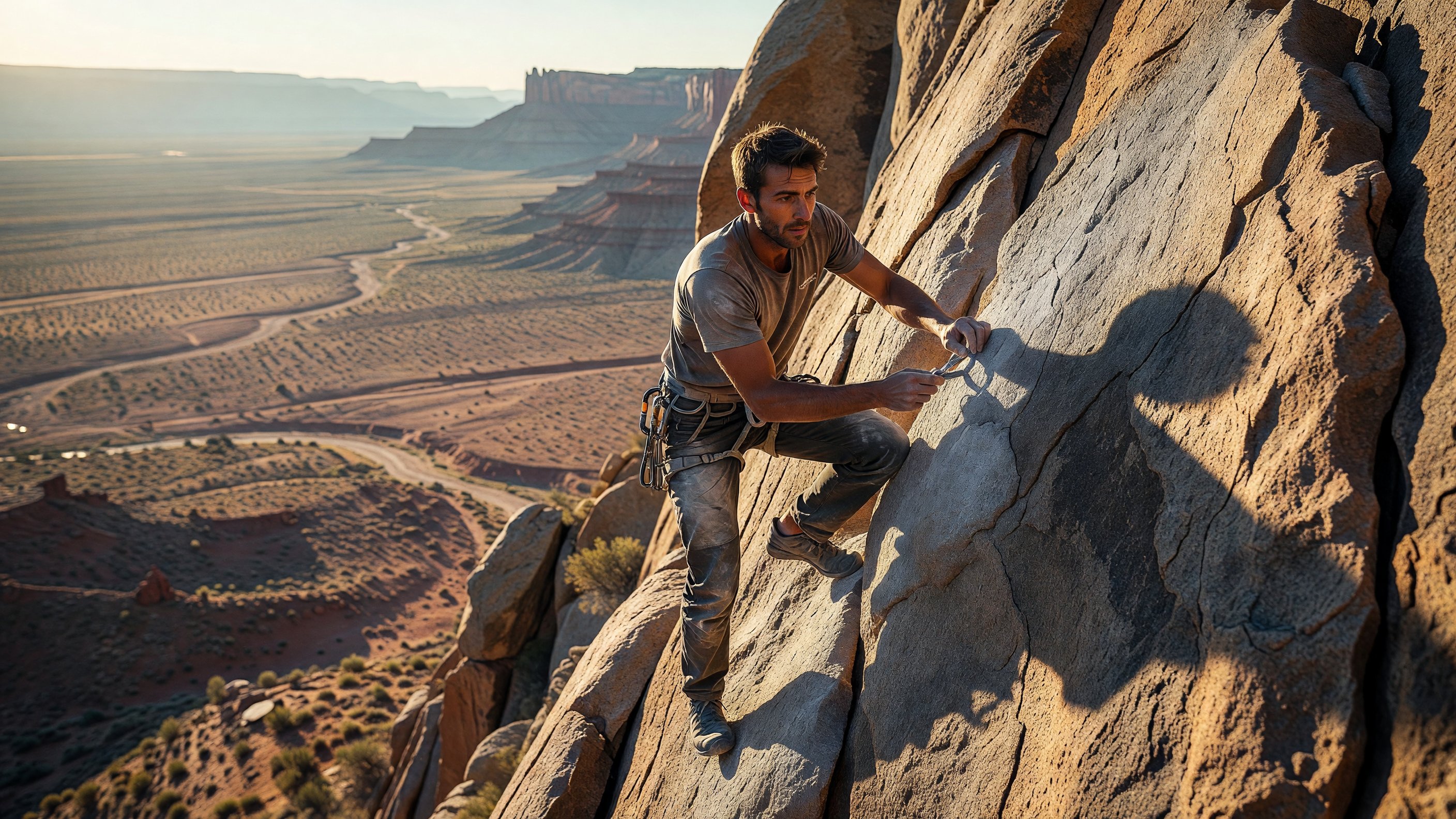
Rock climbing inside the national park system is different from climbing anywhere else. The rules are different, the land management priorities are different, and — on the best days — the scale and quality of the stone is unlike anything you’ll find on private or BLM land. I’ve spent enough time climbing in parks to know that the permit landscape, raptor closure calendars, and climbing management plans matter as much as the rock quality when you’re planning a trip. This guide covers the ten parks I’d rank first if I were building a climbing-specific trip from scratch, with honest notes on what makes each one exceptional and what gets in the way.
The ten parks here span every climbing discipline — bouldering, sport, trad, big-wall, and full alpine — and every skill level. I’ve ordered them roughly by climbing significance, starting with the parks I think most climbers should experience at some point in their career.
1. Joshua Tree National Park, California
Climbing style: Trad and sport (quartz monzonite), bouldering Route count: 8,000+ routes across all grades (per NPS climbing program) Season: October through April (summer heat above 100°F makes the main boulder fields dangerous) Permit: No climbing permit required; camping permits via Recreation.gov NPS resource: nps.gov/jotr/planyourvisit/climbing.htm
Joshua Tree is, by sheer volume and style diversity, the best single climbing destination in the national park system. The 8,000-plus route count — updated from older estimates as the NPS climbing program has expanded its documentation — spans a range from 5.0 slab friction to desperate 5.13 and 5.14 crack climbs on the same monzonite rock. The stone itself is exceptional: coarse quartz monzonite that bites into friction-dependent slab moves and locks into hand and finger cracks in ways that spoil you for other rock types.
The park’s main climbing corridors are clustered around four areas: Hidden Valley (the traditional center of gravity, with classics across all grades), Real Hidden Valley (shorter, technical face routes and easy crack introductions), Echo Cove (sport routes in a quieter section of the west district), and Indian Cove (its own campground and permit zone, with a distinct character — shorter approaches, more concentrated bouldering, good for families).
For bouldering specifically, Joshua Tree is among the best in the country. The Wonderland of Rocks section contains dense concentrations of untracked problems, and the main campground areas have enough moderate boulder problems to keep intermediate boulderers occupied for weeks.
The NPS manages climbing through a dedicated climbing ranger program. Camping inside the park requires a reservation during peak season (October–April); campers without reservations frequently find spots unavailable by Friday afternoon. Most climbing is walk-up, no permit required. The Access Fund has maintained a collaborative relationship with the NPS here that has kept the park’s climbing regulations minimal — a model worth noting.
Ethics note: Chalk use is accepted but contested visually in desert rock environments. Use a chalk color that blends with the stone where possible; tick marks (chalk marks used for foot placement on boulder problems) should be brushed after a session.
2. Yosemite National Park, California
Climbing style: Big-wall (El Capitan, Half Dome), multi-pitch trad, free climbing Route count: 800+ established routes (Yosemite Valley alone) Season: April through October (shoulder seasons for the Valley; high country July–September) Permit: No permit required for free climbing; Class 5+ climbing registration recommended via NPS Yosemite climbing program; Camp 4 camping requires a Recreation.gov reservation NPS resource: nps.gov/yose/planyourvisit/climbing.htm
If Joshua Tree is the best climbing park for volume and variety, Yosemite is the best climbing park for history, scale, and the particular ambition that granite big-wall climbing requires. El Capitan’s 3,000-foot southwest face contains some of the most consequential routes in American climbing history. The Nose — rated 5.9 C2 in its aid climbing form, or 5.14a for the full free version (the Great Roof crux pitch checks in at 5.13c) — was the route that defined big-wall aid climbing through the 1960s and 1970s, and has since become the route against which free climbing progression on El Cap is measured. Alex Honnold’s 2017 free solo of FreeRider (VI 5.13a) on El Cap’s Freerider route is probably the most widely known climbing achievement in the park’s modern history.
Camp 4 — the walk-in campground at the base of Yosemite Valley’s climbing walls — is the historic social center of American climbing culture and is listed on the National Register of Historic Places, with UNESCO World Heritage status included in Yosemite’s overall designation. Camping at Camp 4 now requires a Recreation.gov reservation; the walk-up era when climbers lived there indefinitely is over, but the campground remains the right base for El Cap approaches. The reservation system fills quickly during spring and fall peak climbing seasons.
For newer climbers, the Valley offers far more than just El Cap objectives. The Apron, Manure Pile Buttress, and Swan Slab areas have moderate multi-pitch routes in the 5.6–5.9 range that provide legitimate granite crack technique development. Tuolumne Meadows (accessible July–September) has a different character — longer approaches, thinner air, and high-country granite slabs and domes that reward a different technical vocabulary.
Big-wall logistics: Permits are not required for free climbing on El Cap or Half Dome, but climbers doing multi-day routes on El Cap must comply with the park’s waste management regulations, including the use of a poop tube (portable waste container) — human waste cannot be left on the wall. A free self-registration overnight climbing permit is required for overnight bivy on El Cap routes (no quota, available at the permit kiosks at El Capitan Bridge and Camp 4).
3. Zion National Park, Utah
Climbing style: Big-wall trad, multi-pitch trad Route count: Hundreds of established routes on Navajo Sandstone Season: March through May and September through November (summer temperatures exceed 105°F in the canyon; sandstone loses strength when wet) Permit: No climbing permit required; route-specific permits may apply for certain wilderness areas NPS resource: nps.gov/zion/planyourvisit/climbing.htm
Zion’s sandstone walls — Navajo Sandstone, a cemented aeolian sand deposit — produce a uniquely demanding big-wall climbing environment. The rock climbs well when dry and in cool conditions, but becomes fragile and unreliable when wet. The single most important rule for Zion climbing: do not climb on wet sandstone. The surface layer separates and holds have broken off under load on wet Navajo Sandstone routes, creating both dangerous conditions and resource damage.
The marquee routes here are genuine benchmarks. Moonlight Buttress (VI 5.12+, or 5.8 C2 for the aid line) is a 1,200-foot route on the west face of a prominent tower above the Virgin River — widely considered one of the finest big-wall routes in the country. Touchstone Wall and Cerberus Gendarme are other major objectives in the canyon proper. The climbing tends toward sustained vertical and slightly overhanging crack systems on a scale that rewards climbers comfortable with multi-day commitment.
The NPS manages climbing at Zion through the Zion climbing management plan, which restricts drilling of new fixed protection in certain areas. The park’s canyon shuttle system (mandatory for most visitors April through October) affects approach logistics — most climbs in the main canyon are accessed on foot from shuttle stops.
4. Rocky Mountain National Park, Colorado
Climbing style: Alpine trad, multi-pitch trad, mountaineering Route count: Hundreds of established routes on the east and west faces of the Mummy Range, Longs Peak massif, and Bear Lake corridor Season: June through September for most technical routes; winter and shoulder seasons for ice and alpine mixed Permit: Wilderness permit required for overnight routes and bivouacs via Recreation.gov; Longs Peak summit trail does not require a permit for day use NPS resource: nps.gov/romo/planyourvisit/climbing.htm
Rocky Mountain National Park’s climbing is defined by its elevation and alpine character. The park sits at 8,000 to 14,000 feet, and most technical climbing objectives require approaches at altitude that affect planning even for climbers acclimatized to lower elevations. The signature objective is Longs Peak at 14,259 feet — the northernmost fourteener in Colorado — and specifically its east face, which contains The Diamond.
The Diamond is a 900-foot sheer granite wall sitting above Chasm Lake at 12,000 feet, and it is Colorado’s most iconic technical big-wall objective. Routes like Casual Route (IV 5.10) and Yellow Wall (V 5.11) follow crack systems up a vertical face that requires a 3.5-hour approach even from the Longs Peak trailhead. A wilderness permit is required for bivy in the Chasm Lake area. Routes typically come into condition by late June and are most reliable through August; afternoon thunderstorms are a genuine objective hazard and early starts (pre-dawn) are standard practice.
Beyond Longs Peak, the Petit Grepon (a prominent spire in the Chaos Canyon area, accessible from Bear Lake) is one of the most aesthetically compelling moderate alpine trad objectives in the country — a true summit experience on a route (South Face, IV 5.8) that rewards traditional crack technique.
Weather note: Afternoon thunderstorms develop rapidly in the Colorado Rockies from approximately 1 p.m. onward in summer. Arriving at technical summit objectives before noon is not optional — it is the minimum safety standard.
5. Acadia National Park, Maine
Climbing style: Trad (sea cliff), some sport Route count: 100+ established routes primarily on the Otter Cliffs and other coastal granite areas Season: May through October for most climbing; winter ice climbing possible but specialized Permit: No climbing permit required; campsite reservations via Recreation.gov NPS resource: nps.gov/acad/planyourvisit/rock-climbing.htm
Acadia is the best sea-cliff climbing in the national park system and one of the best in the eastern United States. Otter Cliffs — a 60-foot granite sea cliff dropping directly to the Atlantic Ocean — offers trad routes on coarse, well-featured rock with the practical complexity of ocean exposure: swell surge, wet rock in certain conditions, and the rhythmic sound of surf below an open-book crack. The climbing itself is short by big-wall standards, but the quality of the rock and the uniqueness of the environment make it worth the trip.
Precipice Trail is the park’s other primary climbing area — a mix of fixed iron rungs and technical scrambling on a route that grades into legitimate 5th class territory. Critical seasonal closure: Precipice is closed annually from approximately late March through mid-August to protect nesting peregrine falcons (Falco peregrinus). The NPS posts the exact closure dates each year at the park entrance and on the NPS website; do not assume the closure has lifted without checking. Peregrine recovery is one of conservation’s clear successes in the Northeast, and climber compliance with the closure is both legally required and ethically straightforward.
The weather window in Maine is shorter than western parks — reliable dry conditions run roughly June through September, with October offering beautiful light if you accept variable conditions.
6. Grand Teton National Park, Wyoming
Climbing style: Alpine trad and mountaineering Route count: Hundreds of established routes across the Teton Range; the Grand Teton alone has 15+ distinct routes Season: July through mid-September (high alpine; lower routes possible from mid-June) Permit: No permit required for free climbing; wilderness permit required for overnight camping via Recreation.gov; summit registration recommended at Jenny Lake Ranger Station NPS resource: nps.gov/grte/planyourvisit/climbing.htm Guide services: Exum Mountain Guides (park concessioner), Jackson Hole Mountain Guides (park concessioner)
Grand Teton National Park offers the most accessible high-alpine mountaineering in the contiguous United States. The Grand Teton itself reaches 13,775 feet via routes that are serious alpine undertakings but not technically extreme by Cascade or Himalayan standards. The Owen-Spalding Route (5.4) is the standard route — a two-day objective involving glacier travel, third-class scrambling, and a summit pitch on good granite that puts you on one of the finest summits in North America.
Two NPS-licensed concessioners operate guided climbing programs in the park: Exum Mountain Guides (established 1931, based at the Upper Saddle hut below the summit) and Jackson Hole Mountain Guides. Both offer guided ascents of the Grand and other major objectives in the range. For parties without high-alpine experience, hiring a guide is the recommended approach — the route involves glacier travel and complex route-finding that is routinely underestimated.
The range also offers excellent one-day and multi-pitch climbing on peaks like Symmetry Spire, Nez Perce, and Thor Peak — objectives that are frequently overlooked in favor of the Grand but offer world-class granite at slightly more accessible grades.
Wilderness permits are required for overnight camping in the backcountry and are competitive during July and August via the Recreation.gov lottery (advance lottery opens in January).
7. Pinnacles National Park, California
Climbing style: Sport and bouldering on volcanic breccia Route count: 150+ established routes Season: October through May (summer heat exceeds 100°F in the Pinnacles interior) Permit: No climbing permit required; campsite reservations via Recreation.gov or the Pinnacles Campground NPS resource: nps.gov/pinn/planyourvisit/climbing.htm
Pinnacles is the most underrated climbing park in California. The volcanic breccia — welded tuff and breccia formed by ancient volcanic activity — produces unusually featured rock with pockets, edges, and conglomerate textures that reward a different technique than the granites and sandstones elsewhere on this list. The High Peaks area is the park’s primary climbing corridor, with bolted sport routes from 5.6 to 5.13 and concentrated bouldering in the Bear Gulch area.
The park’s small size means the climbing zones are compact and approachable — the High Peaks circuit from the east parking area covers the primary sport climbing in a half-day. For boulderers, the formations scattered through the chaparral in the Bear Gulch corridor offer an interesting set of problems on stone that punishes heel hooks differently than granite.
Pinnacles also hosts one of California’s premier raptor conservation programs — the California condor (Gymnogyps californianus) reintroduction effort has made the Pinnacles area one of the primary release and monitoring sites for this endangered species. Climbers occasionally encounter condors on routes in the High Peaks; the birds are federally protected and should not be disturbed or approached.
8. Devils Tower National Monument, Wyoming
Climbing style: Sport and trad on phonolite porphyry columnar basalt Route count: 200+ established routes Season: April through October; voluntary June closure affects the primary climbing period Permit: No climbing permit required; climbing registration at the visitor center is requested NPS resource: nps.gov/deto/planyourvisit/climbing.htm
Devils Tower is one of the most recognizable rock formations in North America — a 1,267-foot igneous monolith rising from the Belle Fourche River valley in northeastern Wyoming. The tower’s columnar structure, formed by the cooling and contraction of igneous rock into hexagonal columns, produces crack systems that run the full 867-foot technical height of the climbing face from base to summit. The Wiessner Route (5.7), first climbed in 1937, is the classic line — a sustained crack climb that follows a prominent system up the northwest face.
The June voluntary closure is the most significant management consideration at Devils Tower. The monument is a sacred site in the traditions of at least twenty American Indian nations. Each June, the NPS and representatives of those nations request that climbers voluntarily refrain from climbing on the tower out of respect for traditional ceremonies and spiritual practices that occur during this period. The closure is voluntary — the NPS cannot legally prohibit climbing on the basis of religious use — but the ethical expectation is clear: June is not the month to climb at Devils Tower. The climbing community’s compliance rate with this closure has been high, and it is both an ethically straightforward decision and a practical demonstration of the principles articulated by the Access Fund (accessfund.org) regarding land stewardship.
The tower’s summit plateau (approximately 1.5 acres) requires descent by rappel — the approach to the summit involves 200+ meters of technical climbing with no walk-off. Summit registrations document an ongoing human presence on the tower that the NPS monitors for resource impact.
9. Black Canyon of the Gunnison National Park, Colorado
Climbing style: Multi-pitch trad, advanced only Route count: 150+ established routes; most require complex descents Season: April through June and September through November (summer heat builds in the canyon; winter conditions at the rim are severe) Permit: No climbing permit required; wilderness permit required for inner canyon overnight use via the park’s wilderness permit system NPS resource: nps.gov/blca/planyourvisit/climbing.htm
Black Canyon is not beginner territory, and the NPS climbing materials are unusually direct about this: most routes do not have walk-off descents, the inner canyon is remote and difficult to access in an emergency, and the technical complexity of both approach and retreat is higher than almost any park on this list. I include it because the climbing itself — on Painted Wall, the tallest cliff face in Colorado at 2,250 feet — is among the finest traditional multi-pitch climbing in the country.
Painted Wall routes like Leisure Climb (IV 5.10) and Comic Relief (V 5.11+) are full-day or multi-day objectives on deteriorated, sometimes-loose Precambrian gneiss and schist that requires confident gear placement and route-finding. The descent from most Black Canyon routes involves 3rd and 4th class scrambling in the dark inner canyon that is serious even for experienced parties. The NPS requires climbers on inner canyon routes to register at the South Rim Visitor Center before descending.
The access gully system — the chutes leading from the rim down to the inner canyon — is another technical element. Most chutes require fixed lines or downclimbing in the 5.0–5.5 range just to reach the climbing routes. Conditions in the chutes vary with precipitation; loose rock in descent gullies is a genuine hazard.
10. Mount Rainier National Park, Washington
Climbing style: Alpine mountaineering (glaciated volcano) Summit elevation: 14,410 feet (Columbia Crest, the highest point in Washington State) Season: May through July for the standard route; earlier season attempts face significant avalanche risk Permit: Climbing permit required for all summit attempts — $60/person, purchased via Recreation.gov; annual permit also available NPS resource: nps.gov/mora/planyourvisit/climbing.htm Guide services: Rainier Mountaineering Inc. (RMI) (park concessioner), International Mountain Guides (park concessioner), Alpine Ascents International (park concessioner)
Mount Rainier occupies its own category on this list — it is not technical rock climbing but rather the most-attempted glaciated summit in the contiguous United States, and the standard training ground for climbers developing the skills needed for higher-altitude objectives worldwide. The Disappointment Cleaver route (the most commonly used standard route) involves glacier travel from Camp Muir at 10,080 feet to the summit at 14,410 feet, requiring crampons, ice axe, rope teams, and competent crevasse rescue readiness.
The NPS manages summit climbing through a permit system: all parties attempting the upper mountain (above Camp Muir or Camp Schurman) require a climbing permit. Permits are purchased through Recreation.gov. Three park-concessioned guide services operate at Rainier — RMI, International Mountain Guides, and Alpine Ascents International — and all offer guided summit programs with equipment included.
Summit success rates vary significantly with weather and party preparation; NPS figures indicate approximately 9,000–10,000 summit attempts per year with success rates dependent heavily on season and weather window. The NPS does not publish a fixed overall success rate — any specific percentage cited without a NPS source reference should be treated as estimate. The best available benchmark is the park’s annual climbing report, published each year at nps.gov/mora.
Gear minimum for self-guided parties: 12-point crampons, ice axe, helmet, harness, rope (one per team of 2–4), crevasse rescue kit (pickets, pulleys, prussiks), layering system capable of handling summit temperatures well below 0°F with wind.
Climbing Management Plans and NPS Ethics
The national park system’s approach to climbing has matured significantly since the late 1990s, when the legacy of Yosemite’s Camp 4 and the big-wall era’s laissez-faire attitude toward fixed gear and chalk first came under scrutiny. Most parks with significant climbing now have formal Climbing Management Plans (CMPs) that govern:
- Fixed gear (bolts and pitons): Most parks prohibit new fixed gear installation without NPS authorization. Existing fixed gear is evaluated for replacement on a park-by-park basis. The trend across the system is toward minimizing fixed hardware, particularly in wilderness zones.
- Chalk use: White chalk is visually conspicuous on desert sandstone and in some wilderness areas. Several parks have adopted low-impact chalk policies; many experienced climbers use colored chalk matched to the rock.
- Raptor closures: Peregrine falcons, golden eagles, and prairie falcons nest on cliff faces in parks from New England to the Pacific Coast. Seasonal closures — typically February through July for active nest sites — are standard at Acadia, Rocky Mountain, Yosemite, and several other parks. Current closure information is posted at each park’s visitor center and on the NPS climbing page.
- Campsite and staging area management: High-use climbing areas have seen measurable vegetation loss and soil compaction at common belay and staging areas. The NPS requests that climbers use existing pads and rock surfaces rather than creating new impact footprints.
The American Alpine Club (americanalpineclub.org) publishes annual Accidents in North American Mountaineering reports, which are the most authoritative source for climbing safety data across all NPS and non-NPS climbing areas. The Access Fund (accessfund.org) is the primary advocacy organization for climbing access on public lands — they have been directly involved in the Yosemite climbing management plan process, the Devils Tower voluntary closure, and access negotiations at dozens of smaller NPS-managed climbing areas.
Gear Basics for Multi-Style Climbing
The gear requirements vary substantially by climbing style:
Trad climbing (Joshua Tree, Zion, Yosemite Valley, Black Canyon): Full rack of cams from finger-width to fist (#0.1–#4 Camalot scale covers most requirements, extended with #5 and #6 for wide crack routes at Joshua Tree and Black Canyon), a set of nuts and hexes, cordelette or slings, belay/rappel device rated for the route. Helmet is mandatory.
Big-wall (El Capitan, Zion big walls): All of the above plus haul bags, portaledge for multi-day routes, poop tube (required on El Cap), aiders, ascenders (jumarring the fixed lines is standard practice on El Cap), progress-capture pulley for hauling. A multi-day big wall is an expedition with a freight logistics component.
Alpine (Grand Teton, Rocky Mountain, Mount Rainier): Crampons (12-point for serious alpine objectives), ice axe, helmet, mountaineering boots rated for crampon use, rope (9–10mm dry-treated for glacier objectives), harness, crevasse rescue kit for glaciated routes.
Bouldering (Joshua Tree Indian Cove, Pinnacles): Crash pad, brush for tick mark removal, friction shoes (softer rubber compounds perform better on the quartz monzonite at Joshua Tree; harder rubber for the more featured volcanic rock at Pinnacles).
Commercial Photography in National Parks
If you are photographing climbing commercially — for a brand, a publication, or social media with a paid partnership — a commercial filming permit from the NPS is required. This applies to still photography as well as video. The threshold for what constitutes “commercial” photography is lower than most people expect: using park imagery for paid advertising or a sponsored post on a platform where you receive compensation generally triggers the permit requirement. The NPS processes commercial photography permit applications through each individual park’s superintendent’s office; processing times vary from one to six weeks. Personal/non-commercial photography and recreational documentation of your own climbing does not require a permit.
Frequently Asked Questions
Do you need a permit to rock climb in national parks?
Requirements vary by park. Joshua Tree, Zion, Acadia, Pinnacles, and Devils Tower require no climbing permit. Yosemite requires no permit for free climbing but a wilderness permit for overnight bivy on big walls. Rocky Mountain and Grand Teton require wilderness permits for overnight backcountry camping on climbing routes. Mount Rainier requires a paid climbing permit ($60/person) for all summit attempts. Always check the specific park’s current climbing regulations before your trip — rules change.
What is the best national park for beginner rock climbers?
Joshua Tree is the most accessible entry point for novice trad climbers — the density of moderate routes (5.5–5.9) on good-quality crack systems within walk of camping makes it the best learning environment in the park system. For sport climbing beginners, Pinnacles offers well-bolted routes on approachable terrain. Acadia’s Otter Cliffs is excellent for beginner trad in the East, with short routes and sea-cliff novelty. Yosemite has excellent beginner areas (Manure Pile Buttress, Swan Slab) but the crowds in peak season and camping logistics add friction.
What is the climbing season at Joshua Tree National Park?
October through April is the primary season. Summer temperatures in Joshua Tree’s high desert regularly exceed 100–105°F; the rock absorbs heat and becomes dangerously hot to the touch, and the physical demands of climbing in that heat are serious. A few sheltered north-facing crags are climbable in early summer mornings, but the main boulder fields at Hidden Valley and Indian Cove are effectively off-limits May through September.
What is the Devils Tower voluntary closure and when does it happen?
Every June, the NPS and representatives of American Indian nations with ties to Devils Tower request that climbers voluntarily refrain from climbing the tower out of respect for traditional ceremonies and spiritual practices. The closure is voluntary (not legally enforceable), runs for the full month of June, and has been in place since 1995. The NPS Devils Tower climbing page explains the cultural context in detail. Climber compliance has been consistently high.
Can you rock climb at Yosemite without a guide?
Yes — the vast majority of climbing in Yosemite is self-guided and no guide requirement exists for any route. Hiring a guide is advisable for parties new to Yosemite’s specific crack-climbing style (granite jamming technique is learned, not intuitive) or for those attempting technical big-wall objectives for the first time. The NPS maintains a list of licensed guide services on the Yosemite climbing page.
What is the easiest way to summit the Grand Teton?
The Owen-Spalding Route (5.4) is the standard route, involving a two-day approach via the Garnet Canyon trail to the Lower Saddle (camping requires a wilderness permit), then a summit day involving exposed scrambling and one technical pitch to the summit at 13,775 feet. The term “easiest” is relative — the route requires solid 3rd and 4th class scrambling comfort, glacier approach skills, and the ability to move confidently at altitude. Guided ascents through Exum Mountain Guides or Jackson Hole Mountain Guides are the recommended approach for parties without prior high-alpine experience.
Climbing regulations, raptor closure dates, and permit fees cited in this guide reflect conditions through early 2026. NPS rules are subject to annual revision — always verify current requirements at nps.gov before your climbing trip.
For climbing access advocacy and land stewardship guidance: Access Fund (accessfund.org). For safety statistics and accident analysis: American Alpine Club (americanalpineclub.org).
For planning your wider national park visit around climbing objectives, see multi-day backpacking routes in national parks for permit strategy and wilderness logistics, and best national park hikes under five miles for approach trail options at lower-elevation zones.